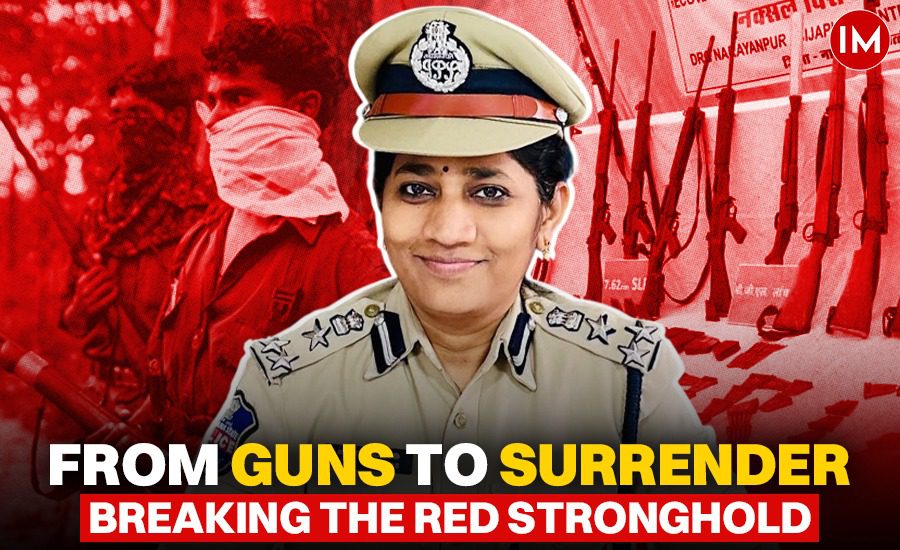
In a landscape where anti-insurgency is often associated with encounters and firepower, one officer chose a quieter, more complex path—dialogue. When top Maoist commander Thippiri Tirupati, known as Devuji, surrendered in Telangana along with other senior cadres, it marked more than an operational success. It was the outcome of sustained, patient engagement led by B. Sumathi, a 2001-batch IPS officer and head of the Special Intelligence Branch (SIB), who has spent over two decades working in the shadows of intelligence.
A DIFFERENT KIND OF BATTLE
For Sumathi, insurgency is not just about arms—it is about ideas. She understands that while Maoist movements are rooted in ideology, not everyone inside is deeply committed to it. Many are foot soldiers. Some are young and inexperienced. Others are caught in a system they cannot easily exit. Her work begins at this intersection of doubt and compulsion. Instead of viewing every insurgent as an adversary, she studies their motivations, fears, and circumstances. This approach allows her to open channels of communication that are often closed in conventional policing.
THE DEVUJI BREAKTHROUGH
The surrender of Devuji was particularly significant. As a Central Committee member, he was among the top leadership of the Maoist structure and not someone expected to return easily. Yet, through sustained efforts, Sumathi and her team managed to convince him. Alongside him, other senior cadres also laid down their arms. Each such surrender weakens the internal structure of the movement. The strategy behind this is deliberate—if insurgents are killed, they risk becoming martyrs; if arrested, they may retain symbolic power. But surrender exposes the failure of the ideology itself.
THE ART OF PATIENCE
Intelligence work does not operate on immediate timelines. It requires patience, precision, and persistence. Sumathi’s team invests time in understanding networks, tracking communication, and identifying psychological turning points. They look for moments when individuals begin to question their path. Engagement is gradual. Sometimes it involves family members. Sometimes trusted intermediaries. Sometimes direct outreach. The process is slow, but it is effective. As she has often emphasized, this is never the result of a single effort but of sustained engagement over time.
EMPATHY WITHOUT WEAKNESS
Balancing empathy with firmness is one of the most difficult aspects of her role. Many cadres she interacts with come from vulnerable backgrounds. They have limited exposure to the outside world and are often driven by narratives of justice and equality. However, the reality within the system is often different. Sumathi highlights these contradictions carefully. She does not confront aggressively. She allows individuals to reflect and question. “If we kill them, they become martyrs. If they surrender, their ideology fails.” This belief shapes her approach—firm in objective, but humane in execution.
A WOMAN IN A MAN’S WORLD
Working in intelligence and anti-insurgency is demanding, regardless of gender. For a woman officer, the challenges can be more layered—expectations, scrutiny, and the need to constantly prove capability. Sumathi, however, treats her gender not as a limitation but as an added dimension. Her ability to listen, observe, and communicate with sensitivity often helps in building trust, especially with women cadres who form a notable part of Maoist groups. Yet, she is clear that professionalism is the foundation. Respect comes from competence, not identity.
THE POWER OF TARGETING LEADERSHIP
A key element of Sumathi’s strategy is focusing on leadership. When a senior leader surrenders, it creates a ripple effect. It raises doubts within the ranks. It weakens morale. It encourages others to reconsider their choices. Over the past two years, this approach has yielded significant results, with around 591 Maoists surrendering under her watch. Each surrender is not just an individual decision but a structural shift within the movement.
THE SILENT TEAM BEHIND HER
Sumathi consistently emphasizes that such outcomes are not individual achievements. Intelligence operations rely heavily on teamwork. Her team works discreetly, gathering information, verifying inputs, and maintaining strict confidentiality. In such operations, even a small leak can compromise months of effort. Coordination, trust within the team, and professional discipline are essential. The success of each surrender reflects the collective effort of this silent network.
LESSONS FROM THE FIELD
Years of experience have shaped Sumathi’s understanding of insurgency. She has learned that ideology alone does not sustain movements—conditions on the ground matter. Development, opportunities, and exposure can change perspectives. She has also observed that when given a genuine chance, many individuals choose to return to mainstream life. Importantly, those who have surrendered rarely go back, reinforcing the effectiveness of this approach.
BEYOND OPERATIONS: A HUMAN STORY
Every surrender carries a personal story. A young recruit seeking a different life. A cadre disillusioned by internal contradictions. A leader questioning long-held beliefs. Sumathi’s role often involves listening to these stories and creating space for change. It is in these quiet conversations that transformation begins. Her work, therefore, goes beyond operations—it touches lives at a deeply human level.
A QUIET IMPACT
Sumathi does not seek public recognition. Intelligence work, by its nature, demands discretion. Success is measured not in visibility but in outcomes. Telangana’s declining Maoist activity reflects a combination of factors, but the role of sustained intelligence efforts has been critical. By shifting the approach from confrontation to communication, officers like Sumathi have redefined the strategy.
THE ROAD AHEAD
The challenge of insurgency is far from over. It continues to evolve, adapting to new conditions. But the framework established in Telangana offers a model—one that combines strategy, patience, and empathy. It shows that long-term solutions require more than force. They require understanding.
THE WOMAN WHO CHOSE CONVERSATION
In the end, Sumathi’s story is not just about policing. It is about perspective. It shows that even in the most difficult conflicts, dialogue has a place. That change is possible. And that sometimes, the most powerful victories are not those won in battle, but those achieved quietly—when a weapon is set aside, and a life begins again.