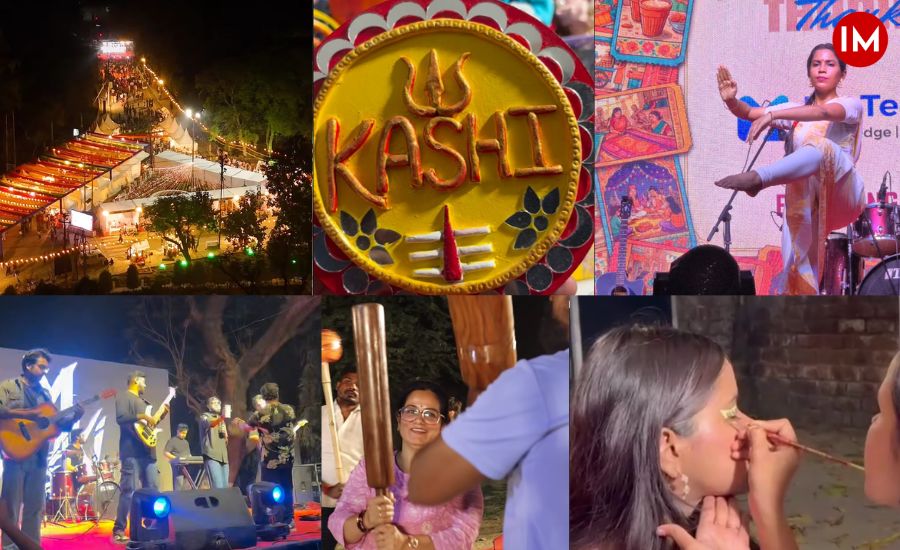
In a city like Varanasi, culture does not sit quietly in the background—it lives on the streets, in the music of the ghats, in the aroma of food, and in the hands of its artisans. Yet for years, there was no single public platform where all these elements could come together in an accessible, participatory format.
Banarasgiri is changing that.
Launched in 2025, Banarasgiri has quickly emerged as one of the most distinctive cultural initiatives in the city—turning ordinary public spaces into vibrant hubs of art, craft, cuisine, wellness, and community interaction. More importantly, it is not just another government event. It is a collaborative effort where citizens play as important a role as institutions.
A NEW IDEA FOR URBAN CULTURAL SPACES
The idea behind Banarasgiri was simple but powerful: bring the cultural life of Banaras onto the streets in a way that people can experience directly.
Himanshu Nagpal, IAS (2019 batch, Uttar Pradesh cadre), Municipal Commissioner of Varanasi, explained to Indian Masterminds, “The idea behind Banarasgiri was to create a vibrant urban cultural street platform that celebrates the spirit of Varanasi while giving a direct platform to local artisans, performers, and food entrepreneurs.”
This vision was jointly developed by Satyam Mohan (IDES), CEO of Varanasi Cantonment; Pulkit Garg (IAS), former vice chairman of Varanasi Development Authority; and Himanshu Nagpal himself. Together, they envisioned a format where the administration facilitates but the community drives.
FILING A LONG-STANDING GAP
Varanasi has always had everything—handicrafts, classical music, street food, traditional practices—but these existed in scattered pockets.
Banarasgiri was designed to bring them together.
As Mr Nagpal points out,
“While Varanasi has an incredibly rich heritage of handicrafts, folk music, art, and traditional food, there were limited regular platforms where these could come together in an accessible public setting for both citizens and visitors.”
This gap is what Banarasgiri addresses by transforming streets into cultural corridors where visitors can see, taste, learn, and participate—all in one place.
RAPID GROWTH IN A SHORT TIME
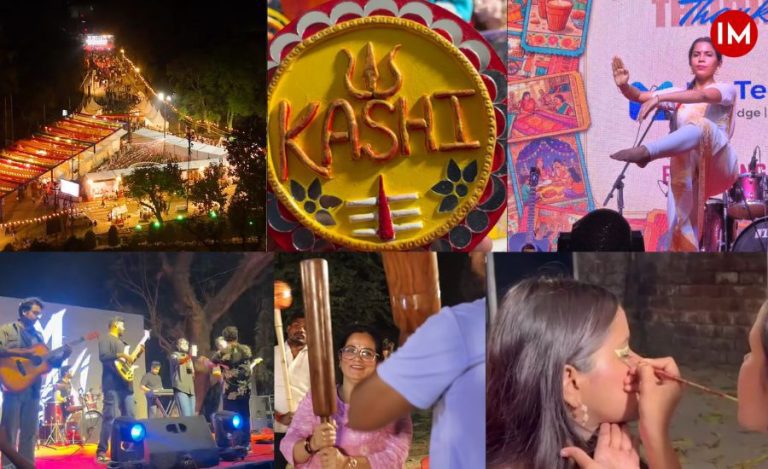
What started in 2025 as a community-driven experiment has already seen five successful editions, including Banarasgiri 5.0 held on 14th and 15th March.
With each edition, participation has grown—not just in numbers, but in diversity. Today, the festival includes the following:
- Local artisans and craftsmen
- Street performers and musicians
- Food vendors and small entrepreneurs
- NGOs and civic groups
- Students and volunteers
What began as a cultural street event has now evolved into a structured, multi-dimensional urban festival.
CELEBRATING CRAFTS AND LOCAL LIVELIHOODS
A major highlight of Banarasgiri is its focus on traditional handicrafts and GI-tagged products.
Artisans are not just displaying finished goods—they are demonstrating their craft live. Visitors can watch:
- Pottery being shaped
- Handloom weaving in action
- Carpet-making techniques
- Candle-making processes
- Glass bead craftsmanship
This direct interaction builds appreciation for the effort behind each product and creates real economic opportunities for artisans.
It also aligns with the broader goal of promoting local industries and sustaining traditional skills.
A STREET FULL OF FLAVOURS
No cultural experience in Varanasi is complete without food, and Banarasgiri embraces this aspect fully through its dedicated food street.
Visitors can explore the following:
- Banarasi chaat
- Fresh chai
- Kulfi
- Litti-chokha
- Other regional favourites
The food section does more than serve meals—it reflects the everyday culinary identity of the city, making it accessible to both locals and tourists in a single space.
MUSIC, PERFORMANCE AND LIVING TRADITIONS
Banarasgiri also showcases the city’s musical heritage through live performances.
Traditional Shehnai music, folk performances, and other cultural forms create an immersive environment where the soundscape itself becomes part of the experience.
Unlike staged auditorium events, these performances happen in open public spaces—making them more accessible and interactive.
REVIVING AKHADA CULTURE
One of the most unique aspects of Banarasgiri is its focus on traditional physical culture through Akhada workshops.
These sessions allow visitors to:
- Observe traditional training methods
- Learn basic techniques
- Participate in friendly competitions
The event not only revives interest in historic Indian physical practices but also introduces them to a younger audience in an engaging format.
A FESTIVAL DESIGNED FOR EVERYONE
Banarasgiri has been structured as a family-friendly event.
A dedicated kids’ zone offers the following:
- DIY activities
- Creative workshops
- Interactive learning sessions
At the same time, the festival also addresses modern concerns like mental well-being.
The Meditation and Mental Wellness Corner hosts:
- Awareness sessions
- Guided meditation
- Interactive discussions
In addition, free health check-ups are conducted, expanding the festival beyond culture into community welfare.
SUSTAINABILITY AND CIVIC PARTICIPATION
Another defining feature of Banarasgiri is its focus on sustainability and awareness.
Through collaborations with organisations such as Kutumb and Green Army, the festival promotes the following:
- Responsible consumption
- Environmental awareness
- Citizen participation
Such participation ensures that the event is not just celebratory but also socially meaningful.
A COMMUNITY–DRIVEN MODEL
What truly sets Banarasgiri apart is its model of participation.
It is not a top-down event. Citizens, NGOs, artists, and volunteers actively contribute to planning and execution. This creates a strong sense of ownership.
As Mr Nagpal describes, “It is a collective initiative… to transform public streets into lively cultural spaces where people can experience the crafts, cuisine, and creative traditions of Banaras.”
This shared responsibility is what gives the festival its authenticity and energy.
THE ROAD AHEAD
The long-term vision for Banarasgiri is ambitious.
IAS Himanshu Nagpal explains, “The long-term vision is to develop Banarasgiri into a signature cultural street festival of Varanasi, similar to how many global cities host regular cultural street events.”
The goals include:
- Promoting Banarasi crafts and creative industries
- Supporting livelihoods of artisans and performers
- Enhancing tourism experiences
- Creating regular cultural public spaces
If sustained, Banarasgiri could become a model for other cities looking to activate public spaces through culture.
MORE THAN A FESTIVAL
Banarasgiri is not just about events, performances, or stalls. It represents a new way of thinking about cities—where culture is not confined to institutions but flows through public life.
By bringing together administration and citizens on the same platform, it shows how collaboration can transform ordinary spaces into meaningful experiences.
And in a city like Varanasi, that might be the most natural thing of all.