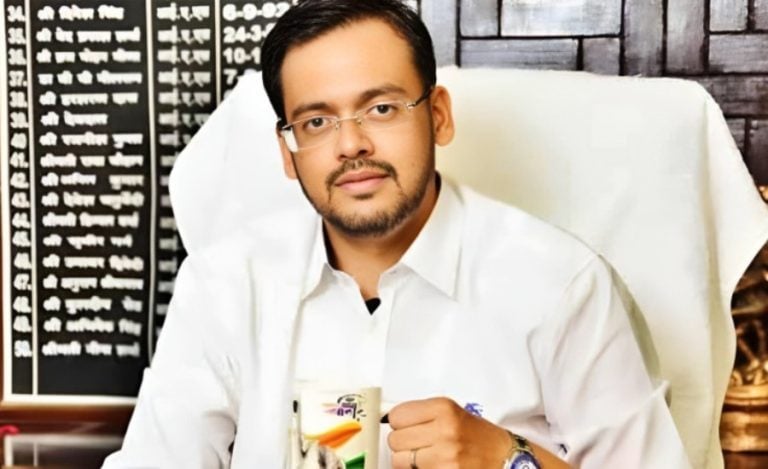
In a time when fast food chains dominate urban palates and traditional dishes are rapidly vanishing from memory, one district in Karnataka has dared to rewrite the narrative. In Kalaburagi, where jowar fields sway across rainfed plains and millet is more than just a crop—it’s culture—the humble jowar rotti has undergone a dramatic transformation. What was once a staple in local kitchens is now a bold, branded identity on digital shelves, delivery apps, and soon, international markets. And steering this inspiring journey is none other than IAS officer of 2015 batch & Karnataka Ms. Fouzia Taranum, the determined Deputy Commissioner of Kalaburagi.
Under her leadership, “Kalaburagi Rotti” has emerged as not just a dish but a symbol of revival—revival of food heritage, women’s livelihood, farmer income, and public health.
FROM FORGOTTEN TO FAMOUS
Kalaburagi has long been a powerhouse of jowar and bajra cultivation, with over 90% of its farmland rainfed. These millets are not just crops—they’re deeply woven into the local diet, especially in the form of the nutritious jowar rotti. But with urbanisation came change: rice and wheat crept in, and the traditional millet-based diet faded from urban menus.
The consequences were stark. Recent health surveys revealed that more than 50% of school-going girls were anemic, a worrying indicator linked to the loss of iron-rich traditional foods.
“It was more than just a nutritional crisis—it was a cultural one,” said Ms. Fouzia Taranum told to Indian Masterminds, adding, “We had to reintroduce what was always ours, in a way that fits today’s world.”
THE BRANDING BREAKTHROUGH
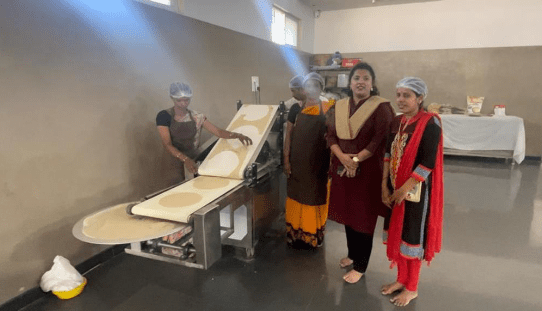
To tackle this, the Department of Agriculture distributed over 100 rotti-making machines under central schemes like PMFME, PMKSY 2.0, and Secondary Agriculture. These were handed over to women SHGs, solo entrepreneurs, and small manufacturers to kick-start millet processing units.
But the missing piece was clear—marketing.
Seeing the potential and the problem, Ms. Taranum visited production sites herself. “What I saw wasn’t just machinery—it was potential waiting to be unlocked,” she recalled. That visit led to the birth of “Kalaburagi Rotti” as a full-fledged brand.
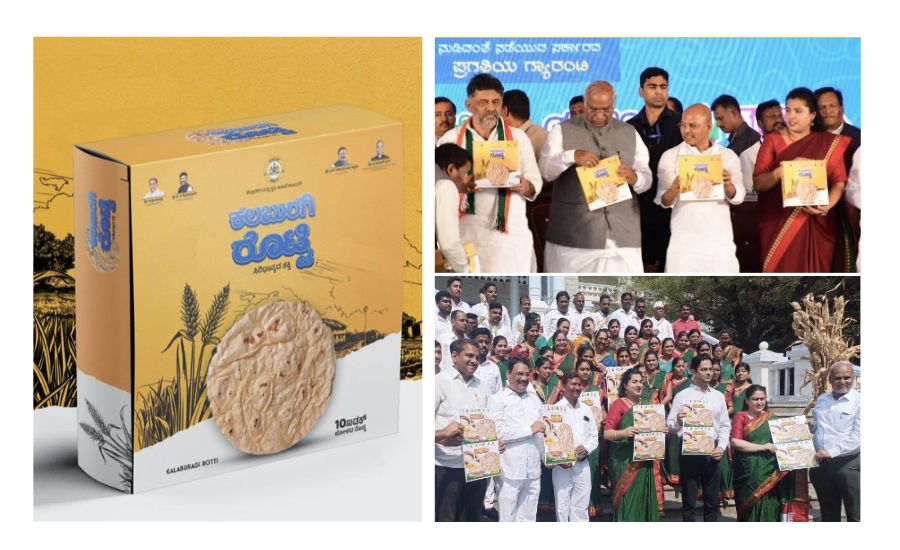
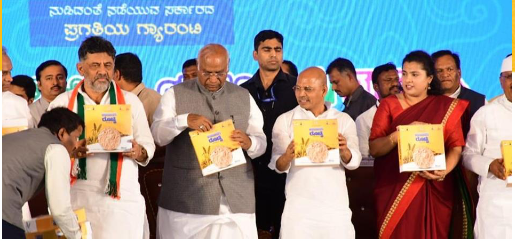
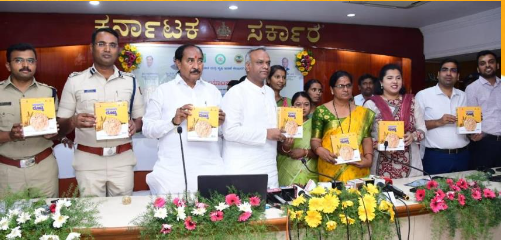
With professional packaging, FSSAI and GST registrations, and expert branding support, the humble flatbread now had a formal identity. The effort was officially launched by District In-charge Minister Sri Priyank Kharge and later by Deputy Chief Minister Sri DK Shivakumar during a major public event in Kalaburagi.
A DIGITAL PUSH
In today’s digital-first world, the administration didn’t stop at local markets. A professionally designed website (www.kalaburagiRotti.com) was launched with integrated payment gateways, order tracking, and listings on Zomato, Swiggy, and Amazon (approval pending).
The results were immediate and overwhelming. Within just four days, the website received over 6,700 enquiries—including those from six different countries.
“We were stunned by the response,” said Ms. Taranum. “This wasn’t just a local or national product anymore—it had global appeal. Our goal now is to tap into export opportunities to countries like the US, UK, and the Middle East.”
Social media campaigns, YouTube videos, influencer collaborations, and even QR codes were used to push the brand into public consciousness. Today, the brand receives 500-1000 rotti orders daily, often accompanied by traditional toppings like chutneys.
EMPOWERING WOMEN, STABILISING PRICES
One of the most powerful outcomes of this initiative is its impact on women’s empowerment. Over 1,000 women have found employment, either through direct production or distribution chains. For many, this is their first independent income source.
Moreover, with jowar and bajra now in consistent demand, the prices of these crops have stabilised—giving farmers a fair return for their produce.
“This initiative is about creating a win-win for everyone,” Ms. Taranum explained. “Farmers get better prices, women get employment, and consumers get healthy, traditional food. It’s an ecosystem we’re proud of.”
ROADBLOCKS & RESOLUTIONS
Like every good story, this one has its share of challenges. Expanding into tier-1 cities like Bengaluru, Hyderabad, Mumbai, and Pune, and setting up franchises at bus stops, railway stations, and malls, remains a work in progress.
Other hurdles include:
- Logistics for export to countries like the US, UK, and Middle East
- Integrating Kalaburagi Rotti into government food programmes, hostels, and training centres
- Need for seed money or grants for outreach and infrastructure
- Strengthening the Secondary Agriculture ecosystem for more processing units
- Creating a one-stop platform linking farmers, producers, and consumers
NEXT ON THE PLATE
The district administration has big plans. More franchises, stronger digital presence, larger rotti-making networks, and tapping into government outlets like KOF and KMF are all part of the future blueprint.
There’s also a push to provide more machines to rural women’s groups, making the Kalaburagi Rotti ecosystem wider and deeper.
And with the Kalaburagi Rotti Utpadakara Sahakara Sangha—a cooperative society of rotti makers—already registered, the support structure is strong and growing.
A MODEL WORTH EMULATING
The branding of “Kalaburagi Rotti” is now being hailed as a model initiative in millet promotion. It combines grassroots empowerment with high-level policy execution, digital marketing with traditional wisdom, and health benefits with economic revival.
“This is not just about rotti,” concludes Ms. Taranum. “It’s about preserving heritage, improving health, and creating livelihoods. Kalaburagi Rotti is our way of telling the world—we are proud of who we are and what we eat.”
And indeed, in this one humble rotti, Kalaburagi has found a recipe for pride, progress, and prosperity.