For decades, the dense forests of Bastar whispered stories of fear. Villages emptied at dusk, roads ended abruptly, and governance seemed like a distant idea. The region, once considered the epicentre of Left Wing Extremism in India, had become synonymous with ambushes, landmines, and a shadow state run by Maoists.
Today, that narrative is changing.
What was once a conflict zone is now on the cusp of becoming Naxal-free—not merely in terms of reduced violence, but in the dismantling of an entire parallel ecosystem. This transformation did not happen overnight. It is the result of a carefully orchestrated blend of relentless security operations, deep community engagement, and sustained development efforts.
At the heart of this transformation stands Sundarraj Pattilingam, a 2003-batch IPS officer currently serving as Inspector General (IG) of Bastar Range, Chhattisgarh—who has been instrumental in steering this multi-dimensional strategy.
THE DEADLINE THAT CHANGED EVERYTHING
Every large mission needs a turning point—and for Bastar, that moment came with a clear deadline.
The government’s declaration to make the region free of Left Wing Extremism by March 31, 2026, became a psychological and operational game changer. It aligned forces, sharpened intent, and injected urgency into every stakeholder involved.
“The game changer was the declaration of a clear deadline. Once a target is fixed, the entire system—forces, administration, and resources—moves in one direction,” Says Mr. Sundarraj Pattilingam during a conversation with Indian Masterminds.
This deadline didn’t just motivate security forces—it also changed the narrative among civilians, making the end of Maoist dominance seem achievable.
THE OPERATIONAL ASSAULT: DISMANTLING THE CORE
The backbone of Bastar’s transformation lies in its aggressive and sustained security operations.
Multiple forces worked in close coordination—District Reserve Guard (DRG), Bastar Fighters, Special Task Force (STF), CoBRA units, and central paramilitary forces like CRPF, BSF, and ITBP. Among them, locally recruited units like DRG and Bastar Fighters proved to be decisive.
These local recruits understood the terrain, spoke the language, and blended seamlessly with the community—giving them a critical edge.
“The local forces like DRG and Bastar Fighters were the X-factor. Their knowledge of terrain, language, and customs gave us a decisive advantage,” Says Mr. Sundarraj Pattilingam during a conversation with Indian Masterminds.
The impact was visible:
- Maoist battalion-level formations collapsed
- Divisional command structures weakened
- Key safe zones like Abujhmad and National Park areas were penetrated
- Camps were established deep inside forest strongholds
One of the most significant blows came in 2025, when top Maoist leader Basava Raju was neutralised. This was followed by the elimination of around 12 top Central Committee and Polit Bureau members, leading to a near-total collapse of leadership.
From 24 top leaders in 2024, by March 2026, only one active Polit Bureau member remained operational.
BREAKING THE SAFE HAVENS
Earlier, Maoists thrived on mobility—escaping from one state to another during operations. That advantage has now been eliminated.
Improved interstate coordination between Chhattisgarh, Andhra Pradesh, Odisha, and Maharashtra ensured that Maoists could no longer find refuge across borders.
Simultaneously, security camps were established in previously inaccessible zones:
- Abujhmad region
- Tri-junction forest corridors
- Deep interior hill regions
These moves effectively dismantled Maoist hideouts and restricted them to scattered, isolated pockets.
DEVELOPMENT AS A WEAPON
Security operations alone could not have achieved this transformation. Development played an equally crucial role.
Wherever security camps were established, governance followed:
- Ration shops opened
- Schools and health centres established
- Roads and bridges constructed
- Electrification expanded
More than 600 mobile towers were installed in remote areas, connecting isolated populations to the outside world for the first time.
“Earlier, Maoists controlled the narrative by isolating people. Mobile connectivity changed that completely. People could see the outside world for themselves,” explains “Mr. Sundarraj Pattilingam”.
This connectivity brought a silent revolution:
- Youth gained exposure
- Aspirations expanded
- Maoist propaganda weakened
WINNING HEARTS: THE COMMUNITY CONNECT
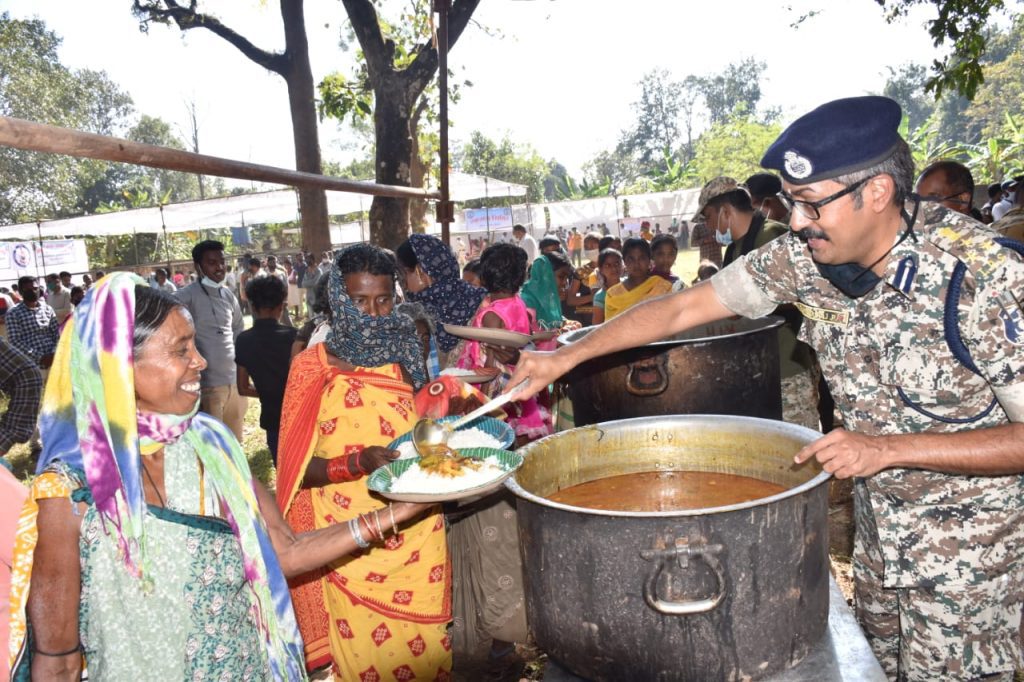
Perhaps the most critical pillar of Bastar’s transformation has been community engagement.
For years, local tribal populations were the worst victims of Maoist violence. Between 2000 to 2020, thousands of civilians lost their lives in IED blasts, kangaroo courts (Jan Adalats), and targeted killings.
Security forces recognised that without winning public trust, lasting peace was impossible.
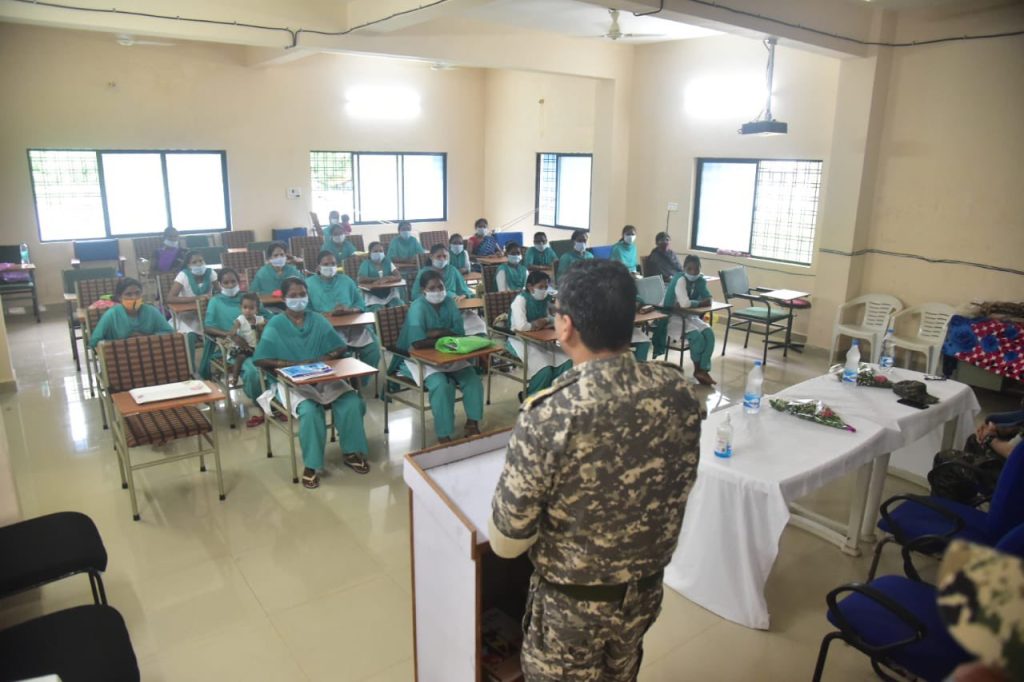
“The community was the fulcrum of all efforts. They were the biggest victims of this violence, and once they understood the reality, they began to disengage from Maoist influence,” says “Sundarraj Pattilingam”.
Key initiatives included:
- Village interaction programmes
- Medical camps
- Sports events like Bastar Olympics
- Cultural platforms like “Bastar Pandum”
Lakhs of tribal youth participated in these initiatives, creating a positive social environment.
Gradually, the fear barrier broke. Villagers began supporting the administration—not out of compulsion, but conviction.
THE TURNING OF CADRES: SURRENDER AND REINTEGRATION
Another major breakthrough came through the surrender of Maoist cadres.
In the last three years alone, over 3,000 cadres surrendered, including several mid- and senior-level leaders.
This created a domino effect:
- Local formations weakened
- Recruitment pipelines collapsed
- Intelligence flow improved
Many surrendered cadres also helped expose internal realities of Maoist operations—further weakening their ideological hold.
The government’s rehabilitation policy played a key role here, offering:
- Financial assistance
- Skill development
- Livelihood opportunities
- Social reintegration
THE COLLAPSE OF AN IDEOLOGY
Beyond guns and development, Bastar’s transformation is also a story of narrative collapse.
For decades, Maoists projected themselves as champions of tribal rights. But sustained outreach exposed their violent practices:
- Forced recruitment of children
- Use of locals as human shields
- Brutal punishments through Jan Adalats
- Restrictions on normal family life
Many cadres revealed disturbing practices, including forced sterilisation within ranks—further eroding support.
As truth replaced propaganda, the movement began losing its moral legitimacy.
THE LAST MILE: POCKETS OF RESISTANCE
Despite massive progress, a few remote forest pockets still remain.
These areas, often located in difficult terrains and border zones, continue to house small groups of Maoists—sometimes just 3 to 4 cadres per pocket.
However, their capacity is severely limited:
- No organised formations
- No leadership structure
- No mass support
Continuous operations and infrastructure expansion are expected to eliminate these pockets soon.
THE REMAINING CHALLENGE: IED THREAT
Even as the Maoist threat declines, one major challenge persists—Improvised Explosive Devices (IEDs).
Thousands of IEDs planted over the years still pose risks, especially in forest routes.
To counter this:
- Advanced mine-detection technologies are being deployed
- Bomb disposal squads strengthened
- Road-opening operations intensified
A MODEL FOR THE FUTURE
The Bastar model offers a blueprint for conflict resolution:
- Relentless security pressure
- Simultaneous development push
- Deep community engagement
- Rehabilitation over retribution
Together, these efforts have dismantled what was once India’s most formidable insurgency network.
A SILENT REVOLUTION
Today, Bastar stands at a historic juncture.
From a region where governance once struggled to enter, it is now a place where roads are being built, schools are opening, and young people are dreaming beyond survival.
The forests are still dense—but the fear is fading.
The guns are quieter—but the change is louder.
And as Bastar inches towards becoming truly Naxal-free, it tells a powerful story: that even the most entrenched conflicts can be resolved—not just with force, but with trust, opportunity, and a vision for a better future.