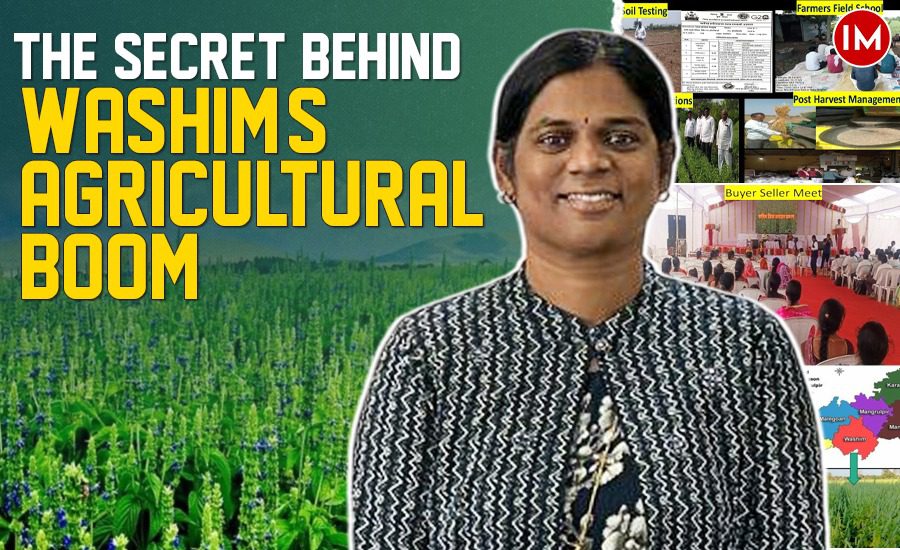
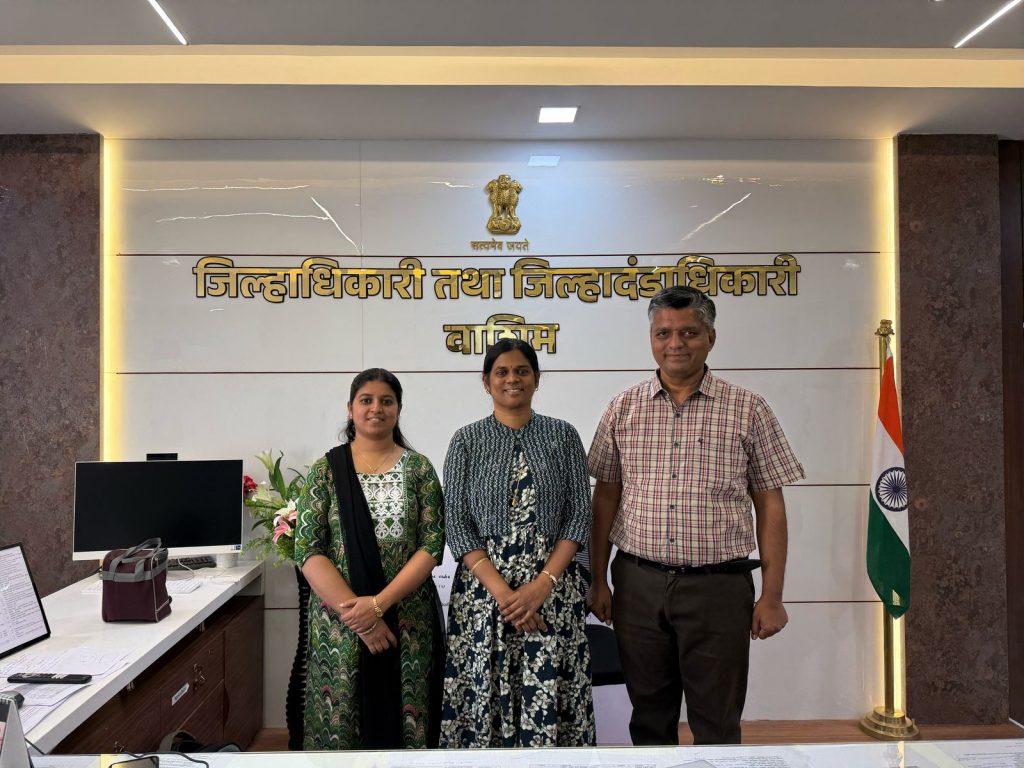
In the heart of Maharashtra lies Washim, a district that has experienced remarkable growth and transformation under the leadership of Ms. Buveneswari Suriyan, a 2015-batch IAS officer from the Maharashtra cadre. As the District Collector, Buveneswari’s vision was clear: to empower farmers economically, socially, and technologically. With the right strategies, Washim, which was once a land of underutilized potential, was poised for a revolutionary shift in agriculture.
After joining Washim in July 2023, Buveneswari quickly took the initiative. Her bold vision led to the introduction of chia seed farming – a high-value, low-resource crop that would not only transform the livelihoods of farmers but also position Washim as a key player in the national agricultural landscape. This is the story of how Washim rose from a district struggling with traditional crops to becoming the hub of India’s organic chia production. Today, more than 8,000 farmers are benefiting from this crop, experiencing a significant boost in income and sustainability.
Indian Masterminds had the opportunity to interact with Ms. Buveneswari to learn more about this groundbreaking initiative and her inspiring journey.
HER JOURNEY
Ms Buveneswari originally hails from Tamil Nadu. She completed her engineering degree in Computer Science before embarking on a career in the private sector, working with Dell. However, while in the corporate world, she felt a deep calling to contribute to society, realizing that her current job wasn’t fulfilling her desire to make a difference. Driven by this urge, she began preparing for the UPSC exams while still working. Her hard work paid off when she cracked the examination in 2014, securing an All India Rank of 251 and becoming an IAS officer.
Before her current role as the District Collector of Washim, she served as the CEO of the Zilla Parishad in Bhandara. Her impressive career also includes serving as the Director General of Vanamati Nagpur and the Chief Executive Officer of Nagpur Smart City.
CHIA FARMING: A GAME CHANGER FOR FARMERS
The decision to promote chia farming was based on thorough research into Washim’s cropping patterns. Traditionally, farmers in Washim relied on crops like wheat and chickpeas, which offered limited financial returns. Chia, however, offered a unique advantage: it requires less water than wheat and chickpea, thrives in Washim’s soil, and boasts a high cost-to-benefit ratio. For every rupee invested, farmers could expect a return of ₹4.81, far surpassing traditional crops, where the returns were lower.
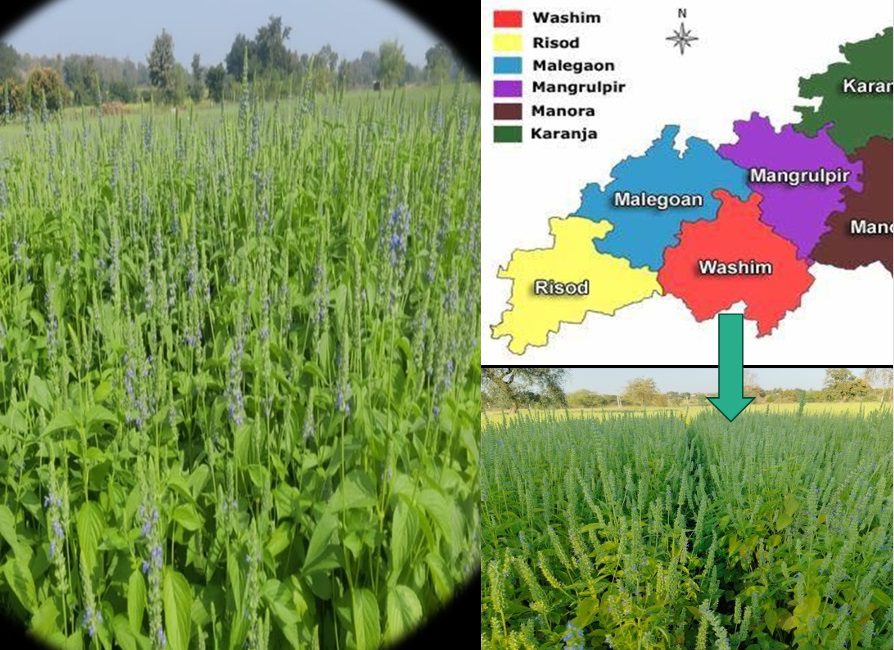
In the 2022-2023 Rabi season, just 162.5 hectares of land were dedicated to chia farming. Yet, the results were astounding. By 2023-2024, the area had expanded to 898 hectares – a growth of 5.5 times. By 2024-2025, chia cultivation covered a staggering 3,608 hectares, becoming the third most significant Rabi crop after wheat and gram.
She said, “Here, most of the farmers have small holdings. That’s why this is huge and significant. By introducing chia farming, we are not only providing a high-value crop that requires fewer resources but also empowering small-scale farmers to increase their income and improve their livelihoods.”
CHALLENGES: NEW CROP, NEW HOPE
The journey to making chia a staple in Washim’s agricultural scene was not without its challenges. The concept of chia farming was entirely new to the district, and convincing farmers to adopt this crop was no easy task. The major hurdle was the lack of standardization, which meant that there was limited information on best practices, seed availability, and post-harvest handling.
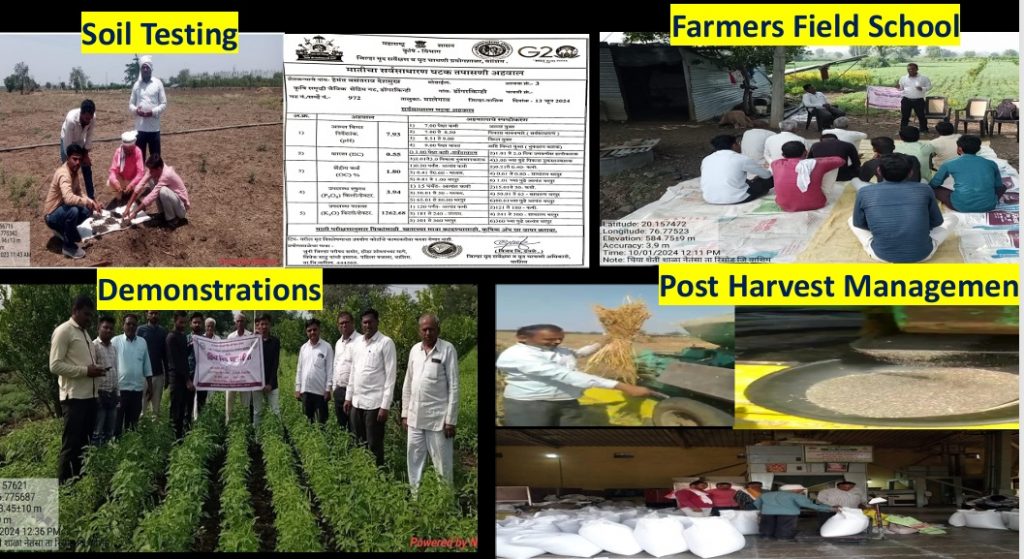
To tackle these issues, Buveneswari’s administration took a proactive approach. They organized workshops, farmer field schools, and field demonstrations, where farmers could learn directly from experts and fellow farmers who had adopted chia farming successfully. Technical guidance booklets were created in the local language, ensuring that every farmer had access to the information needed to cultivate chia effectively.
In addition to these efforts, post-harvest practices such as cleaning, grading, and packaging were developed locally, ensuring that chia farmers had access to the resources necessary for high-quality produce. Through collaboration with institutions like the CFTRI in Mysuru, the district gained expertise that helped refine chia farming techniques.
“This initiative has the potential to uplift entire communities, turning challenges into opportunities for growth and sustainability,” she added.
MARKETING: BRINGING THE MARKET TO WASHIM
One of the greatest barriers to success was the challenge of marketing. Before the chia revolution, farmers had to travel long distances to Neemuch in Madhya Pradesh to sell their produce. But under Buveneswari’s leadership, local markets and Agricultural Produce Market Committees (APMCs) were revitalized to actively trade chia, offering farmers fair prices and eliminating the need for long-distance travel.
In the 2023-2024 season alone, 4,500 quintals of chia were sold, generating a turnover of ₹6.3 crore. The organic chia, which was sold at ₹14,000 per quintal, quickly found buyers, and a registered contract was established between the Farmers Producer Company (FPC) and private buyers, ensuring that farmers received a fixed, fair price. Washim was now officially on the map for chia cultivation, with the APMC trading chia seeds and offering farmers a direct, reliable market.

A DISTRICT TRANSFORMED: THE RIPPLE EFFECT OF CHIA FARMING
The impact of chia farming on Washim’s agricultural landscape has been nothing short of transformational. The district has gone from an aspirational to an inspirational model.
- Economic Benefits: The introduction of chia has doubled farmer incomes, providing a sustainable, high-value crop that requires fewer resources than traditional crops. In a district where agriculture is the primary livelihood, this has brought significant financial relief and hope to the farming community.
- Farmer Welfare: The initiative has directly contributed to reducing farmer suicides, a tragic issue in many rural areas. Farmers, once struggling with unprofitable crops, now have the opportunity to grow a crop that provides them with financial stability.
- Market Access: The establishment of local markets, trade agreements, and buyer-seller meets has ensured that farmers are no longer at the mercy of distant markets. They now have direct access to better prices and fairer deals.
- Organic Certification: Washim became the only district in India with officially certified organic chia cultivation. With more than 1,000 farmers and 1,600 hectares certified, Washim stands as a leader in organic farming, ensuring farmers a premium for their organic produce.
A BRIGHT FUTURE
The success of chia farming in Washim is only the beginning. Buveneswari and her team have ambitious plans for the future, including branding and retailing chia products, as well as developing value-added products like chia nutrition bars. The success of this initiative offers a replicable model for other regions, not only in Maharashtra but across India.
The journey of chia farming in Washim is an example of the power of strategic thinking, community collaboration, and the willingness to embrace innovative solutions.
A MODEL
With chia farming, Washim has proven that when farmers are empowered with knowledge, technology, and access to markets, they can transform their livelihoods and communities. Ms Buveneswari’s leadership has inspired a new way of thinking about agriculture in Washim. What was once a district struggling with economic and social challenges has now become a beacon of hope for farmers across India. The chia revolution in Washim is more than just about crops; it’s about creating a sustainable, prosperous future for farmers, where health-conscious consumers and wealthy farmers thrive side by side.