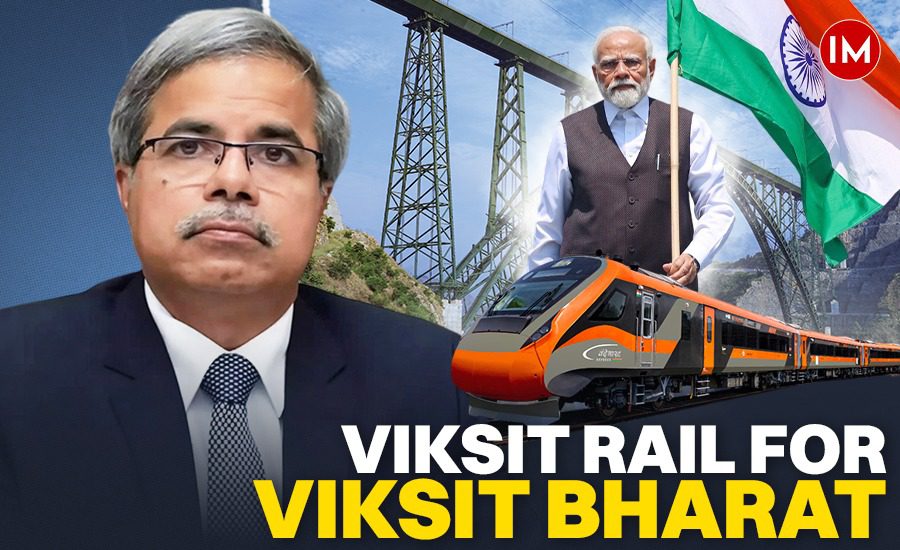
By Satish Kumar, Chairman & Chief Executive Officer, Railway Board
Indian Railways, one of the world’s largest rail networks, is the lifeline of the nation, connecting its vast and diverse landscapes. It plays a crucial role in the nation’s economy by facilitating the movement of passengers and freight across the country.
The Indian Railways is undergoing a significant transformation, focusing on station development, rolling stock modernization, capacity enhancement, high speed rail and enhanced safety. Initiatives are being implemented to improve passenger experience, increase freight capacity and adopt sustainable practices. Indian Railways is committed to become a world class transportation provider, driving progress and contributing to India’s all-round development.
IR is working hard to upgrade its infrastructure, introduce new technologies and further strengthen its role in the nation’s growth story. From introducing modern trains to empowering its workforce, the IR is adapting to meet the evolving needs of emerging New India.
FY 2024-25: Year of Initiatives and Achievements
In the quest to Viksit Bharat 2047, Indian Railways continued its transformative journey in this financial year also, paving the way for a new era of modernization and progress. With a strong focus on providing world class travel experience, boosting freight efficiency and also adopting advanced technologies, the Indian Railways has solidified its role as a catalyst for national growth with a record freight loading of 1,617.4 MT.
The best ever capex utilization of 2.62 lakh crore was achieved in FY 2024-25 which is leading to development of modern stations, state-of-the-art trains and innovative safety systems are reshaping the landscape of rail travel.
This year was marked by the commissioning of landmark bridges namely the first vertical sea-lift bridge at Pamban, world’s highest rail bridge on Chenab River and India’s first cable stayed bridge, Anji Khad Bridge. After the grand success of Vande Bharat services in transforming intercity travel, Namo Bharat Rapid Rail services, aimed at providing better travel experience for commuters in suburban and inter-city short distance travel, have been introduced between Ahmedabad and Bhuj.
In the FY 2024-25, the capacity addition remained a focus area and 3248 km of track commissioning in New Line, Doubling and gauge conversion was achieved.
The manufacturing of electric locomotives reached the highest ever figure of 1476 during the year. Indian Railways moved further in its goal to progressively replace all conventional coaches with LHB and manufactured 5742 LHB coaches during FY 2024-25 which is 15% higher than previous year. The availability of wagons to freight customers has also been improved with the addition of 41,929 wagons during the year.
The year also witnessed the Indian Railways initiatives in the futuristic transportation systems. Indian Railways is supporting IIT Madras for setting up of a center of excellence. The hydrogen trainset project is set to place the country at forefront of global efforts towards decarbonization of rail transport.
Committed to sustainability, IR is steadily moving towards greener operations with a commissioning of 2701 km of track electrification reaching a figure of 99% route electrification. Indian Railways is poised to attain the net zero (Scope 1) by 2025 creating a new landmark in sustainability in logistics.
Process Reforms
The foundation of the Viksit Rail for Viksit Bharat lies in the reforms in the processes to empower the field units to plan, sanction and execute the works as per the requirements.
To fast pace the completion of projects adequate empowerment of field units has been done. Powers of acceptance for works tenders have been enhanced to various accepting authority including full powers to Chief Administrative Officer/Construction for all works contracts including Engineering Procurement and Construction (EPC) tenders.
GMs of various railway zones can now sanction infrastructure projects such as yard remodelling, track renewal, bridge, tunnel work, etc. worth `50 crore. It is 20 times more than their previous sanctioning power of `2.5 crore.
Indian Railways has taken steps to streamline processes and resolve disputes between procuring entities and contractors. All pending cases on the Indian Railways E-Procurement System (IREPS) related to the department have been settled through a ‘one-time settlement scheme’ known as ‘Vivad Se Vishwas II (Contractual Disputes).’ In order to streamline and improve clarity in Engineering Procurement and Construction (EPC) tendering, a new ‘Schedule G-1’ has been introduced, providing a separate Bill of Quantities (BoQ) for itemized works.
Enhancing Infrastructure and Speed
Indian Railways has made significant strides in track infrastructure improvements. In Financial year 2024-25, 6200 track km of rails have been replaced with new rails and complete track renewal has been accomplished for 6450 track km.
Indian Railways utilizes various track machines for track relaying, tamping, deep screening and various other maintenance activities. Further, enhancing track infrastructure, 8550 turnouts have undergone renewal. Apart from this, the sectional speed has been raised to 130 kmph over 2000 track km, encompassing portions of the golden quadrilateral and diagonal routes, as well as other B routes. Additionally, the sectional speed has been increased to 110 kmph over 7200 track km.
Integrated Track Monitoring System (ITMS) was launched to monitor and measure critical track parameters at speeds ranging from 20 to 200 kmph. This capability ensures comprehensive diagnostics and monitoring of track infrastructure without compromising operational efficiency, making it an essential tool for modern railway maintenance and safety management.
Infrastructure for Viksit Bharat
Indian Railways sanctioned three key economic corridors: (i) Energy, mineral and cement corridors; (ii) High traffic density routes; and (iii) Rail sagar corridors. A total of 434 projects are planned for implementation across these corridors. During the 2024 calendar year, 58 projects out of the total 434 were sanctioned, with a combined completion cost of approximately `88,875 crore and a total track length of about 4107 km.
Amrit Bharat Stations
Indian Railways has identified 1337 stations for redevelopment. Out of 1337 stations, tenders have been awarded and work has commenced in 1198 railway stations. Redevelopment of 111 stations (106 under ABSS) have been completed till 31st March, 2025. Redevelopment of railway stations across the country is being done with special emphasis on making them divyangjan friendly and upgrading the passenger amenities for all passengers.
Redeveloped Deshnoke Railway Station, Rajasthan
A major initiative has been launched to enhance safety at Level crossings by constructing ROBs and RuBs. In FY 2024-25, 1255 RoBs and RuBs were constructed which were 16% higher than the previous FY (2023-24). For the convenience of passengers, especially for ease of movement of divyangjans, 369 lifts, 187 escalators have been provided at various stations of IR in FY 2024-25 which is the highest ever.
To stimulate investment from the industry in the development of cargo terminals, Indian Railways is developing Gati Shakti Multi-Modal Cargo Terminals (GCT) across the country. A total of 354 locations have been identified for this purpose, with 327 on non-railway land and 27 on railway land. As of March 2025, 100 GCTs have been commissioned.
Connecting Bharat- Strategic Rail Corridors
Indian Railways has undertaken rail connectivity projects to connect hitherto unconnected areas like North-East and Himalayas which are strategically important. After the commissioning of Udhampur-Srinagar-Baramulla line, the work is underway on the Rishikesh Karnaprayag rail line. The 14.57 km longest rail tunnel between Devprayag and Janasu saw a breakthrough on 16th April, 2025 when the last layer of rock was removed by the tunnel boring machine named Shakti.
The strategically important Bhanupli-Manali-Leh will target the opening of Bhanupli-Bilaspur section by 2027.
North East Connectivity Project
The North East region has witnessed unprecedented rail development in recent years. Indian Railways has made it a priority to connect all state capitals of the region by rail. Projects like the Jiribam–Imphal and Dimapur–Zubza (Kohima) lines are under advanced stages of execution. Arunachal Pradesh, Tripura and Manipur have already been brought onto the broad-gauge map. With the commissioning of Bhairabi–Sairang, Aizawl will become the fourth North East state capital connected to the Railways.
Electrification
Indian Railways has taken up electrification of Broad Gauge (BG) Railway lines in a Mission mode. Since FY 2014-15, Indian Railways has completed electrification of about 45,200 Route km on Broad gauge (BG) network. There is substantial jump in electrification from about 1.42 km/day during 2004-14 to about 19.7 km/day during FY 2023-24.
3248 km has been electrified during the FY 2024-25 and electrification of BG Network of IR has been extended to 97%.
Reliable power supply is crucial for electric train operations. Redundant power sources are available at both grid substations and traction substations to ensure uninterrupted services.
Freight Initiatives
Indian Railways achieved a record freight loading of 1617.4 MT in FY 2024-25 with a revenue of 2.64 lakh crore.
Coal remains the mainstay of the freight loading with a share of 50.9% in the overall loading in tonnage terms. Automobile traffic is one of the success stories with the rail coefficient rising from 1.5% in 2013-14 to 24.20% in FY 2024-25.
In order to promote parcel traffic, popular e-commerce commodities such as cosmetics, personal hygiene products, lithium-ion batteries, battery powered vehicles, etc. which were not allowed for transportation have now been included in the Red Tariff (Policy issued in June’24), so as to facilitate their movement in properly packed conditions through Railways’ parcel services, leased parcel cargo express trains, indented parcel trains and JPP-RCS trains.
Following the Mantra, ‘Hungry For Cargo’, IR has made sustained efforts to improve the ease of doing business as well as improve the service delivery at competitive prices.
Budget
Making Indian Railways a world-class entity has been the top priority of the Indian Government. In the Union Budget 2025-26, presented by Nirmala Sitharaman, Union Minister for Finance and Corporate Affairs on 1st February, 2025 a record capital expenditure (Capex) of `2,65,200 crore has been estimated for 2025-26. The Gross Budgetary Support has been maintained at FY 2024-25 record level of `2,52,000 crore, a nine-fold rise from `28,174 crores in 2013-14.
The key focus areas for 2025-26 budget are safety, capacity augmentation, customer amenities and rolling stock upgradation. The key initiatives, such as the Amrit Bharat Station Scheme, modernization of locomotives and coaching stock and the implementation of advanced safety measures, are crucial steps towards achieving the world class standards. These comprehensive measures are expected to not only boost the efficiency and safety of train operations but also support India’s broader economic growth and connectivity goals.
Renewable Energy Milestones: Net Zero
Significant advances are being made by Indian Railways towards its ambitious goal of becoming a Net Zero Carbon Emitter (Scope 2) by 2030.
To achieve this, investments have been made in renewable energy infrastructure. As of April 2025, approximately 553 MW of solar power plants, encompassing both rooftop and ground-mounted installations, and about 103 MW of wind power plants have been commissioned. Furthermore, 100 MW of Renewable Energy – round the clock (RE-RTC) has been successfully integrated into the network.
With approximately 2014 MW of renewable capacity already tied up, Indian Railways is demonstrating a strong commitment to sustainable practices and reducing its carbon footprint. IR is also foraying into nuclear power generation to meet its traction power demand with clean energy.
Upgradation of Rolling Stock
Vande Bharat: As of March, 2025, the Vande Bharat Express, a flagship indigenous semi-high-speed train, had significantly expanded its services across the nation, with a total of 136 services operational. During the calendar year 2024, 62 new Vande Bharat services were added, further enhancing this development.
Vande Bharat Express
Namo Bharat Rapid Rail: The Namo Bharat Rapid rail has been conceived with an aim to provide enhanced passenger facilities and rapid rail transit services. With an operational speed of 130 kmph, it is set to revamp the intercity services. After successful run of first Namo Bharat Rapid Service between Ahmedabad and Bhuj, the second service was started between Patna-Jayanagar on 24th April, 2025.
Vande Bharat Sleeper Train Set: Indian Railways is set to revolutionise long-distance travel with the new Vande Bharat Sleeper train set, a world-class, high-speed sleeper train. The first 16 coach train, manufactured by Integral Coach Factory, Chennai, successfully completed trials between Mumbai and Ahmedabad, covering 540 km. The sleeper train promises luxury, speed and comfort with features like automatic doors, ultra-comfortable berths, onboard Wi-Fi and an aircraft-like design.
Dedicated Freight Corridors
Indian Railways has taken up construction of two Dedicated Freight Corridors (DFC) i.e. Eastern Dedicated Freight Corridor (EDFC) from Ludhiana to Sonnagar (1337 km) and the Western Dedicated Freight Corridor (WDFC) from Jawaharlal Nehru Port Terminal (JNPT) to Dadri (1506 km). Out of total 2843 km, 2741 Rkm (96.4%) has been commissioned and operational. The work in balance section has been taken up.
Ministry of Railways has also undertaken the work of preparation of Detailed Project Reports (DPR) for three new Dedicated Freight Corridors (DFCs).
Passenger Centric Reforms
This year was marked by various initiatives to improve the conditions for the common citizens of the country. A decision was taken to ensure that every train has a minimum of four general class coaches and 1062 GS coaches were added to 434 pair of trains. The production of GS coaches has been significantly increased from 550 coaches in 2023-24 to 2110 in 2024-25. Indian Railways has planned to manufacture 10,000 non-AC coaches in next three years to cater to the needs of the common man.
Special emphasis has been kept on the cleanliness of coaches and stations by deploying mechanized cleaning and onboard housekeeping services. Use of Coach Maintenance Management (CMM) module to monitor the staff deployment has led to remarkable improvement in the cleanliness. The revamped clean train station (CTS) scheme has been launched on 20 stations to cover 683 trains.
One day Automatic Refund: The process of refund is being digitized aiming to give refund on an immediate basis. This is achieved through automation of refund process by developing a module in Web Enabled Coaching Refund application. The new system has enabled in disposing more than 90% of refund cases within 24 hours from earlier 60 days of filing of TDR.
Improved Catering-Base Kitchen Model: State of art Base Kitchen Infrastructure is being set up with adequate logistics and service infrastructure along with deployment of skilled manpower to handle food production and distribution. The base kitchens are not only being set up at originating stations but also at enroute stations to ensure service of good quality and hygienic food to passengers on trains.
All trains have been mapped with service locations and accordingly base kitchens are being set up. Around 900 base kitchens equipped with modern kitchen equipment, planned over IR network. As on 31st March, 2025 a total of 718 base kitchens has been commissioned.
Bullet Train Project
The Mumbai-Ahmedabad Bullet Train Project is demonstrating significant progress on various fronts. Impressive milestones have been achieved in this regard, with over 243 km of viaducts, 352 km of piers and 362 km of pier foundations are now complete.
The construction has also involved complex engineering feats, including the successful bridging of 13 rivers and the crossing of multiple railway lines and highways through the erection of five steel bridges and two pre-stressed concrete (PSC) bridges.
In Maharashtra, the first concrete base-slab for the Mumbai Bullet Train Station has been successfully cast at a depth of 32 meter, equivalent to a 10-storey building. Work on the 21 km tunnel between Bandra-Kurla Complex (BKC) and Shilphata is underway, with an Intermediate Tunnel (ADIT) of 394 meter completed to facilitate main tunnel construction.
Further in Maharashtra’s Palghar district, the construction of seven mountain tunnels using the New Austrian Tunnelling Method (NATM) is underway, complementing the successful completion of the single mountain tunnel in Gujarat. The twelve stations planned along the high-speed rail corridor are also under rapid construction. These stations are being designed with thematic architectural elements, incorporating energy-efficient technologies, and focusing on user-friendliness to ensure a world-class and sustainable passenger experience.
Hyperloop Project
India is making notable progress in hyperloop technology, with Ashwini Vaishnaw, Minister of Railways on 15th March, 2025 highlighted the development of electronics components at the Integral Coach Factory (ICF) in Chennai. This move leverages the expertise at ICF, which has already successfully developed complex electronics for Vande Bharat high speed trains.
The 410-meter Hyperloop test tube at IIT Chennai, recognized as the longest such facility in Asia, showcases the indigenous development of the entire testing system. As an initiative, Research Designs and Standards Organisation (RDSO) has signed Memorandum of Understanding (MoU) with IIT/Madras with a funding of `20.89 crore for setting up a Centre of Excellence for Hyperloop technology with the objective of development of sub-scale model of Pod, test track and vacuum tube facility of the futuristic full-scale Hyperloop at IIT/Madras for validation of this technology. Indian Railways’ financial and technical support to the emerging technology is critical for propelling this project forward.
Chenab Bridge
The Chenab Bridge, a defining landmark of the USBRL project, is an engineering marvel that surpasses global records. Towering at 359 meter above the riverbed and 35 meter taller than the Eiffel Tower, it is the highest railway arch bridge in the world.
The Chenab Bridge spans a total length of 1215 meters and has been engineered with robust specifications to endure wind speeds reaching approximately 266 km/hour. Furthermore, the structure incorporates earthquake-resistant design principles. The bridge is equipped with 117 advanced sensors that will continuously monitor its stability and overall health. With a designed lifespan exceeding 120 years, the Chenab Bridge is also anticipated to emerge as a significant attraction for tourists.
Pamban Bridge
The harsh marine environment and growing transportation demanded a modern solution.
Thus, the decision to build the New Pamban Bridge was made by Ministry of Railways and RVNL was entrusted with the responsibility of transforming this vision into reality. The result is India’s first vertical lift railway sea bridge, a 2.07 km long marvel spanning the Palk Strait in Tamil Nadu.
New Pamban Bridge is designed to meet modern standards and tackle the challenges posed by the environment, preserve the cultural and historical importance of the region and mark a significant leap forward in design, connectivity and regional development.
After the inauguration of New Pamban Bridge, Narendra Modi, Prime Minister flagged off Rameswaram-Tambaram (Chennai) New Train Service on 6th April, 2025
Mahakumbh 2025
Indian Railways achieved significant milestones in managing the unprecedented influx of pilgrims during the Mahakumbh 2025 in Prayagraj, which concluded on 26th February, 2025. IR operated more than 17,000 trains including 7484 special trains to ensure smooth travel of passengers. Furthermore, 17 new permanent Yatri Ashray were constructed, increasing the holding capacity of these shelters from 21,000 to over 1,10,000. Additionally, 21 new Road over Bridges (RoBs) and Road under bridges (RuBs) have been built, eliminating all level crossings in the region. The doubling of Prayagraj-Varanasi and Janghai-Phaphamau provided the infrastructural support to handle the volume of special trains.
Each station had its own control room, with a central master control room at Prayagraj Junction. Standard Operating Procedures (SOPs) were developed for train operations and crowd management at stations. Additional deployment of 15,000 personnel from the Railway Protection Force (RPF) and Government Railway Police (GRP) and para-military forces were done to ensure security. Also, additional deployment was made at other sensitive railway stations were high rush of passengers was expected.
Digital Initiatives
Indian Railways has witnessed significant progress in digital ticketing, with e-ticketing reaching 86% in the reserved sector. The unreserved sector has also seen substantial growth in e-ticketing adoption, increasing from 28% at the beginning of the current financial year to approximately 33% by October 2024. Furthermore, the refund process has been significantly streamlined, enabling refunds in eligible cases within 24 hours for around 98% of transactions.
To enhance payment convenience, dynamic QR code-based payment systems have been implemented across all ticket counters on Indian Railways and are being extended to parcel offices, with full coverage expected by the end of the current financial year.
SwaRail: The Ministry of Railways has introduced the SuperApp ‘SwaRail’ on 31st January, 2025. The SuperApp is a one-stop solution offering multiple public-facing services of Indian Railways, including reserved and unreserved ticket booking, platform and parcel booking, Train and PNR enquiries and help through Rail Madad.
The App allows users to onboard using their existing RailConnect or UTS on Mobile credentials. Once registered, the same credentials apply across these platforms. The single-sign-on feature reduces the need to remember multiple passwords.
Achievements made by RPF
The Railway Protection Force (RPF) is unwavering in its commitment to safeguarding railway property, passenger areas, and the well-being of travellers, while also assisting Indian Railways in delivering reliable freight transport services to its customers. RPF made some notable feats during the year 2024.
Under Operation ‘Nanhe Farishtey’ RPF played a pivotal role in reuniting more than 549 children in need of care and protection with their families. In a commendable effort, RPF arrested 76 individuals and seized narcotics, valued at `4.13 crore under the Operation ‘NARCOS’. RPF also helps police in preventing and detecting crimes against railway passengers, under Operation ‘Yatri Suraksha’ RPF arrested 225 criminals involved in offenses against passengers.
Under Operation ‘Amanat’ RPF personnel helped in securing the belongings of the passengers who forgot them to collect in a rush to board the train or leave while leaving the train/station.
RPF promptly addressed security-related passenger complaints received through Rail Madad portal and the Helpline (No. 139 integrated with Emergency Response Support System No. 112). Over 20,059 complaints were received, with RPF taking necessary actions to resolve them. Further, during the General Elections 2024 RPF seized unaccounted cash, drugs/NDPS (Ganja/Charas, Tobacco), contraband (liquor), bullion (gold, silver, etc.), illegal arms/ammunition, others (Cigarettes, Pan Masala etc.) of valued `39 crore.
Further, under Operation ‘Matrishakti’, RPF personnel, especially women personnel go out of the way to help pregnant women who go into labour during their train journeys and render assistance in childbirth.
RPF has launched a dedicated initiative ‘Meri Saheli’ to provide enhanced safety and security to lady passengers travelling alone by trains for their entire journey i.e. from the originating station to destination station in long distance trains.
Focusing on Women Welfare
The women employees of IR have been steadily increasing their presence and impact across various roles, marking significant achievements and contributing substantially to the railway’s progress. Railway Board celebrated International Women’s Day with enthusiasm at Rail Bhawan and the event honoured the achievements of women and reaffirmed the commitment to gender equality, witnessing the participation of approximately 300 women officials.
Whether managing stations, inspecting tickets, excelling in sports, contributing to engineering or ensuring security as part of the RPF Indian Railways’ Nari Shakti has proven its efficiency and leadership in every domain.
Sports
IR through its sports wing, Railway Sports Promotion Board (RSPB), has contributed immensely to promoting sports across the Country since 1928. RSPB has now become an important organization in promotion of Sports in the country and presently has 29 game disciplines. National Sports Awards for the year 2024 have been announced by the Ministry of Youth Affairs & Sports. It is a matter of pride that out of 32 players, who have been awarded with the prestigious Arjuna Award, five players are from IR.
Jyothi Yarraji, SCR (Athletics-100 m hurdles), Annu Rani, PLW (Athletics-Javelin Throw), Salima Tete, SER (Hockey), Swapnil Suresh Kusale, CR (Shooting-50 m 3P), Aman, NR (Wrestling-57 kg Freestyle).
Apart from this, Indian Railways left an indelible mark in Paris Olympics, 2024 with three Railway players winning Medals for the country. Aman Sehrawat – Bronze (Wrestling), Swapnil Kusale – Bronze (Shooting), Amit Rohidas – Bronze (Hockey).
Viksit Rail for Viksit Bharat
The FY 2024-25 stands as a significant milestone in Indian Railways’ journey towards realizing the ambitious goals of Viksit Bharat 2047. The unwavering commitment to modernization, efficiency enhancement, technological adoption and sustainability has not only redefined the rail travel experience but has also strengthened the Railways’ position as a vital engine for national progress.
By seamlessly integrating tradition with cutting-edge innovation, IR is firmly on track to becoming a world-class transportation network, catering to the evolving needs of a dynamic nation and contributing significantly to its overall development.
The steps taken in this year lays a strong foundation to the development of a Viksit Rail in the coming years to provide an economical and safe means of transportation for passengers and freight segment.