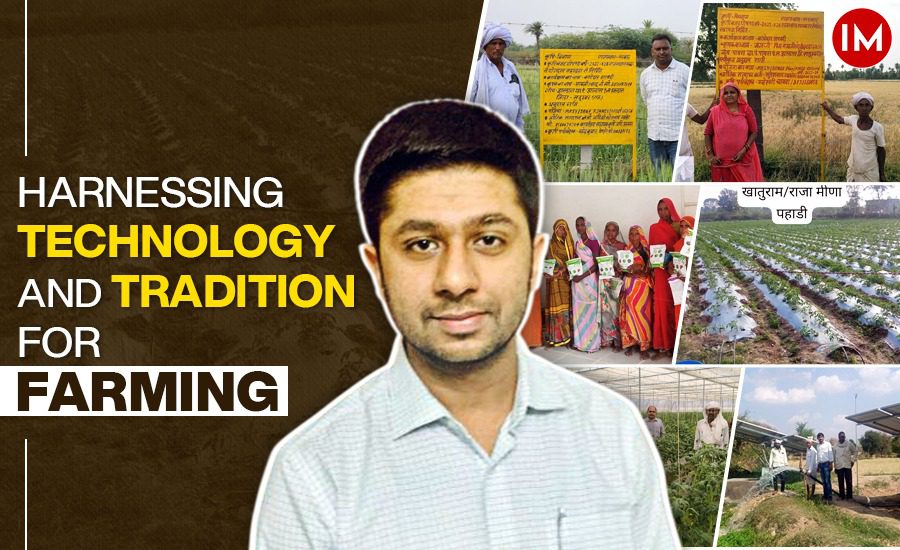
In the arid terrains of Salumbar, Rajasthan, a silent revolution is underway. Spearheaded by the visionary District Collector, Jasmeet Singh Siddhu, this initiative aligns with the Hon’ble Prime Minister’s vision of doubling farmer incomes. Combining an array of government schemes, Salumbar proves that innovation, when married to determination, can yield transformative results for rural communities.
A Vision Takes Root
When Siddhu assumed his role as DC, he was confronted with a daunting challenge: how to uplift the struggling farmers of Salumbar, who were battling water scarcity, unpredictable weather, and limited resources. Recognizing that piecemeal solutions wouldn’t suffice, Siddhu and his team devised an integrated approach that brought together the benefits of multiple flagship schemes, including the National Mission on Micro Irrigation (Per Drop More Crop), Rashtriya Krishi Vikas Yojana (RKVY), National Horticulture Mission, and PM-KUSUM.
“The idea was simple yet ambitious,” Siddhu explained to Indian Masterminds. “We wanted to create a model where farmers could sustain themselves and thrive. By converging multiple schemes, we aimed to address all aspects of farming—water, energy, and quality inputs.”
FROM VISION TO ACTION
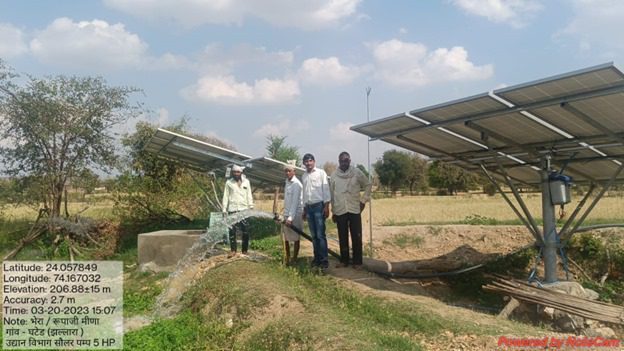
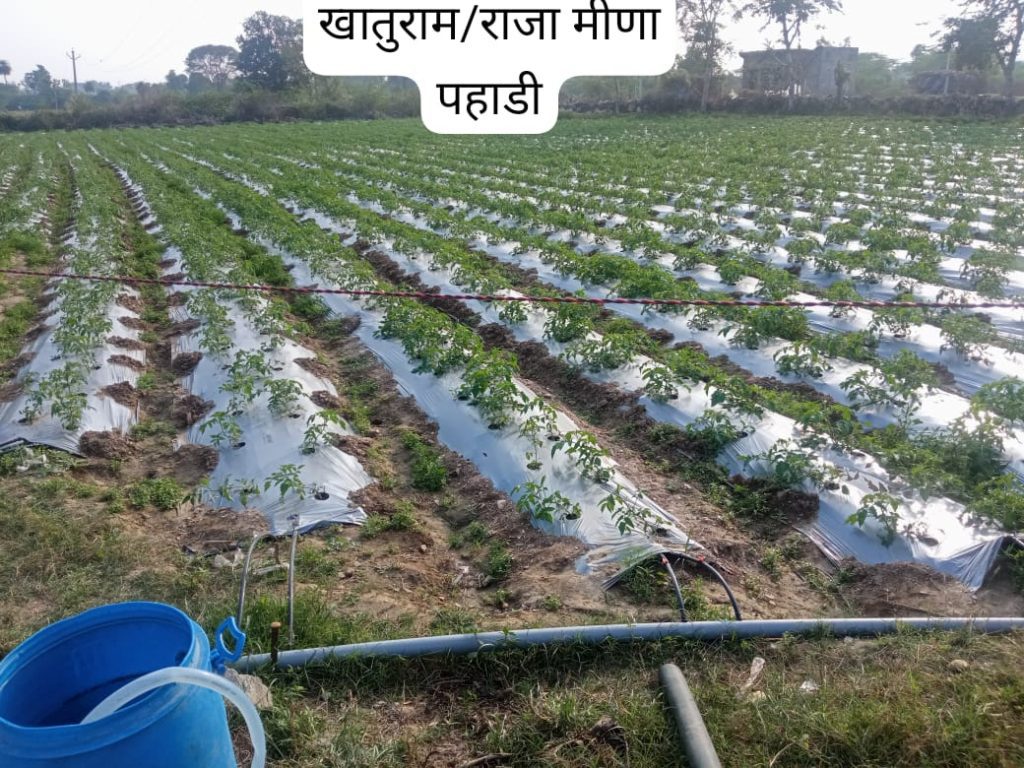
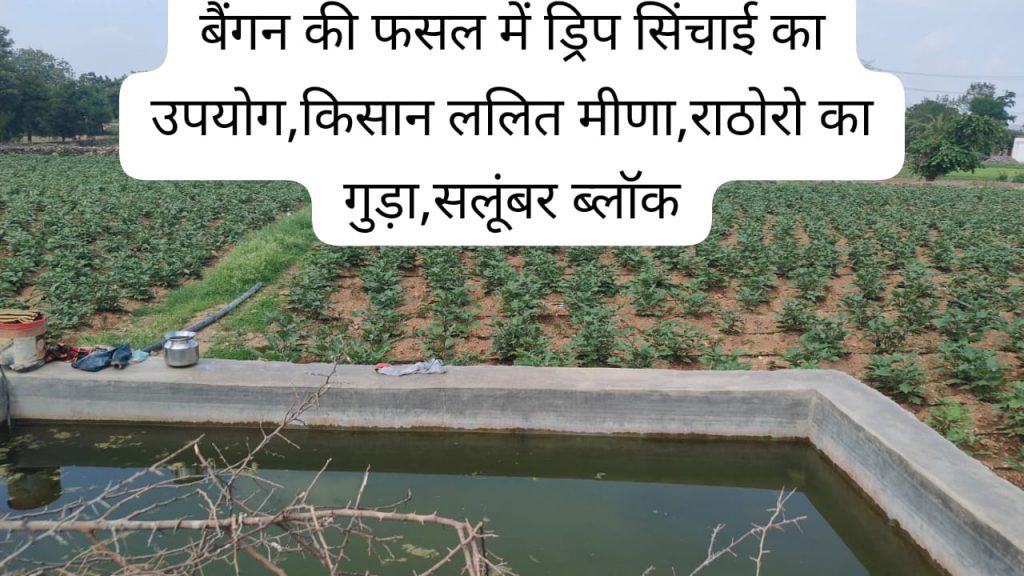
Under the initiative, over 60,000 farmer families were contacted and mobilized. Farmers received farm implements under RKVY, while the National Horticulture Mission supported them with farm ponds, plastic mulching, and quality horticultural seeds. Solar pumps and drip irrigation systems provided under PM-KUSUM addressed water and electricity challenges.
The efforts bore fruit. “Farm ponds and solar pumps have made our farmers independent in water availability,” Siddhu notes. “The use of drip irrigation and plastic mulching has significantly reduced water losses, ensuring higher yields with less input.”
In numbers, the success is staggering:
- 641 applications for farm implements processed.
- 161 farm ponds and 399 irrigation pipelines sanctioned.
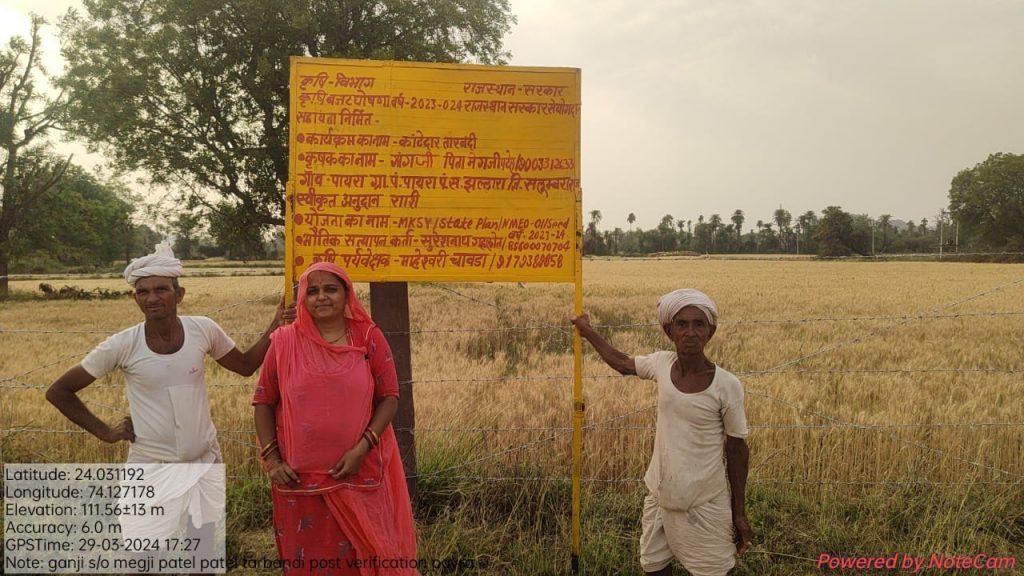
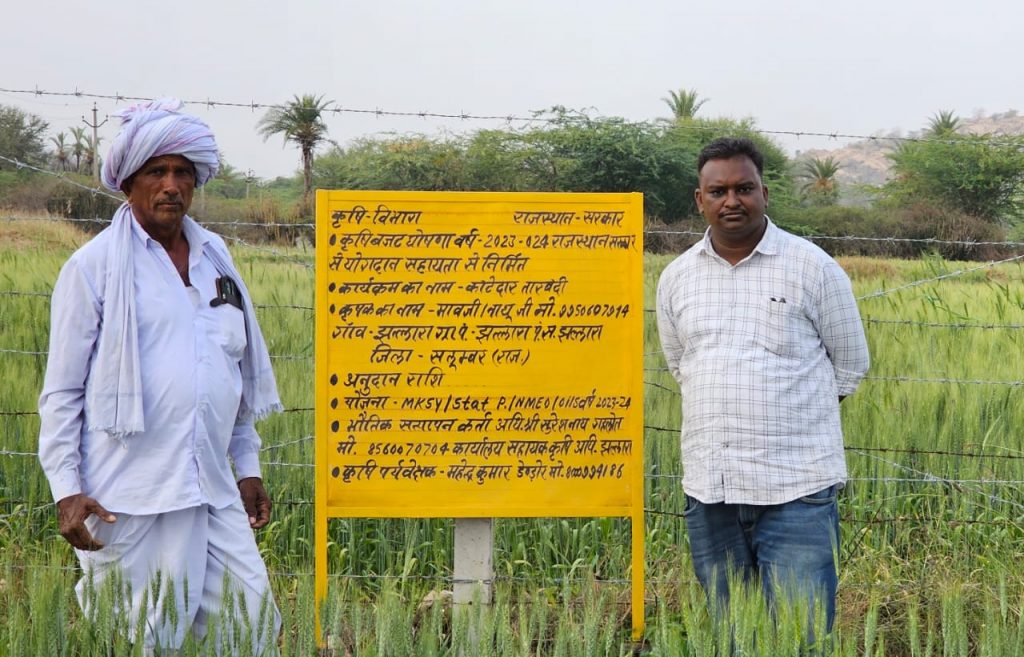
- 450 approvals for fencing and 166 sanctions under PM-KUSUM.
BUILDING TRUST AND COLLABORATION
Achieving such outcomes required more than policy implementation; it demanded building trust and involving every stakeholder. “We knew that for any scheme to succeed, farmers had to believe in it,” Siddhu emphasizes. “That’s why community involvement was at the heart of this initiative.”
The process began at the grassroots. Proposed plans were presented before Gram Sabhas for approval, ensuring transparency. Stakeholder consultations followed, involving agriculture and horticulture departments, local NGOs, and elected representatives. Farmer groups like Kisan Sangh were integral to the process, as was training provided through Krishi Vigyan Kendras (KVKs).
“Farmers who were pro-technology became our champions,” Siddhu says. “Their success stories inspired others to adopt these innovations.”
A FARMER’S PERSPECTIVE
Ram Singh, a farmer from a small village in Salumbar, shares his story: “Before this program, we depended on rainfall. Solar pumps and farm ponds have changed everything. Now, we grow three crops a year instead of one. My income has more than doubled.”
Ram Singh’s tale is echoed across the district. Farmers are diversifying into horticultural crops, using quality seeds, and adopting protected cultivation practices. The result? Continuous increases in income levels and better livelihoods for their families.
TRANSFORMATIVE IMPACT
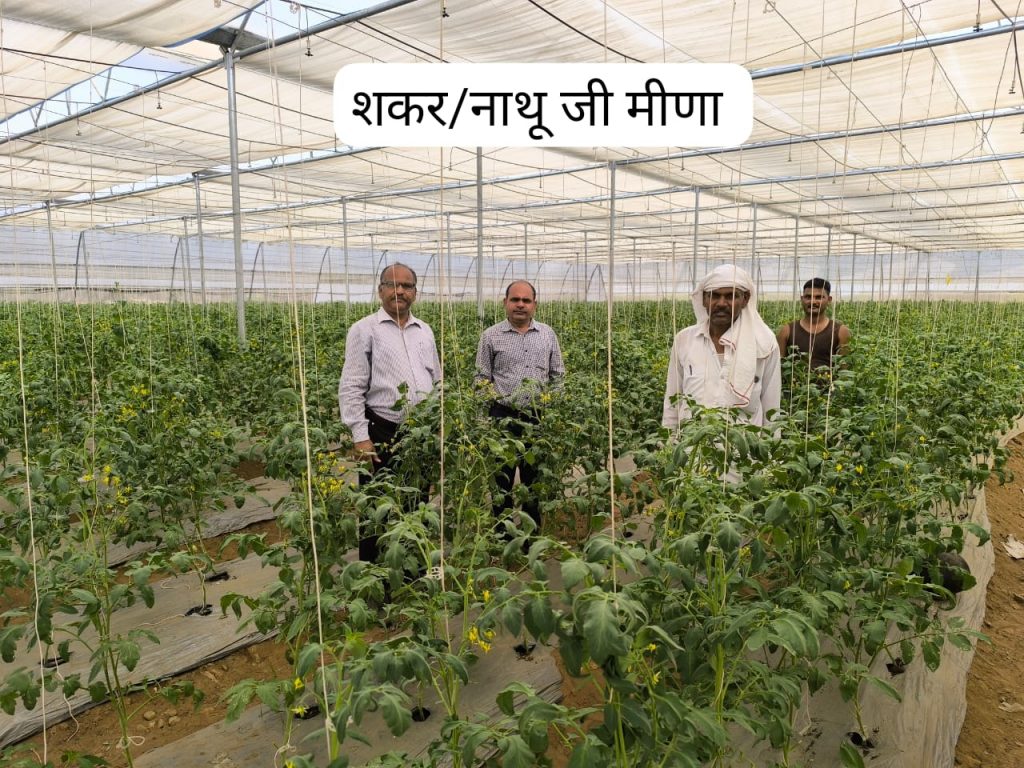
The initiative’s hallmark is its holistic nature. Farmers no longer struggle with water shortages, thanks to solar pumps and farm ponds. Drip irrigation systems and plastic mulching ensure efficient water use, while good-quality seeds enhance productivity. Protected cultivation, supported by the horticulture department, allows farmers to grow high-value crops throughout the year.
“Our goal was not just to increase farmer incomes but to empower them with the tools and knowledge to sustain this growth,” Siddhu states. “We’ve seen incredible results because the approach addresses systemic issues rather than just symptoms.”
THE POWER OF CONVERGENCE
At the heart of this success is the convergence model. By seamlessly integrating multiple schemes, the administration ensured that benefits reached every village and farmer. Regular monitoring and feedback loops kept the initiative on track.
“Good governance is about ensuring that policies don’t remain on paper,” Siddhu remarks. “We’ve demonstrated that with the right execution, government schemes can transform lives.”
THE FUTURE
While the progress in Salumbar is remarkable, Siddhu is far from complacent. “This is just the beginning,” he asserts. “Our next focus is on scaling these practices across other regions and exploring more innovative solutions to empower farmers.”
The Salumbar story is a powerful reminder of what’s possible when vision meets action. It showcases the potential of Indian agriculture to not just sustain but thrive, proving that even in the most challenging circumstances, change is always within reach.