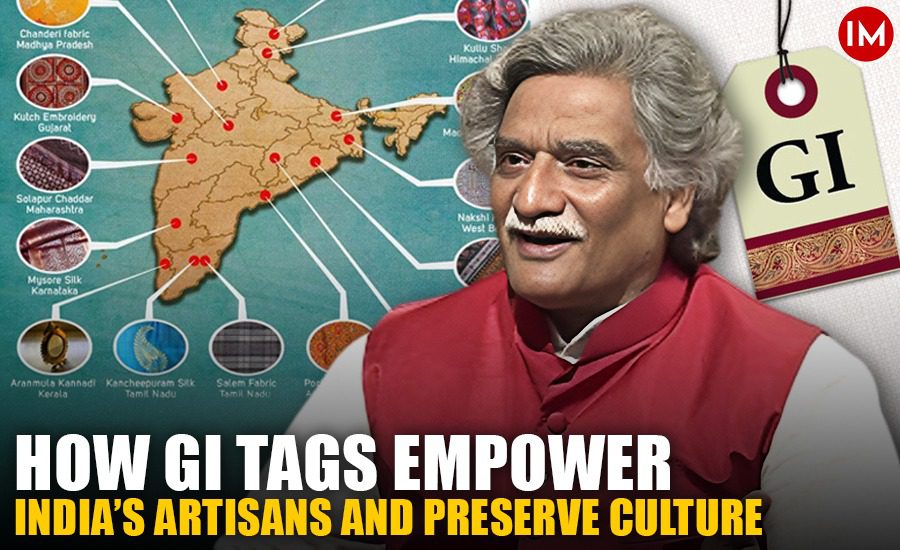
India, a land of diverse cultures, traditions, and craftsmanship, has a rich heritage of unique products tied to specific regions. From the intricate Banarasi sarees to the aromatic Darjeeling tea, these products are not just commodities but symbols of cultural identity and human skill. The Geographical Indications (GI) tag, a form of intellectual property right, protects these products by recognising their unique origin and traditional production methods. At the forefront of India’s GI movement is Dr Rajni Kant, a Padma Shri awardee widely known as the ‘GI Man of India’. His tireless efforts have transformed the landscape of GI registration, empowering artisans, farmers, and communities across the country.
THE GENESIS OF THE GI MOVEMENT IN INDIA
The concept of Geographical Indications in India gained formal recognition with the enactment of the Geographical Indications of Goods (Registration and Protection) Act, 1999. However, awareness about GI and its potential to safeguard traditional products was minimal in the early 2000s. Dr Rajni Kant, through his organisation, took the lead in changing this narrative. The journey began in Varanasi with the registration of Banarasi sarees and brocades in 2007, marking a significant milestone. “Our first application for Banarasi sarees and brocades was a collaborative effort with the Banaras Bunkar Samiti and other organisations, supported by the Ministry of Textiles and United Nations agencies,” Dr Kant shared with Indian Masterminds in an exclusive interview. This initiative set the stage for a nationwide campaign to identify and protect India’s unique products.
Since then, Dr Kant’s organisation has facilitated the registration of 360 GI products across 24 states and union territories, with 157 already granted and many others in the final stages of approval. Uttar Pradesh, with 77 GI tags, holds the distinction of being the state with the highest number of registered products, a testament to the region’s rich cultural heritage and Dr Kant’s dedicated efforts.
THE GI PROCESS: A COMPLEX BUT REWARDING JOURNEY
Securing a GI tag is no small feat. It is a meticulous process that involves technical, social, and economic dimensions. Dr Kant explains, “The GI process is lengthy and requires detailed documentation of the product’s history, its geographical boundaries, environmental connections, human skills involved, and the community’s legacy.” The application demands evidence of a product’s existence for over 100 years and its unique characteristics tied to the region’s soil, water, climate, and traditional production methods. From raw material sourcing to the final product, every step must be systematically documented.
The process begins with identifying an applicant, typically a registered body such as a producer association, artisans’ group, or farmers’ collective. The application is then submitted to the GI Registry in Chennai, accompanied by legal fees and supporting documents. This is followed by a review by the Consultative Group Meeting (CGM), which may involve physical hearings where artisans and producers participate. Once approved, the GI tag is granted, and the applicant becomes the registered proprietor, legally authorised to use the GI logo. “The GI tag ensures that only authentic producers from the designated region can use it, protecting the product’s identity and the community’s legacy,” Dr Kant told Indian Masterminds.
Post-registration, the focus shifts to implementation—ensuring the GI tag is used correctly, tracked, and promoted effectively. This includes designing the tag, defining its usage guidelines, and monitoring compliance to prevent misuse. The entire process, from application to certification, can take six to eight months or more, depending on the complexity of the case.
CHALLENGES IN THE GI JOURNEY
Despite its transformative potential, the GI registration process faces significant challenges. One of the biggest hurdles is the lack of awareness, not only among artisans and producers but also among government officials, bureaucrats, and academics. Dr Kant laments, “It is unfortunate that even senior professors and bureaucrats are unaware of the GI process and its impact. This lack of awareness in academic and government circles is a major barrier.” Without institutional support, the burden of documentation and research often falls on organisations like Dr Kant’s, which must bridge the gap between traditional knowledge and modern legal frameworks.
Another challenge is the absence of historical records for many products. “Documentation is a significant challenge because most traditional products lack written records. We have to conduct extensive research to establish their history and authenticity,” Dr Kant notes. This requires significant manpower and resources, as well as collaboration with communities to capture oral histories and traditional practices. The diversity of products, ranging from textiles to agricultural goods, adds further complexity, as each requires tailored research and documentation.
VARANASI: THE GI HUB OF THE WORLD
Varanasi, often referred to as Kashi, has emerged as a global GI hub under Dr Kant’s leadership. With 32 GI-tagged products, including Banarasi sarees, tabla, thandai, and metal casting crafts, the city employs over 2 million people and generates an annual turnover of ₹25,500 crore. This remarkable achievement has positioned Varanasi as a model for GI promotion, often referred to as the ‘Kashi Model’. “The Kashi Model is about linking GI with branding, marketing, and promotion to ensure that local products gain global recognition,” Dr Kant explains. This model has been replicated in states like Arunachal Pradesh, Tripura, and Uttarakhand, where small but culturally rich regions have seen significant GI progress.
The impact of Varanasi’s GI success was highlighted in a mega event on April 11, 2025, when Prime Minister Narendra Modi handed over 21 GI certificates to artisans and producers in Varanasi. Products like Banarasi shehnai, Lal Peda, and Tirangi Barfi have not only preserved cultural heritage but also boosted local economies by creating jobs and enhancing export potential.
THE NATIONAL IMPACT AND FUTURE GOALS
Dr Kant’s efforts have extended far beyond Varanasi. From the virgin coconut oil of the Nicobar Islands to the traditional crafts of Arunachal Pradesh, his organisation has brought lesser-known products to the global stage. The Nicobar Islands, for instance, have secured GI tags for products like virgin coconut oil and traditional boats, gaining recognition through Prime Minister Modi’s ‘Mann Ki Baat’ programme. “The Prime Minister is a regional ambassador for GI, promoting India’s heritage and linking it to development,” says Dr Kant.
The GI campaign aligns with the government’s ‘Vocal for Local’ initiative, championed by Prime Minister Modi since 2015. By certifying products as authentically local, GI tags enhance their marketability and protect them from imitation. With 24 states and union territories now involved, including all eight Northeastern states, the campaign has gained momentum. States like Uttarakhand (27 GIs) and Arunachal Pradesh (20 GIs) are emerging as GI powerhouses, showcasing India’s diversity and craftsmanship.
The Ministry of Commerce has set an ambitious target of registering 10,000 GI products, a goal Dr Kant believes is achievable with increased government support. However, challenges remain, including the need for faster processing by the GI Registry and amendments to the GI Act to reduce approval times. Currently, over 1,500 GI applications are pending, with only 612 granted so far. Streamlining the process and enhancing manpower at the GI Registry will be critical to meeting the 10,000-GI target.
Dr Rajni Kant’s work as the ‘GI Man of India’ has not only preserved India’s cultural heritage but also empowered millions of artisans, farmers, and producers. As India moves toward its goal of 10,000 GI tags, Dr Kant’s vision and dedication continue to inspire a movement that celebrates ‘Vikas bhi, Virasat bhi’—development and heritage hand in hand.