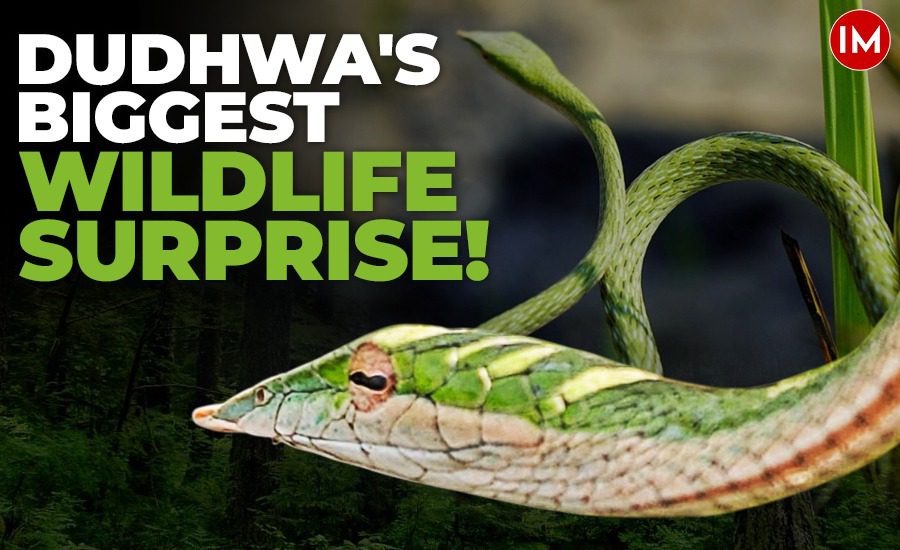
On March 28th, a remarkable discovery was made at Dudhwa Tiger Reserve (DTR), located in Lakhimpur Kheri, the largest district in Uttar Pradesh. A rare long-snouted vine snake, scientifically known as Ahaetulla longirostris, was spotted – marking the first-ever documentation of this species in the state and only the second time it has been recorded in the country.
The elusive snake was found in the Kakrah area of the South Sonaripur Range (RRA-1) during a rhino-free-ranging operation. The photos of this extraordinary find have since gone viral, sparking widespread excitement among wildlife experts and nature enthusiasts alike.
The significance of this discovery can be fully appreciated when considering that DTR officials are preparing to publish it in several renowned scientific journals worldwide. All necessary preparations for this have been completed, and experts believe it will be a significant contribution to the scientific community. This discovery will pave the way for further research, which is crucial for understanding and preserving biodiversity.
To delve deeper into the importance of this find for ecology and biodiversity, Indian Masterminds spoke with Dr. H Raja Mohan, the 2001 batch IFS officer and current Field Director of DTR, and Mr. Lalit Kumar Verma, the 1996 batch IFS officer and former Field Director of DTR.
HOW IT WAS FOUND
A campaign was underway to release rhinos into the Palia-Kheri division of DTR, and to ensure their safety, the forest department team was conducting a thorough inspection of the surrounding land. During this process, an excavator was used to remove a termite mound when, suddenly, a bright green snake emerged. The officials were left stunned by the snake’s vibrant color and unusual size.
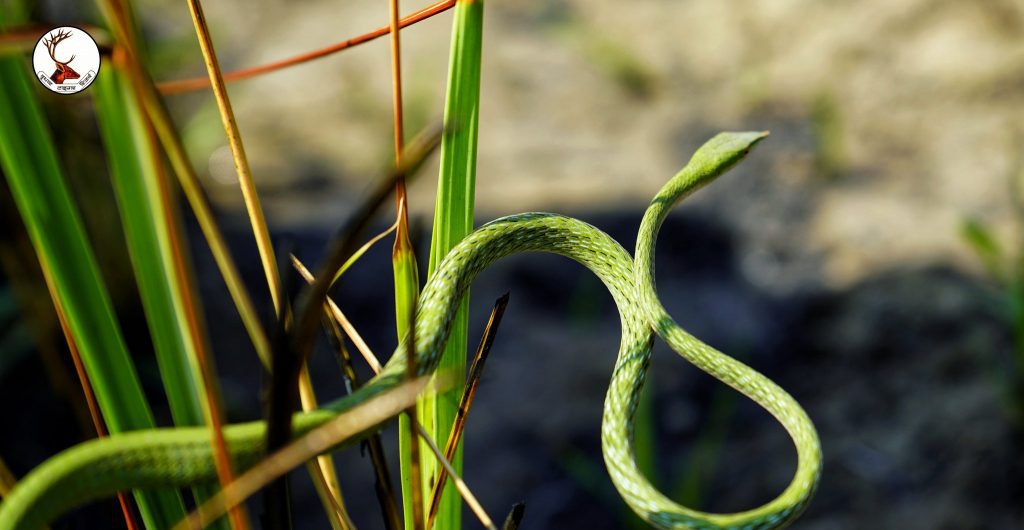
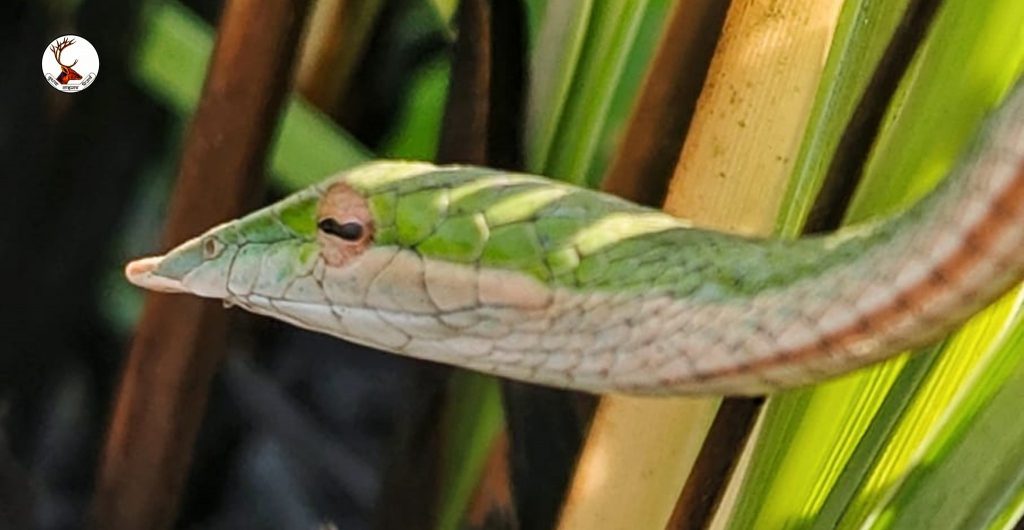
Its elongated snout, striking green coloration, and unique features immediately set it apart from other snakes. Field biologists quickly confirmed its identity, marking the first official record of this species in Uttar Pradesh.
With the snake’s safety in mind, the forest officials carefully relocated it to a nearby termite mound, ensuring it remained in its natural environment. The original mound was left undisturbed to protect the other organisms and the surrounding ecosystem.
Mr Mohan remarked, “This species is extremely rare, and its discovery is of great significance. It highlights the richness of DTR’s biodiversity. This species is both endemic and scarce, but thanks to the excellent protection and habitat here, it continues to survive.”
THE SIGNIFICANCE OF DISCOVERY
The food source for such rare species is equally rare—specific insects that only thrive in certain environments. These species will only be found where these particular insects exist. Therefore, the discovery of both these rare insects and species in DTR holds immense significance. It underscores the rich biodiversity and the exceptional ecosystem of DTR.
This rediscovery highlights the remarkable biodiversity of Dudhwa and reinforces the importance of habitat conservation to protect these elusive species. It also demonstrates the critical role even small patches of forest, such as termite mounds, play in supporting rare species. This is a major milestone in Indian wildlife conservation.
Mr Lalit said, “Biodiversity simply means that the greater the diversity of species, the more beneficial it is for the entire ecosystem. This is a very encouraging discovery, especially for the Dudhwa Terai Landscape. It’s a big surprise for everyone and further validates the pristine management of DTR.”
WHY SNAKE ARE NECESSARY
Snakes play a crucial role in our ecosystem, perhaps one of the most important. They help control populations of harmful animals, such as rodents, which are part of their diet. By keeping these populations in check, snakes maintain a balance in the environment.
An increase in the variety of animals and biodiversity is a sign of a healthy ecosystem. As the diversity of species improves, it benefits the area at many levels, showcasing that a suitable environment has been created where various species can thrive.
Mr. Lalit said, “Snakes occupy a vital position in the ecological food chain. They are interconnected with other species in a delicate balance – each depending on the other. Therefore, snakes, whether wild or otherwise, are essential to maintaining ecological harmony. Without them, the entire balance of the ecosystem would be disrupted.”
THE RARE SNAKE
The snake discovered was a sub-adult, meaning it wasn’t fully a baby nor completely an adult. These snakes can grow up to four feet long and are typically bright green or orange-brown, with an orange belly. Their slender bodies and vine-like structure have earned them the name “vine snake.” This appearance allows them to blend seamlessly into trees, making them difficult to spot.
It mainly lives on trees and can easily hide among the branches and leaves. One of the most distinctive features of this snake is its long snout, which sets it apart from other vine snakes.
Additionally, the snake has enlarged teeth or fangs located at the back of its upper jaw, unlike vipers or cobras, which have fangs in the front of their jaws. This adaptation helps with venom delivery.
FIRST SPOTTING
The species, Ahaetulla longirostris, was first recorded in India in Bihar and Meghalaya in 2024. The discovery dates back to December 2021, when scientists Saurabh Verma and Soham Patekar were walking through the Valmiki Tiger Reserve in Bihar. During their walk, they came across a dead snake with a 4-foot-long body and a distinctive long snout. This unusual find piqued their interest. After conducting DNA testing, field surveys, and detailed analysis, they confirmed that the snake was a previously unknown species of vine snake. Their groundbreaking discovery was published in 2024. This species is primarily found in Southeast Asia, including Thailand, Myanmar, and Laos.
Mr. Mohan said, “Another species of vine snake was also discovered in Dudhwa a few years ago. This area has always been a favorable habitat for such species.”