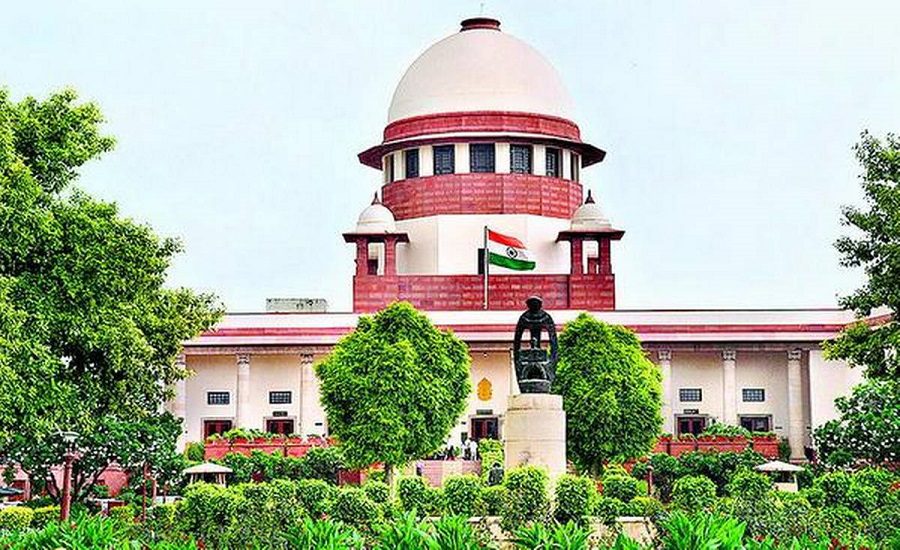
New Delhi: The Supreme Court of India has taken a major step to protect the Aravalli hills, an ecologically sensitive region, by deciding to form a court-supervised expert committee to examine the Aravalli definition and related mining issues.
The court has asked lawyers to suggest names of eminent environmentalists, forest experts and scientists for this panel. This development comes amid growing concerns over illegal mining and environmental degradation in one of India’s oldest mountain ranges.
What is the Aravali Hills Case
The Aravalli Range stretches across Rajasthan, Haryana, Gujarat and Delhi and is one of the oldest geological formations in India. It plays a critical role in maintaining groundwater levels, controlling desertification, and sustaining biodiversity.
Environmental experts, farmers and civil society groups have raised alarms that a narrow definition of the Aravallis could strip protection from large areas, opening them up to mining and development that may cause lasting damage.
Background of Aravalli Hills Supreme Court Judgement
In December 2025, after widespread public concern, the Supreme Court suo motu (on its own motion) took up the issue of how the Aravalli hills should be defined for environmental protection. The controversy began after an earlier order tried to redefine the hills based on specific elevation criteria, which critics said would exclude most of the range from protection.
Interim Orders and Extension
On January 21, 2026, a bench led by Chief Justice of India Surya Kant, along with Justices Joymalya Bagchi and Vipul Pancholi, continued interim orders that put the earlier definition on hold. This move ensures that no new environmental framework takes effect until a thorough review is completed.
Focus on Illegal Mining
The court also recorded an assurance from the Rajasthan government that illegal mining in the Aravalli region would be halted. Judges noted that such activities could cause irreversible ecological damage if not stopped immediately.
Aravalli Hills Supreme Court Judgement: Formation of the Expert Panel
The Supreme Court has decided to set up an expert committee under its direct supervision.
The panel will include:
- Eminent environmentalists
- Forest specialists
- Scientists and domain experts
- Experts in mining and ecology
The court has asked lawyers and the amicus curiae to suggest names for this committee within a stipulated timeline.
Role of the Committee
The committee’s main goals will be to:
- Review the Aravalli hills definition and clarify ambiguities
- Evaluate environmental risks linked to mining and other activities
- Suggest guidelines based on scientific and ecological evidence
- Help the court frame a sustainable protection plan for the Aravalli-ecosystem
Experts will assess whether the earlier elevation-based criteria (like 100-metre rules) are adequate or whether a broader ecological understanding is needed.
Broader Legal and Environmental Context
The Aravalli hills are vital for supporting wildlife corridors and conserving biodiversity across northern India. Areas like the Delhi Ridge and Nahargarh Wildlife Sanctuary are part of or linked to this range, highlighting the region’s environmental value.
Legal Debate Over Definition
One of the key legal debates is whether natural landscapes like the Aravalli range can be strictly defined using technical measures like height and proximity alone.
Lawyers like Kapil Sibal have argued that such rigid definitions can harm complex ecosystems that function as interconnected ecological systems.
What Comes Next: Timeline and Expectations
- The Supreme Court is expected to receive expert suggestions over the next few weeks.
- The expert committee will begin work and submit findings to the Court.
- Outcomes could influence future policy on mining, forest protection and ecological governance across multiple states.
This move underscores the judiciary’s role in balancing economic activities with environmental sustainability in ecologically sensitive zones.