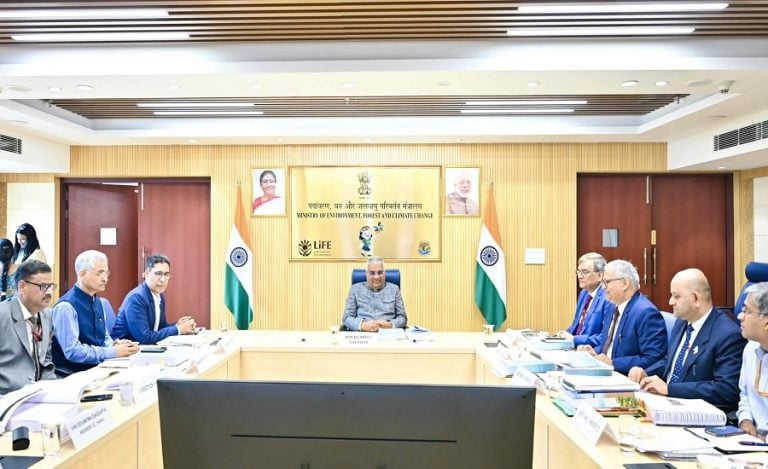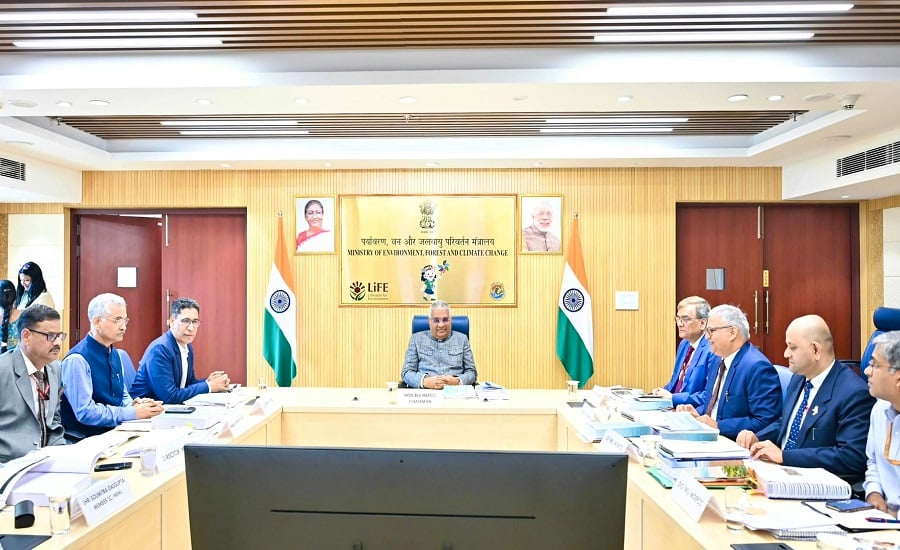
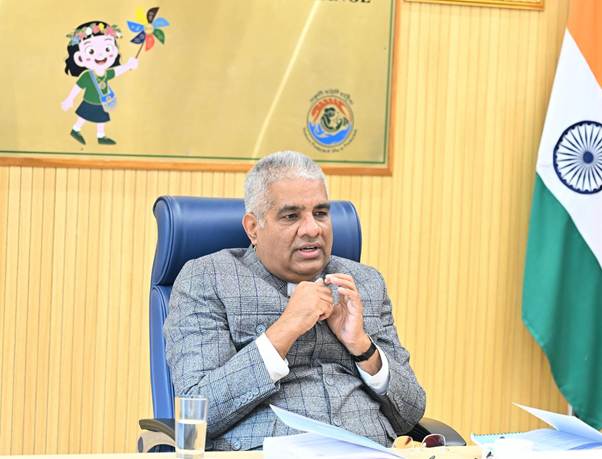
New Delhi: Union Minister for Environment, Forest and Climate Change, Bhupender Yadav, chaired the 92nd meeting of the Standing Committee of the National Board for Wildlife (SC-NBWL) in New Delhi on November 23, 2026.
The meeting focused on strengthening wildlife conservation efforts, with special emphasis on marine biodiversity, habitat protection, scientific monitoring and sustainable development. The Standing Committee also considered 133 proposals involving roads, defence infrastructure, drinking water supply and other essential development activities requiring wildlife clearance under the Wild Life (Protection) Act, 1972.
The proposals were assessed based on their ecological impacts, public welfare and national development significance, as well as the adequacy of proposed mitigation measures to safeguard wildlife and their habitats.
Wildlife Week 2026 Conservation Initiatives Reviewed
The Standing Committee reviewed the report on Wildlife Week 2026, celebrated under the theme ‘Connecting Habitats, Thriving Wildlife’.
Bhupender Yadav highlighted several conservation initiatives undertaken during the event, including:
- Tiger reintroduction in Buxa Tiger Reserve.
- Release of Great Indian Bustards in Rajasthan.
- Expansion of Project Cheetah to a third site.
The initiatives reflect the government’s emphasis on science-based conservation efforts and strengthening wildlife populations and habitats across the country.
The Minister also congratulated the awardees recognised during Wildlife Week 2026 and highlighted the contributions of frontline forest staff and local communities, describing them as the backbone of India’s wildlife conservation efforts.
Read also: Big Cat Conservation Can Boost Climate Change Mitigation, Says Bhupender Yadav at COP31
Frontline Wildlife Staff and Community Conservation Awardees Felicitated
The Minister felicitated individuals and organisations for their exemplary contributions to wildlife protection, monitoring and community-led conservation.
Frontline Staff – Protection and Anti-Poaching
- Late Banoth Naveen – Telangana.
- Hukai H. Zhimo – Nagaland.
- Thiru V. Kumaresan – Tamil Nadu.
Frontline Staff – Wildlife Monitoring and Special Skills
- Umesh Bharat Kalsarpe – Maharashtra.
- Ashwinsinh Kiritsinh Jadeja – Gujarat.
- Bahraich Human-Wildlife Conflict Management Group – Uttar Pradesh.
Community Conservation Award
- Shree Mahavir Machchhimar Sahakari Mandali Ltd., Mangrol, Gujarat, for whale shark conservation.
- Ponnuruvi Eco-Tourism Management Committee, Sirumalai Hills, Tamil Nadu.
The recognition highlighted the role of local communities and conservation personnel in protecting wildlife, addressing human-wildlife conflict and supporting habitat conservation.
Nameri Tiger Reserve Receives CA|TS Accreditation
Nameri Tiger Reserve in Assam was accredited under Conservation Assured | Tiger Standards (CA|TS).
The accreditation recognises efforts towards maintaining effective tiger conservation management and strengthening protection and monitoring practices in the reserve.
92nd NBWL Meeting Focuses on Marine Conservation
The meeting was themed around marine conservation, with scientists from the Wildlife Institute of India (WII) presenting findings and research on several important conservation areas.
The presentations covered:
- Management Effectiveness Evaluation of Coastal and Marine Protected Areas.
- Pan-India Assessment and Monitoring of Marine Turtles.
- Milestones of Recovery of Dugongs and their Habitats in India (2016–2026).
- Mitigating the Impacts of Linear Infrastructure on Wildlife.
The presentations highlighted the progress made in marine wildlife conservation, the management of protected areas and the need to address the ecological impacts of infrastructure development.
The discussion on linear infrastructure also emphasised the importance of involving infrastructure planners, builders, environmental consultants, wildlife managers, regulators, policymakers and analysts in developing effective wildlife mitigation measures.
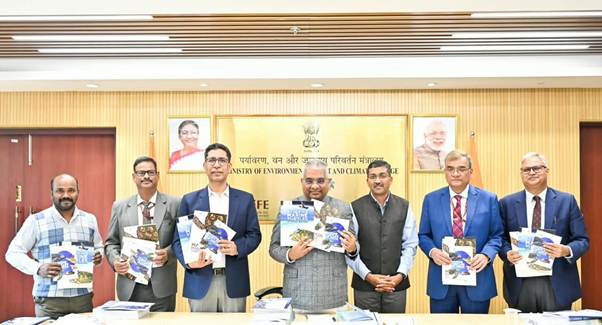
Marine Conservation Publications Released
Several publications highlighting India’s marine biodiversity conservation initiatives were released during the meeting.
1. Management Effectiveness Evaluation of Coastal and Marine Protected Areas
The publication presents findings from the 2024–26 assessment of 108 coastal and marine protected areas. It highlights management performance, conservation best practices and priority areas requiring further strengthening.
2. Pan-India Assessment and Monitoring of Marine Turtles
Conducted by the Wildlife Institute of India under the Ministry’s Development of Wildlife Habitats scheme, the assessment covers three nesting seasons from 2022 to 2025.
The study spans approximately 1,300 km of coastline and 360 beach stretches, providing insights into the nesting status of four marine turtle species.
3. Milestones of Recovery of Dugongs and their Habitats in India (2016–2026)
The publication documents a decade of dugong conservation efforts under a CAMPA-funded programme implemented by WII.
Key achievements include:
- The first drone-based dugong population estimate in Tamil Nadu, recorded at 270 ± 16.
- Identification and assessment of seagrass habitats.
- Notification of India’s first Dugong Conservation Reserve in Palk Bay.
4. Status of Arabian Sea Humpback Whale in India
The publication presents findings from WII’s 2022–25 assessment of Arabian Sea humpback whales.
The assessment identified seven potential sighting hotspots and highlighted threats to the species, particularly entanglement in fishing gear, to guide future conservation interventions.
5. Marine Turtle Knowledge Products
Three publications developed under the Marine Turtle Action Plan (2021–2026) were also released:
- Technical Protocol of Marking Marine Turtles
- Tracking Marine Turtles in Indian Waters
- Marine Turtles of India
These publications provide scientific guidance for marine turtle monitoring, research and conservation.
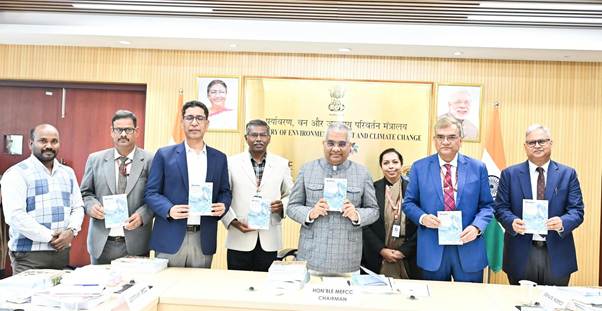
Field Manual on Small Cats Released
The Minister also released the Field Manual on Small Cats, a document covering nine species of small cats found in India.
The manual provides practical guidance on species identification, field surveys and wildlife monitoring.
It has been developed under the Government of India–GEF Small Cats Conservation Project, implemented by the Ministry of Environment, Forest and Climate Change in collaboration with the states of Arunachal Pradesh, Uttar Pradesh and Rajasthan, with support from the United Nations Development Programme (UNDP) and the Global Tiger Forum.
133 Development Proposals Considered for Wildlife Clearance
The Standing Committee considered 133 proposals from across the country involving infrastructure and development activities requiring wildlife clearance under the Wild Life (Protection) Act, 1972.
The proposals included projects related to:
- Road infrastructure.
- Defence infrastructure.
- Drinking water supply.
- Other essential development works.
The proposals were examined on the basis of their ecological impact, public welfare and national development importance, and the adequacy of mitigation measures proposed to minimise adverse impacts on wildlife and their habitats.
The appraisal process aims to balance essential infrastructure development with wildlife conservation and India’s green growth objectives.
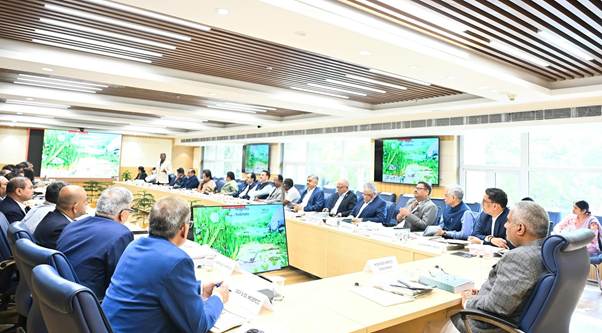
Focus on Wildlife Protection and Sustainable Development
The 92nd meeting of the Standing Committee of the National Board for Wildlife highlighted India’s ongoing efforts to strengthen terrestrial and marine conservation, improve protected area management, promote scientific research and recognise the contributions of frontline staff and local communities.
The release of scientific publications, recognition of conservation personnel, accreditation of Nameri Tiger Reserve and appraisal of development proposals reflect the government’s approach towards combining biodiversity conservation with sustainable development.