Patna: The Bihar government has stepped up relief and rescue operations across flood-affected districts, with 33.88 lakh people receiving two meals a day through 951 community kitchens. The Disaster Management Department is also running relief camps, distributing essential supplies and deploying boats and emergency response teams in affected areas.
The state is currently dealing with flooding across several districts, with around 43.64 lakh people affected across 85 blocks and 527 gram panchayats. Authorities are keeping a close watch on river levels and weather conditions while continuing relief measures on the ground.
951 Community Kitchens Providing Food
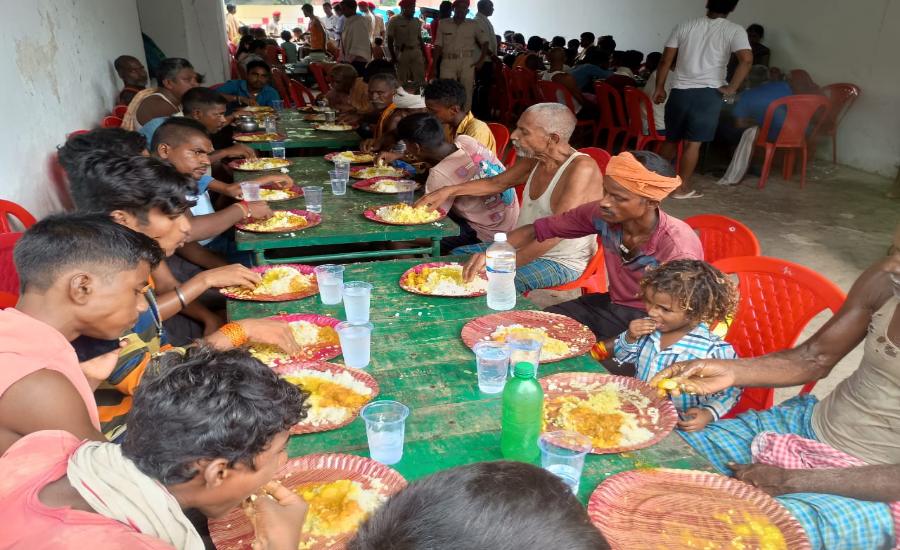
Food remains one of the immediate priorities in the flood-affected areas. According to the Disaster Management Department, 951 community kitchens are currently operating across Bihar.
Through these kitchens, two meals a day have been provided to 33.88 lakh flood-affected people so far. The arrangement aims to ensure that families displaced or affected by flooding can access regular meals despite disruptions to normal life.
The government is continuing the food distribution as flood conditions persist in several parts of the state.
Read Also: Bihar: Aguwani Ghat Bridge Nears Completion, Set to Strengthen Regional Connectivity
Relief Camps Provide Shelter and Medical Care
The administration has also established 15 relief camps in flood-affected areas. These camps are providing accommodation, food and medical facilities to people who have had to leave their homes or cannot safely remain in their villages.
A total of 11,255 flood victims are currently being provided with these facilities at the relief camps.
Along with shelter and food, the camps are intended to provide basic support and access to essential services for affected families during the crisis.
Essential Supplies Reach Affected Families
The Disaster Management Department has also distributed essential materials to help families cope with the impact of flooding.
So far, around 2.57 lakh polythene sheets and 40,600 dry ration packets have been distributed in affected areas. These supplies are particularly important for families whose homes and regular sources of food have been disrupted by rising water levels.
The department has also taken measures to protect livestock, distributing 6,692 quintals of cattle fodder in flood-hit areas.
1,932 Boats in Operation
Floodwaters have disrupted road connectivity in several locations, making boats an important mode of transport for residents in affected areas.
The government is currently operating 1,932 boats to facilitate movement and help people travel through waterlogged and flood-affected areas.
The boat services are expected to assist residents in reaching safer locations and accessing essential supplies and services where regular road transport remains difficult.
SDRF and NDRF Teams Deployed
Emergency response teams have also been deployed across the state to strengthen rescue and relief operations.
The government has deployed 27 State Disaster Response Force (SDRF) teams and 10 National Disaster Response Force (NDRF) teams in different districts.
Their deployment is aimed at supporting local authorities in rescue operations and responding to emergencies as water levels and flood conditions change.
43.64 Lakh People Affected in 14 Districts
According to the department, approximately 43.64 lakh people have been affected by floods across 14 districts.
The affected districts are:
Patna, Bhojpur, Saran, Vaishali, Bhagalpur, Begusarai, Buxar, Samastipur, Munger, Katihar, Lakhisarai, Khagaria, Purnia and Arwal.
The flooding has affected 85 blocks and 527 gram panchayats across these districts, putting pressure on local administration and relief infrastructure.
Major Rivers Remain Under Watch
Several major rivers are flowing above the danger mark at different locations. These include the Gandak, Kosi, Ganga, Punpun, Bagmati and Ghaghara.
However, the water discharge levels of the Gandak and Kosi rivers are currently stable, providing some relief amid the continuing flood situation.
The Meteorological Centre has forecast light to moderate rainfall at some places over the next two days. This makes continued monitoring important, particularly in areas already affected by high water levels.
The Disaster Management Department is keeping a constant watch on the situation and coordinating relief measures across affected districts.
Focus on Continued Relief Operations
With millions of people affected, the scale of Bihar’s flood response remains significant. The operation combines food distribution, temporary shelter, essential supplies, livestock support, boat services and specialised rescue teams.
The continued operation of community kitchens and relief camps is particularly important for vulnerable families whose normal access to food, shelter and transport has been disrupted.
As river levels and weather conditions remain under observation, the state’s focus is now on sustaining relief measures and responding quickly to any further deterioration.
The ongoing response highlights the importance of coordinated disaster management during floods, with government agencies working to maintain essential services and support affected communities until conditions return to normal.
Read Also: MSTC Partners with Bihar Mines Department for Transparent Online Auctions of Minor Mineral Blocks