Patna: Bihar has provided employment to 10.89 lakh rural families under the Viksit Bharat–Guarantee for Rozgar and Ajeevika Mission (Gramin), or VB-G RAM G, since its implementation from July 1, 2026. The state has generated around 1.79 crore person-days of employment during this period.
According to information from the Rural Development Department, Bihar is among the leading states in providing employment under the new rural employment framework. The data also highlights significant participation by women and Scheduled Caste and Scheduled Tribe communities.
Women Account for 57.58% of Person-Days
The employment generated under the scheme has recorded strong participation from women.
Of the total person-days generated since July 1, 57.58% have been contributed by women, while the combined participation of Scheduled Caste and Scheduled Tribe workers stands at 17.48%.
The figures indicate that the scheme is expanding access to wage employment among rural households while also providing greater opportunities for women in rural areas.
The increased participation of women is particularly significant because access to local employment can support household incomes while reducing the need for workers to travel away from their villages in search of work.
Read Also: Bihar Goes More Digital: Paperless Document Registration Jumps Six-Fold in One Month
₹457.93 Crore in Payments Authorised
Data available through the scheme’s Management Information System (MIS) shows that payments worth ₹457.93 crore have been authorised since July 1.
The financial support is part of the wider effort to provide guaranteed employment while strengthening livelihood opportunities for rural families.
For the financial year 2026-27, the state has made an interim budget provision of ₹11,193 crore for nine months, from July 2026 to March 2027. The amount includes both the Centre’s and state’s shares.
Of this provision, ₹2,679 crore has already been released initially for implementation of the programme.
125 Days of Employment Guaranteed
Under the VB-G RAM G framework, every eligible rural household is guaranteed at least 125 days of employment in a financial year.
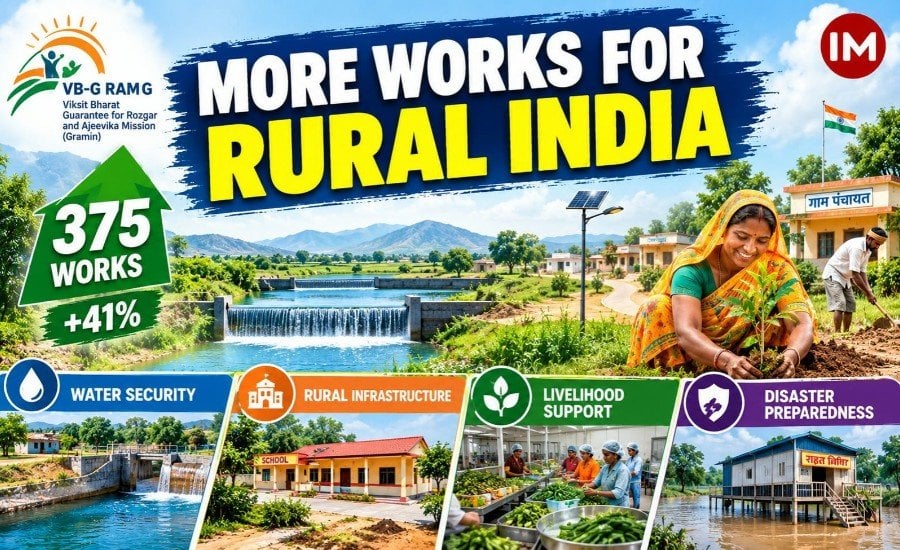
The programme is designed not only to provide wage employment but also to strengthen rural livelihoods and create durable assets in villages.
The focus includes activities that can contribute to:
- Employment and livelihood enhancement for rural households
- Creation of sustainable rural assets
- Environmental protection
- Development of essential rural infrastructure
This approach links short-term employment support with longer-term rural development.
Focus on Livelihoods and Rural Infrastructure
The Rural Development Department has said that employment generation is being implemented alongside livelihood promotion, environmental conservation and the creation of essential rural infrastructure.
This makes the programme relevant beyond wage employment, as the work undertaken under it is also expected to contribute to the development of rural assets and local infrastructure.
For rural families, the availability of guaranteed employment can provide an additional source of income during periods when agricultural or other local work is limited.
At the same time, the creation of durable assets can improve village-level infrastructure and support broader rural development.
Scheme Implemented Across Bihar
The Viksit Bharat–Rozgar and Ajeevika Guarantee Mission (Gramin) Act, 2025, according to the Rural Development Department, has been effective across Bihar’s rural areas from July 1, 2026.
The state government is working to extend employment opportunities to a larger number of economically vulnerable rural households through the programme.
Rural Development and Information & Public Relations Minister Shravan Kumar said the state is giving priority to employment generation along with livelihood promotion, environmental protection and essential rural infrastructure.
He said efforts are continuing to ensure effective implementation and create more opportunities for rural families.
What the Numbers Show
The early figures give an indication of the scale of implementation in Bihar. Within a little over three months from July 1, the scheme has reached 10.89 lakh rural families, generated 1.79 crore person-days, and authorised payments of nearly ₹458 crore.
The high share of women in person-days also points to the role of rural employment programmes in expanding women’s participation in paid work.
With an interim provision of ₹11,193 crore for the remaining nine months of the financial year, the programme is expected to remain a major component of Bihar’s rural employment and livelihood efforts.
For rural communities, its broader significance lies in combining employment support with the creation of lasting village assets, livelihood opportunities and infrastructure. If implementation continues at scale, the scheme could become an important part of Bihar’s wider rural development strategy.