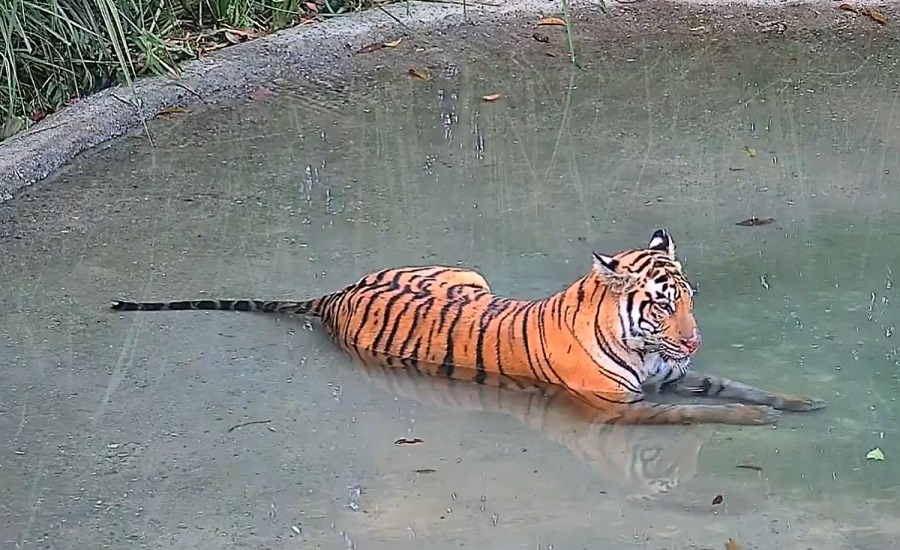
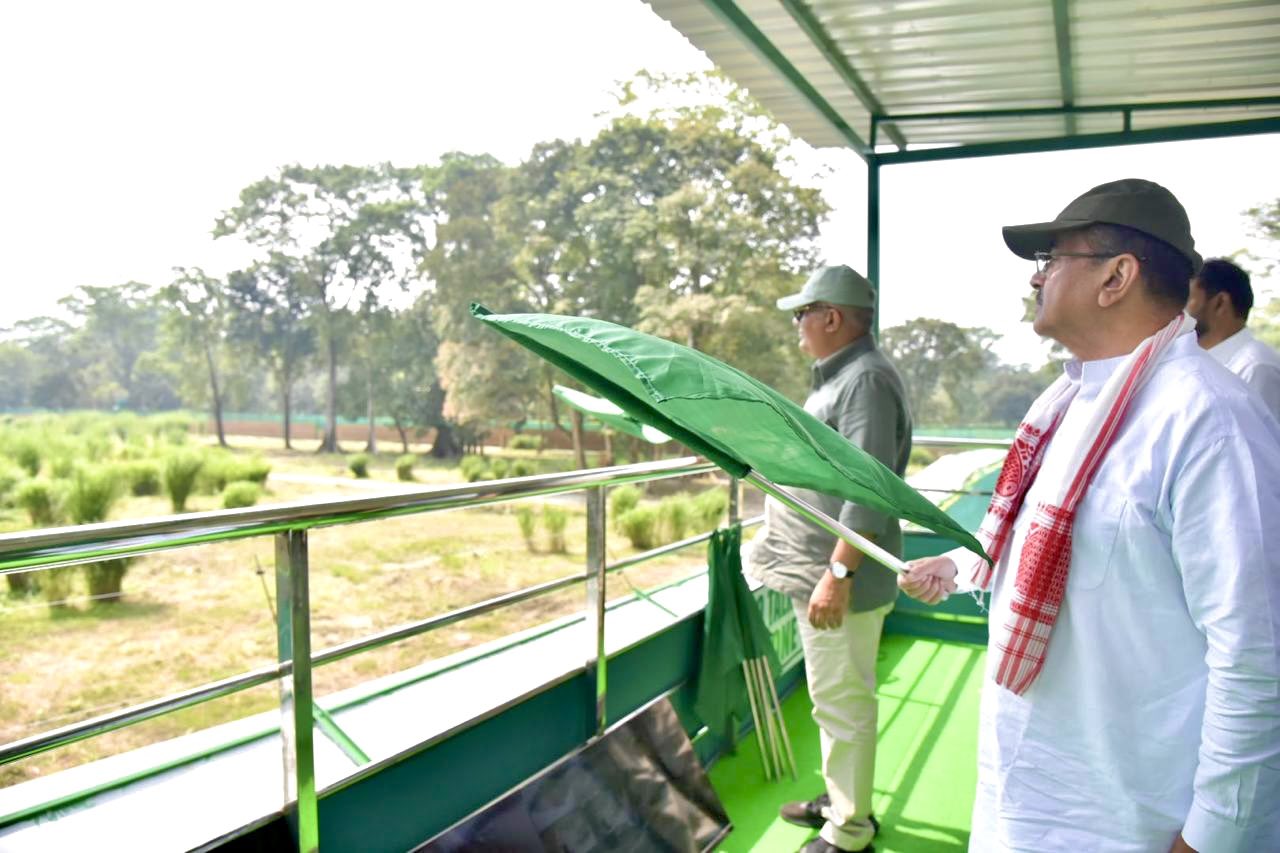
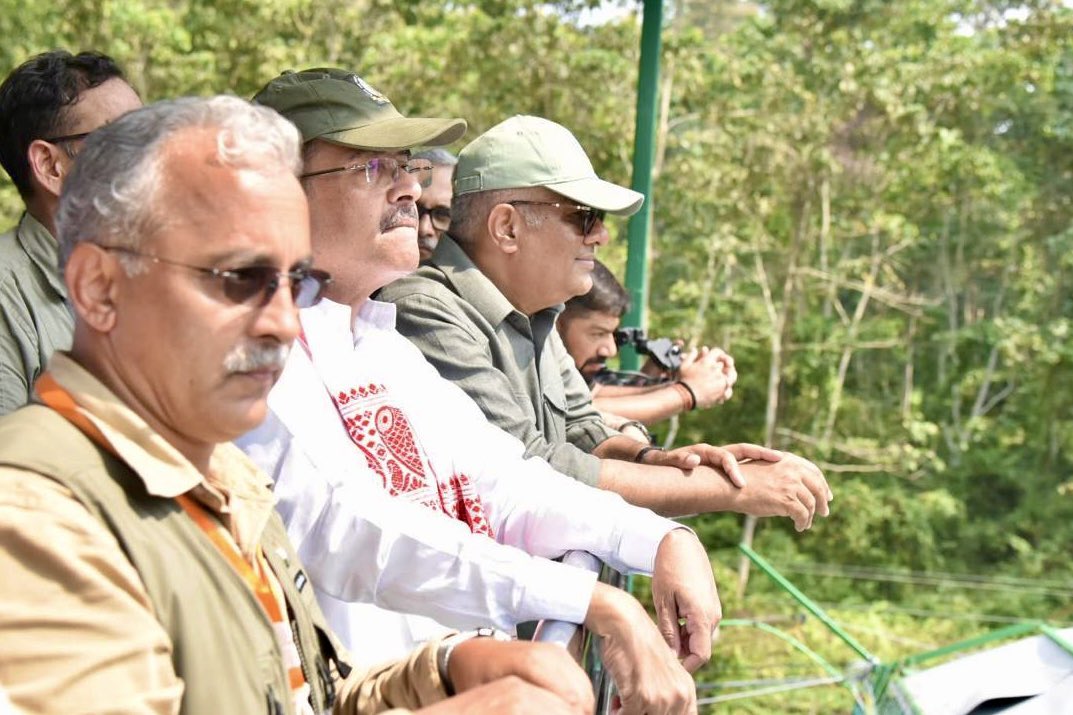
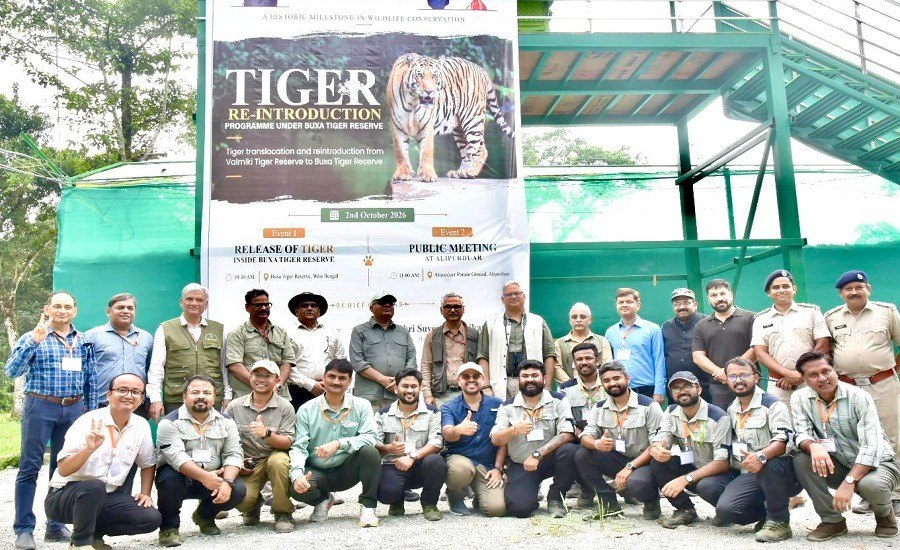
New Delhi: In a significant development for tiger conservation, the first tigress under the Buxa Tiger Reserve Tiger Reintroduction Programme was released in Buxa Tiger Reserve, West Bengal, marking the beginning of a phased effort to restore a viable and self-sustaining tiger population in the historically important landscape.
The release was carried out in the presence of Union Minister for Environment, Forest and Climate Change Bhupender Yadav and West Bengal Chief Minister Suvendu Adhikari.
The initiative focuses on complementing Buxa’s natural recovery through scientifically guided interventions, habitat improvement, prey augmentation, effective protection, monitoring and community participation.
India’s National Tiger Conservation Authority (NTCA) and Wildlife Institute of India (WII) have previously highlighted Buxa among landscapes being assessed for science-based tiger recovery and reintroduction efforts.
First Tigress Released in Buxa Tiger Reserve
The release of the tigress marks the first phase of a planned and adaptive tiger recovery programme for Buxa.
The animal was translocated from Valmiki Tiger Reserve in Bihar after assessment of relevant ecological, veterinary and management parameters and in accordance with established protocols.
The tigress will undergo intensive post-release monitoring using multiple methods, including:
- Telemetry
- Camera trapping
- Field-based monitoring
- Health and behavioural assessment
- Tracking of movement and adaptation
The monitoring will help conservation authorities assess how the animal adapts to its new habitat and inform subsequent stages of the programme.
Read also: Tiger Reserves Face New Management Test: MEE-TR 2026 Adds Solid Waste as Key Criterion
Why Tiger Reintroduction Is Important for Buxa
Buxa has historically been an important tiger landscape in North Bengal. The reserve was declared a Tiger Reserve in 1983 and forms part of a larger ecological landscape connected with forests and protected areas in Bhutan and Assam.
Over the years, habitat degradation and fragmentation, changes in land use and a decline in prey availability affected the ecological conditions required to sustain a resident tiger population.
As a result, Buxa experienced a prolonged period without a stable resident tiger population.
The current programme seeks to rebuild the ecological conditions required for tiger recovery rather than relying only on the release of individual animals.
Buxa Tiger Reserve Recovery Efforts Since 2018
The Tiger Augmentation and Recovery Project was initiated by the Government of West Bengal with support from the National Tiger Conservation Authority (NTCA) and the Wildlife Institute of India (WII).
Since 2018, the collaborative effort has focused on rebuilding the ecological foundations necessary for tiger recovery.
Major interventions have included:
- Habitat improvement
- Prey-base augmentation
- Strengthening protection and surveillance
- Scientific assessment and monitoring
- Capacity building
- Grassland restoration
More than 800 chital have been released to supplement the prey base, while approximately 380 hectares of grassland have been restored or converted over the past eight years.
Scientific monitoring has also indicated a positive trend in prey abundance.
Camera Traps Record Tiger Movement in Buxa
Long-term monitoring has provided evidence of tiger movement through the Buxa landscape.
Camera traps recorded tigers in 2021, 2023 and 2026.
One particularly significant observation came in 2023, when an individual photographed in Buxa was matched with a tiger from Manas Tiger Reserve in Assam. This provided evidence of natural tiger movement between adjoining landscapes.
The reintroduction programme is therefore designed to complement natural recovery, rather than replace it.
Programme Focuses on Building a Self-Sustaining Tiger Population
The objective of the Buxa programme goes beyond simply bringing tigers back into the reserve.
The long-term goal is to create ecological conditions under which a tiger population can:
- Establish itself in the landscape.
- Breed successfully.
- Maintain a viable population.
- Become self-sustaining over time.
Further tiger augmentation will be undertaken in a phased manner, depending on factors such as habitat and prey availability, protection preparedness, population viability, monitoring results and expert advice.
The approach is consistent with the broader national emphasis on science-based tiger reintroduction and adaptive management. A June 2026 national workshop on tiger reintroduction brought together wildlife officials and experts to discuss translocation planning, habitat restoration, prey augmentation, post-release monitoring and community participation.
Community Participation at the Centre of Buxa Tiger Recovery
Community participation is a key component of the Buxa recovery programme.
The initiative has engaged 64 Eco-Development Committees/Joint Forest Management Committees with a focus on strengthening dialogue with local communities.
The programme also emphasises:
- Livelihood opportunities
- Human-wildlife conflict mitigation
- Conservation-linked benefits
- Community dialogue
- Coexistence between local communities and wildlife
Continued community engagement is expected to remain important as the tiger population recovers and wildlife movement increases across the landscape.
Buxa’s Landscape Connectivity with Assam and Bhutan
Buxa’s importance extends beyond the boundaries of the tiger reserve because of its ecological connections with North Bengal, Assam and Bhutan.
These linkages provide opportunities for wildlife movement and dispersal across a larger connected landscape.
Strengthening Buxa could therefore have wider conservation implications for:
- Tiger populations
- Forest ecosystems
- Grasslands
- Prey species
- Landscape connectivity
- Wider biodiversity
Maintaining these ecological connections will be important for long-term wildlife conservation in the region.
Success Will Depend on Long-Term Recovery
The release of the first tigress represents the beginning of a new phase in Buxa’s conservation journey.
The success of the programme will not be measured simply by the number of tigers released. Instead, the focus will be on whether a healthy, free-ranging and self-sustaining tiger population can eventually become established.
This will depend on several factors:
- Secure and suitable habitat
- Adequate prey availability
- Effective protection
- Ecological connectivity
- Scientific monitoring
- Successful breeding and population establishment
- Meaningful participation of local communities
The phased and adaptive approach allows conservation authorities to use monitoring results and expert assessments to guide subsequent interventions.
Buxa Tiger Reintroduction Programme: Key Highlights
- Location: Buxa Tiger Reserve, West Bengal
- First release: Tigress
- Source reserve: Valmiki Tiger Reserve, Bihar
- Programme: Tiger Reintroduction Programme
- Approach: Phased and scientifically guided
- Prey augmentation: More than 800 chital released
- Grassland restoration: Around 380 hectares
- Tiger movement recorded: 2021, 2023 and 2026
- Community institutions engaged: 64 Eco-Development Committees/Joint Forest Management Committees
- Key partners: Government of West Bengal, NTCA and WII
- Long-term objective: Establish a viable and self-sustaining tiger population
Buxa Tiger Reserve: A Historically Important Tiger Landscape
Buxa Tiger Reserve is located in North Bengal and forms part of an ecologically connected landscape extending towards Assam and Bhutan. The reserve was declared a tiger reserve in 1983. Its forests, grasslands and connectivity with neighbouring landscapes make it significant for the conservation of tigers and other wildlife.
The ongoing recovery programme combines habitat management, prey augmentation, scientific monitoring, protection measures and community participation to improve the conditions needed for long-term tiger recovery.
Read also: 6 Cheetahs to Move From Kuno to Gujarat’s Banni: October 31 Release Likely, PM Modi May Release Them