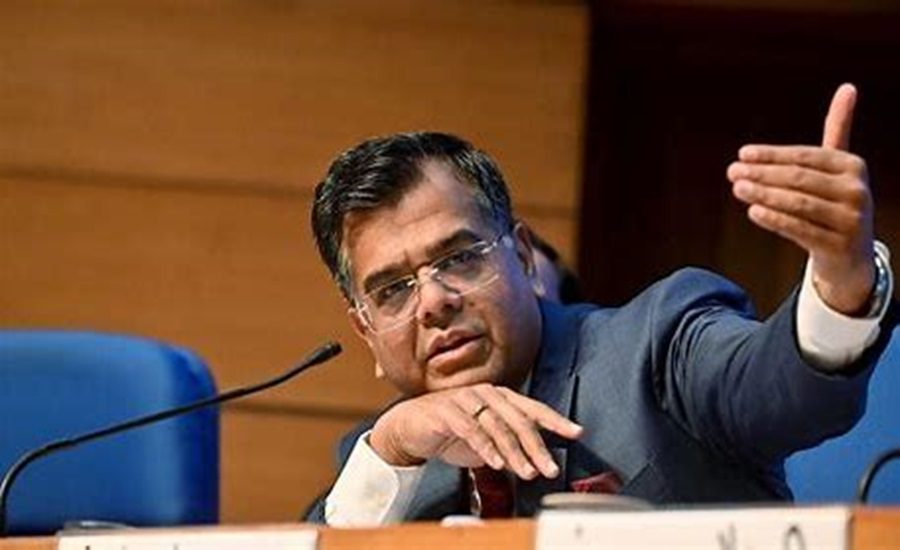
New Delhi: A routine performance review meeting of senior government secretaries in New Delhi took an unexpected turn on Tuesday when Cabinet Secretary T V Somanathan, an IAS officer of 1987 batch from the Tamil Nadu cadre, presented a humorous yet pointed assessment of bureaucratic behaviour, identifying 12 types of officers based on their workplace habits and administrative functioning.
The presentation, delivered before senior bureaucrats from various Union government departments, reportedly left several officers uncomfortable as it highlighted practices ranging from unnecessary delays and poor meeting management to inappropriate workplace conduct.
Rather than relying entirely on conventional administrative instructions, Mr Somanathan used cartoons and humour to draw attention to behaviours that can undermine efficiency, accountability and professionalism within government offices.
The presentation featured illustrations, several of which were reportedly created by celebrated cartoonist R K Laxman, whose work is known for its sharp observations of Indian public life and bureaucracy.
Behind the humour was a serious message: government secretaries must improve workplace culture, take timely decisions and ensure that administrative processes do not become obstacles to governance.
From File Throwers to File Sitters: 12 Types of Bureaucratic Behaviour
The Cabinet Secretary’s presentation reportedly classified bureaucrats into 12 categories, highlighting different kinds of conduct that can affect administrative performance.
Among those identified were officers who throw files or speak rudely to subordinates, reflecting concerns about unacceptable behaviour and the treatment of staff.
Read Also: Who Is Ajay Kumar IAS? 2013-Batch Haryana Officer Appointed Gurugram Metro Rail Chief
Another category included officers who allow files to remain pending instead of taking timely decisions. Such practices can slow down government work and delay important administrative approvals.
The presentation also highlighted officials who unnecessarily refer matters to ministers even when they have the authority to make decisions themselves. This tendency can increase the workload of ministers and create avoidable delays in routine administration.
Meeting-related habits formed another important part of the presentation. These included officers who schedule meetings after 7 pm, call staff to work on Saturdays but arrive late themselves, or otherwise fail to respect the time of their colleagues.
One particularly sensitive category concerned officers who ask women colleagues to come unnecessarily close while showing documents, drawing attention to the importance of appropriate professional boundaries and respectful workplace conduct.
Although the presentation reportedly covered 12 types of bureaucrats, the publicly reported details describe only some of the categories rather than providing a complete official list.
Cartoons Used to Deliver a Serious Administrative Message
The use of cartoons added an unusual dimension to the meeting. Several illustrations were reportedly drawn from the work of R K Laxman, whose cartoons frequently depicted the contradictions and everyday realities of government offices.
By presenting workplace problems through caricatures, Somanathan appeared to be encouraging senior officials to reflect on their own administrative habits.
The underlying concerns were not limited to individual behaviour. They also involved the broader functioning of government departments, including the timely movement of files, respectful treatment of colleagues, effective delegation and the responsible use of official authority.
According to officials familiar with the meeting, the Cabinet Secretary’s central message was that better workplace practices and more productive meetings are essential for improving government performance.
Government Secretaries Ranked on Performance Parameters
Beyond the humorous presentation, the meeting also involved a quantitative assessment of the performance of secretaries heading various government departments.
The officers were reportedly ranked on different performance parameters as part of an exercise to evaluate administrative effectiveness.
During the discussion, Somanathan pointed out a limitation in the existing performance assessment system. He observed that officers’ scores frequently cluster close to 10 on a scale of one to 10, making it difficult to distinguish exceptional performers from those delivering merely satisfactory results.
When most officers receive similarly high scores, the ranking system loses its ability to identify differences in performance.
The observation highlighted the need for more meaningful assessments that can recognise outstanding work while also identifying areas requiring improvement.
Cabinet Secretary Calls for Faster Inter-Ministerial Consultations
Somanathan also emphasised the importance of speeding up consultations between Union ministries to prevent administrative delays.
He reportedly urged the Finance and Commerce Ministries to communicate their views promptly on matters requiring inter-ministerial coordination.
Delays in receiving responses from key ministries can slow down policy decisions and affect the implementation of government programmes.
The Cabinet Secretary’s directions reflected a broader effort to improve coordination across departments and ensure that important proposals are not held up because of procedural bottlenecks.
The emphasis on quicker consultations was consistent with the concerns raised in the presentation about officers sitting on files or unnecessarily escalating decisions.
Deregulation 3.0 to Begin in January
The meeting also provided an opportunity to discuss the Union Government’s next phase of administrative and regulatory reforms.
Somanathan informed the secretaries about plans to introduce Deregulation 3.0 from January 2027.
The proposed initiative will focus on reducing red tape, simplifying compliance requirements and improving the ease of doing business.
The next round of reforms is expected to continue the government’s efforts to streamline regulatory processes and reduce unnecessary procedural requirements that create difficulties for businesses and other stakeholders.
The Cabinet Secretary’s emphasis on administrative efficiency, faster decision-making and better inter-ministerial coordination comes ahead of this proposed reform initiative.
Around One Lakh Railway Employees Reportedly Hold Free-Ration Cards
Another issue raised during the meeting concerned the reported possession of ration cards by approximately one lakh railway employees, allowing them to receive free foodgrains under the Pradhan Mantri Garib Kalyan Anna Yojana (PMGKAY).
The Department of Food and Public Distribution flagged the matter before the Cabinet Secretary.
Somanathan reportedly described the issue as a disciplinary concern and directed Railway Board Chairman Satish Kumar to ensure that the employees concerned surrender their ration cards.
The matter has raised questions about the use of welfare benefits and the need to ensure that subsidised foodgrains reach eligible beneficiaries.
The reported figure and individual eligibility circumstances would require examination by the relevant authorities.
Food Department Had Earlier Flagged Ration Card Use Under Ayushman Bharat
The ration card issue also has a connection with concerns previously raised by the Department of Food and Public Distribution.
Last month, the department reportedly wrote to the Cabinet Secretary about ration cards being used to establish family identity under the Ayushman Bharat Pradhan Mantri Jan Arogya Yojana (PMJAY).
The department pointed out that ration cards were being used for family identification even though they are not a formal eligibility requirement under the health insurance scheme.
The issue highlighted the importance of ensuring that documents used for identification are not confused with the eligibility criteria for government welfare programmes.
A Message on Accountability, Workplace Culture and Governance
The Cabinet Secretary’s presentation and the subsequent discussions brought together several aspects of administrative functioning, from personal conduct and workplace discipline to performance evaluation and regulatory reforms.
While the cartoons provided moments of humour, the concerns raised were significant for the functioning of government departments.
The meeting placed particular emphasis on respecting colleagues, avoiding unnecessary meetings, taking decisions within delegated authority and preventing delays in official work.
It also reinforced the importance of meaningful performance assessments and greater coordination between ministries.
The unusual presentation served as a reminder that improving governance requires not only policy reforms but also changes in the everyday working habits of senior officials.