New Delhi: The Central Armed Police Forces (General Administration) Act, 2026 has come into force across the country, introducing a common legal framework governing the recruitment, promotion, deputation and other service conditions of Group-A General Duty officers and other officers in five Central Armed Police Forces.
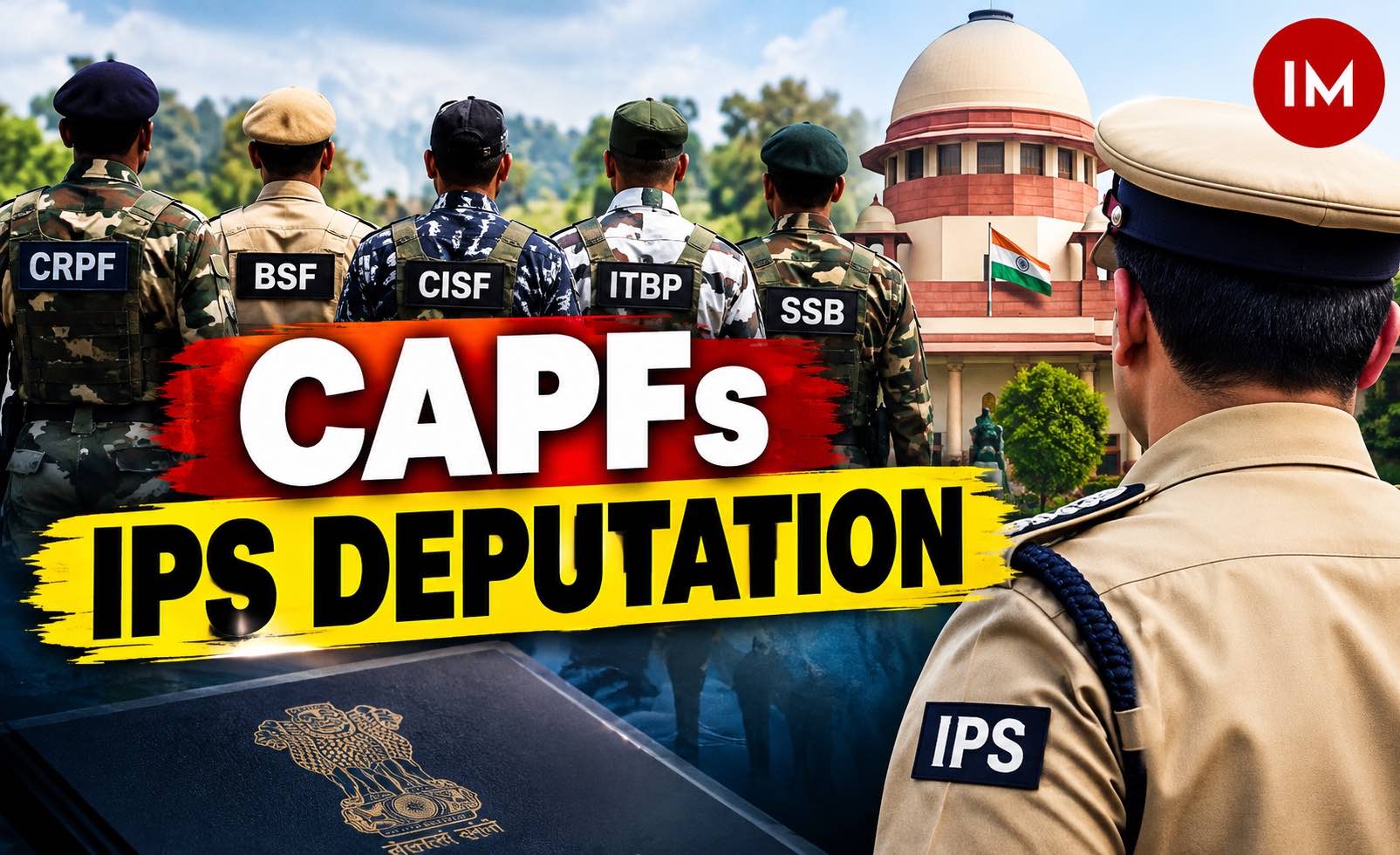
The law covers the Central Reserve Police Force (CRPF), Border Security Force (BSF), Central Industrial Security Force (CISF), Indo-Tibetan Border Police (ITBP) and Sashastra Seema Bal (SSB).
The Ministry of Home Affairs notified that the provisions of the Act would come into force from October 8, 2026. The implementation comes despite petitions pending before the Supreme Court challenging the validity and implications of the legislation.
At the centre of the dispute is the role of Indian Police Service (IPS) officers on deputation to senior positions in the CAPFs and the concern among cadre officers that the new structure could affect their promotional opportunities and career progression.
What Is the New CAPF General Administration Act?
The legislation seeks to create an umbrella framework for the administration and service conditions of officers across the five CAPFs.
Until now, different forces were governed by separate sets of rules relating to recruitment, promotion, deputation and other service matters. The Statement of Objects and Reasons accompanying the legislation notes that the operational requirements of the CAPFs have expanded over the years, resulting in the development of distinct organisational structures.
The absence of a common umbrella legislation, according to the stated rationale behind the Act, contributed to the evolution of divergent rules among the forces. This, in turn, resulted in several service-related litigations and created difficulties in the administration and functioning of the forces.
The new legislation seeks to address these issues by establishing a common statutory framework for Group-A General Duty officers and other officers across the five CAPFs.
Which CAPFs Come Under the New Law?
The Act applies to five major Central Armed Police Forces responsible for internal security, border guarding and protection of vital installations.
They are:
- Central Reserve Police Force (CRPF)
- Border Security Force (BSF)
- Central Industrial Security Force (CISF)
- Indo-Tibetan Border Police (ITBP)
- Sashastra Seema Bal (SSB)
The legislation provides the legal framework for regulating recruitment, promotion, deputation and other conditions of service of officers in these forces.
IPS Deputation at the Centre of the Dispute
One of the most consequential provisions of the new law concerns the appointment of officers through deputation from the Indian Police Service.
The legislation expressly empowers the Central Government to prescribe the method, manner and mode of recruitment of Group-A General Duty officers in the five CAPFs, including recruitment through deputation.
This has become a major point of contention among cadre officers of the CAPFs.
Under the new framework, 50% of posts at the Inspector General (IG) level are to be filled through deputation from the IPS.
At the Additional Director General (ADG) level, a minimum of 67% of posts are to be filled through deputation.
At the two highest levels specified under the legislation — Special Director General (SDG) and Director General (DG) — the posts are to be filled exclusively through deputation.
The provisions have raised concerns among serving and retired CAPF officers about the balance between cadre-based promotion and appointments through IPS deputation.
Why Are CAPF Cadre Officers Opposing the Law?
Cadre officers from the five forces have approached the Supreme Court challenging the legislation and its implications for their career progression.
Their central concern is that the deputation provisions could restrict the number of senior positions available for officers who have spent their careers within the respective CAPF cadres.
According to the officers challenging the framework, greater reliance on IPS officers at senior levels could reduce promotional opportunities for cadre officers and result in delays in their career advancement.
They have also sought implementation of the Supreme Court’s earlier directions concerning the progressive reduction of IPS deputation in the CAPFs.
The challenge has included a contempt petition before the Supreme Court.
What Did the Supreme Court Say in May 2025?
The present dispute is closely linked to a Supreme Court judgment delivered in May 2025 concerning the deputation of IPS officers to the CAPFs.
The Court had directed that deputation of IPS officers to posts up to the rank of Inspector General in the CAPFs should be progressively reduced over a period of two years.
The objective was to create greater promotional opportunities for officers belonging to the CAPF cadres.
The Court had also observed that delays in promotion could adversely affect the morale of the forces.
A direction was also issued for a cadre review, with the broader objective of addressing the structural issues affecting the career progression of CAPF officers.
The Supreme Court’s May 2025 ruling therefore became an important reference point in the subsequent debate over the new legislation.
Review Petition by Centre Also Dismissed
The legal dispute did not end with the May 2025 judgment.
In October 2025, the Supreme Court dismissed a petition filed by the Centre seeking a review of its earlier judgment.
The Supreme Court had maintained the direction concerning the progressive reduction of deputation posts up to the Senior Administrative Grade (SAG) level, with a maximum timeframe of two years for the process.
The Court had also directed a cadre review.
It is against this backdrop that CAPF officers have questioned the provisions of the new legislation and sought implementation of the earlier judicial directions.
Retired CAPF Officers Also Approach Supreme Court
The controversy has also involved retired CAPF personnel.
A group of retired CAPF officers had filed a contempt petition in the Supreme Court against then Home Secretary Govind Mohan, alleging non-compliance with the Court’s October 2025 order.
The petitioners argued that legislative intervention affecting the command structure, service conditions and leadership opportunities within the CAPFs could have implications for the morale of the forces.
They also raised concerns that changes to the existing structure could affect the operational capabilities of forces responsible for critical internal security and border-security responsibilities.
Government’s Position on the New Framework
The Centre has told the Supreme Court through an affidavit that the appointment of Group-A General Duty officers in the respective CAPFs is now regulated by the CAPF (General Administration) Act, 2026.
The government has maintained that the legislation expressly empowers the Central Government to determine the method, manner and mode of recruitment, including recruitment through deputation, as well as the conditions of service of officers in the five CAPFs.
The new law therefore provides the statutory basis for the recruitment and service framework while the Supreme Court continues to hear petitions challenging its validity and implications.
A New Framework at a Sensitive Time
The implementation of the Act marks a significant change in the legal framework governing senior officer recruitment and service conditions in the five CAPFs.
For the government, the legislation provides a unified structure intended to replace divergent rules and address administrative and service-related difficulties that have developed over the years.
For CAPF cadre officers, however, the key issue remains the extent to which senior positions will be available for officers who rise through the respective force cadres, particularly when a substantial proportion of senior posts can be filled through IPS deputation.
The numbers specified in the Act make the issue particularly significant: 50% of IG posts are earmarked for IPS deputation, at least 67% of ADG posts are to be filled through deputation, while SDG and DG posts are to be filled exclusively through deputation.
As the Supreme Court considers the petitions challenging the law, the relationship between the new statutory framework and the Court’s earlier directions on deputation and cadre progression is likely to remain a central issue.
What the CAPF Act Means for Officers
The new law essentially brings recruitment, promotion, deputation and service conditions under a common legal framework for officers serving in the CRPF, BSF, CISF, ITBP and SSB.
Its implementation from October 8 means the statutory framework is now operational nationwide. At the same time, the pending litigation means that the legal challenge to the legislation remains active.
For CAPF cadre officers, the outcome could have a direct bearing on the distribution of senior leadership opportunities between officers promoted through the CAPF cadres and IPS officers inducted through deputation.
The legislation has thus opened a new chapter in the long-running debate over cadre-based career progression versus IPS deputation in the Central Armed Police Forces, with both administrative requirements and judicial directions forming important parts of the ongoing discussion.
Read also: CAPF vs Government: Why OPS, ₹5,400 Grade Pay and OGAS Remain Unresolved Despite Court Victories