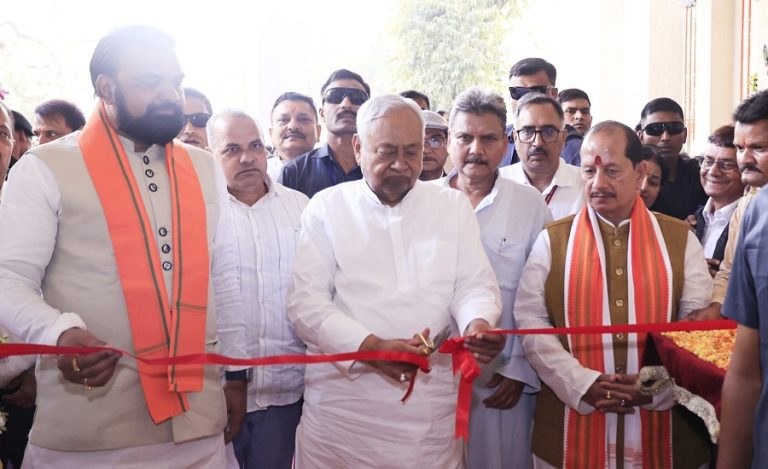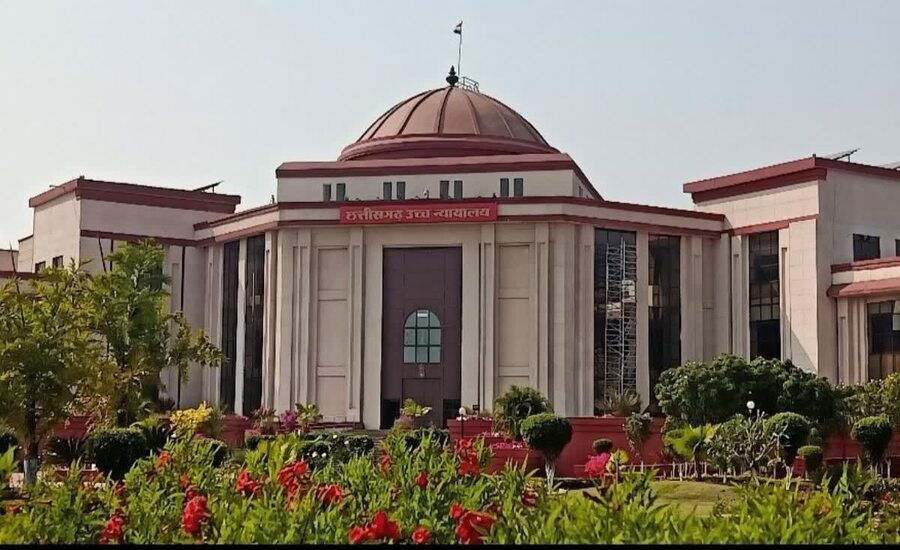
Raipur: In a significant move aimed at strengthening judicial infrastructure and improving access to justice, the Chhattisgarh High Court on Wednesday conducted a virtual Bhoomi Poojan and foundation stone laying ceremony for the construction of a Family Court building at Jashpur and judges’ residential quarters at Dantewada and Sukma.
The event reflects the judiciary’s continued commitment to modernisation, institutional capacity building, and the creation of dignified working and living conditions for judicial officers, particularly in remote and tribal-dominated regions of the state.
Chhattisgarh High Court Virtual Bhoomi Poojan Led by Chief Justice Ramesh Sinha
The ceremony was presided over by Justice Ramesh Sinha, Chief Justice of the Chhattisgarh High Court, who virtually laid the foundation stones for all three projects. The event was attended by senior judicial officers and administrative officials through digital mode, highlighting the court’s adaptive governance approach.
Conducting the Bhoomi Poojan virtually ensured administrative efficiency while maintaining ceremonial sanctity, reflecting how judicial institutions are increasingly embracing technology for governance and infrastructure development.
Family Court at Jashpur: Strengthening Access to Justice
The proposed Family Court building at Jashpur is expected to significantly enhance access to justice in family and matrimonial disputes for residents of the region.
Key Objectives of the Family Court Project
- Faster resolution of family-related cases
- Dedicated infrastructure for sensitive disputes
- Reduced burden on district courts
- Improved access for women, children, and vulnerable sections
Family Courts play a critical role in ensuring conciliatory and humane resolution of disputes, and the new facility at Jashpur is expected to cater to the growing caseload in the district with improved efficiency.
Judges’ Residential Quarters at Dantewada and Sukma
In addition to court infrastructure, the High Court also laid foundation stones for judges’ residential quarters at Dantewada and Sukma, located in the South Bastar region.
These districts are strategically important and administratively challenging due to their geography and security environment.
Providing quality residential facilities for judicial officers is considered essential for:
- Attracting and retaining judicial talent
- Ensuring uninterrupted judicial functioning
- Enhancing officer safety and well-being
- Promoting institutional stability in remote areas
Chhattisgarh High Court Virtual Bhoomi Poojan: Chief Justice Emphasises Role of Infrastructure in Justice Delivery
Addressing the gathering, Chief Justice Ramesh Sinha underscored that robust judicial infrastructure is the backbone of an effective, accessible, and people-centric justice delivery system.
He observed that the development of modern court complexes with essential facilities, along with dignified residential accommodation for judicial officers, directly enhances:
- Court administration efficiency
- Institutional independence
- Impartial and effective discharge of judicial functions