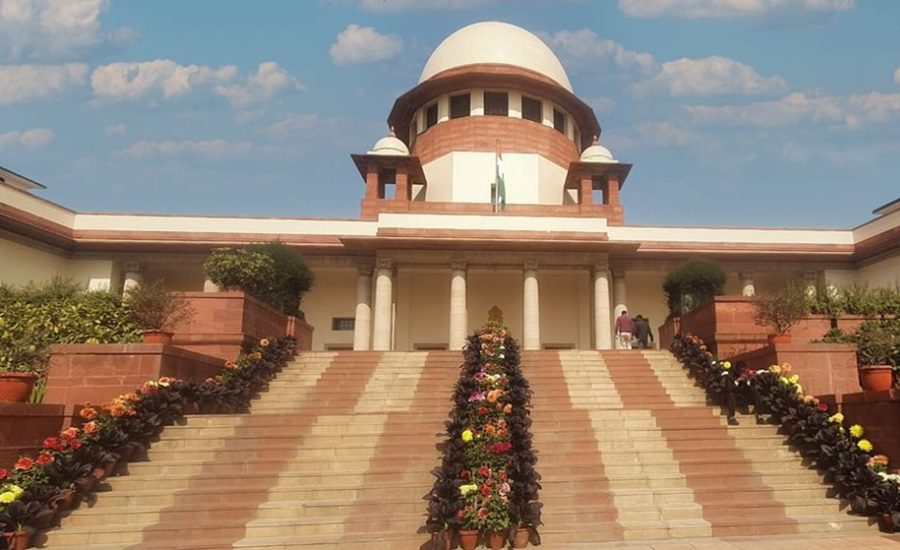
New Delhi: The Supreme Court of India has clarified that judicial officers who entered service before May 20, 2025 are not required to comply with the newly-imposed three-year bar-practice rule when seeking appointment to judicial services in another state — on the condition that they have completed three years of service in their current state.
The ruling brings relief for a class of subordinate judiciary personnel who would otherwise have been disadvantaged by the newly reinstated eligibility requirement.
In a bench comprising B. R. Gavai (Chief Justice of India) and K. Vinod Chandran, the court heard a matter concerning a judicial officer from Madhya Pradesh who sought to move to another state’s judicial services without having completed three years of practice at the bar.
This decision effectively draws a line between pre- and post-judgment (20 May 2025) entrants into judicial service, and has significant implications for interstate recruitment of subordinate judicial officers.
Background of Judicial Officers Bar Practice Exemption Rule
On 20 May 2025, in the case All India Judges Association v. Union of India, the Supreme Court reinstated the requirement that candidates seeking to enter judicial service (such as Civil Judge (Junior Division)) must have at least three years’ practice at the bar.
This reinstatement reversed a previous position (following the 2002 judgment) that had allowed fresh law graduates to enter the judiciary without any minimum practice requirement.
The Court’s rationale centred on ensuring that entry-level judicial officers possess real-world courtroom experience, enhancing their readiness to discharge judicial functions that often involve complex issues of life, liberty and property.
Judicial Officers Bar Practice Exemption: The Issue Before the Court
The applicant was a Civil Judge (Junior Division) in Madhya Pradesh, having joined in 2019 after just one year of enrolment with the Bar Council of Delhi. At the time of her entry, the three-year bar-practice rule had not yet been re-introduced.
She sought to apply for judicial services in another state but found herself ineligible under the new rule since she lacked three years of practice at the bar.
The question before the Court was whether the practice‐requirement should apply to her, given that she had entered service before the judgment date (20 May 2025).
Supreme Court’s Clarification on Judicial Officers Bar Practice Exemption
The bench held that for judicial officers appointed prior to the judgment of 20 May 2025, the three-year practice requirement at the bar would not apply when they seek appointment in another state.
However, this exemption was subject to a condition: such officers must have served at least three years in their current state’s judicial service.
In the case at hand, the applicant had served six years in her current position, satisfying the required three-year service condition. Accordingly, the Court held that the practice-requirement did not apply to her.
The Court further clarified that this ruling resolves ambiguity and instructs states and High Courts to treat judicial officers in this “pre-judgment” category differently compared to those entering service after the judgment date.
Judicial Officers Bar Practice Exemption: Key Implications for Judicial Service Recruitment
For eligible officers: Officers who joined judicial service before 20 May 2025 and have completed three years’ service in their state are now eligible to apply for services in other states without the three-year bar-practice at the bar.
This ensures that they are not unfairly disadvantaged by a rule that came into force after their appointment.
For new entrants: Candidates who join judicial service after 20 May 2025 will be subject to the three-year bar-practice requirement. They must have practiced law for three years before becoming eligible.
States and High Courts will have to amend recruitment rules and ensure compliance with the Supreme Court’s ruling.
For inter-state mobility: The clarification facilitates mobility of judicial officers across states by removing a significant eligibility barrier for those already in service.
It may prompt states to recognise service tenure from other states more readily, provided the applicant meets the three-year service condition.
For recruitment frameworks: The delineation between “pre-judgment” and “post-judgment” recruits necessitates careful distinction in rule-making by state judicial service commissions and High Courts.
States may need to update their service regulations and recruitment notifications to reflect the Supreme Court’s judgment.
Key Legal and Administrative Significance in Judicial Officers Bar Practice Exemption Rule
The decision reflects a broader recognition that practice-based experience is an important component of judicial competence but also acknowledges fairness for earlier appointees.
From a legal‐analytical standpoint:
- It illustrates the principle of non-retroactivity of procedural rules in recruitment when applied to earlier incumbents.
- It balances the evolving standards of eligibility (three-year bar-practice rule) with the protection of legitimate expectation for those who had already joined service.
- The judgment may serve as precedent for other service-rule modifications introduced in mid-stream of service careers, making clarity around modalities essential.
Potential Challenges and Observations
- States may face administrative burdens in segregating recruitments between those who joined before and after the judgment date.
- Applicants who entered service recently but have not completed three years’ service may seek relief or clarification if they find themselves disadvantaged.
- The judgment might prompt questions about the retrospective effect of practice-requirements and the threshold for “completed three years’ service” (whether continuous or cumulative).
- There may be variation among states in how they operationalise the service tenure requirement, requiring standardized guidelines.