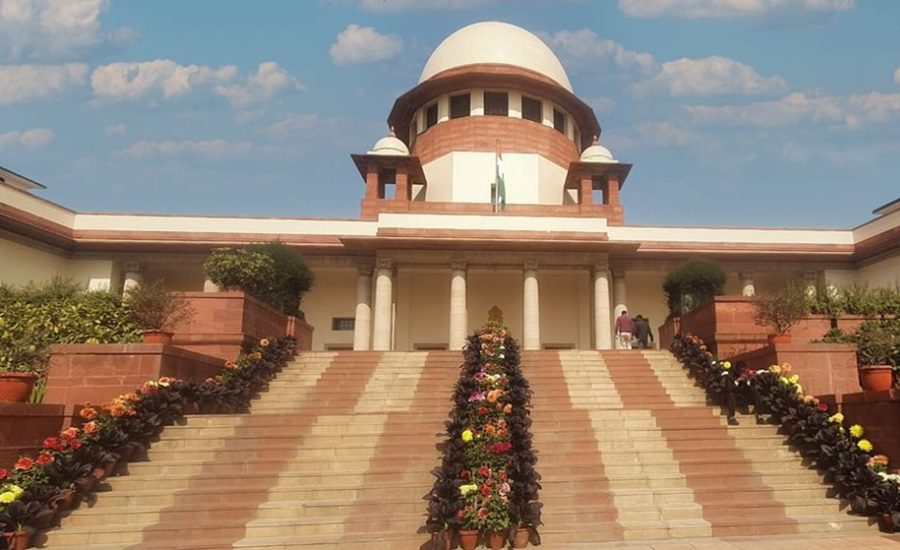
New Delhi: In a decisive ruling on 19 November 2025, the Supreme Court of India struck down several critical provisions of the Tribunals Reforms Act, 2021—specifically those governing the appointment, age, tenure and service conditions of tribunal members.
A Bench headed by CJI B. R. Gavai and Justice K Vinod Chandran observed that the Act effectively reproduced earlier invalidated provisions—without curing their defects—resulting in what the court termed “legislative overwrite”.
The Court held that such reenactment violated the constitutional pillars of separation of powers and judicial independence, and therefore declared the impugned provisions unconstitutional.
Background of the Case
The Tribunals Reforms Act 2021 was introduced by the Central Government with the stated aim of streamlining the functioning of India’s tribunals, reducing pending cases, and bringing uniformity to appointments, service conditions and tenure of tribunal members. However, the Act immediately triggered strong objections from the legal fraternity, bar associations and constitutional experts.
The controversy began when the Act reintroduced several provisions that had already been struck down earlier by the Supreme Court in a series of judgments, including the Madras Bar Association cases (MBA-III, IV & V). These judgments had emphasised that tribunal appointments must ensure judicial independence, longer tenures, and minimal executive interference.
Despite these clear directions, the 2021 Act brought back:
- A short four-year tenure for tribunal members
- A minimum age requirement of 50 years
- Increased powers of the Central Government in appointments
- Provisions allowing the Centre to frame rules that could override earlier Supreme Court rulings
- These clauses were seen as an attempt to tighten executive control over tribunal structures.
Over the last few years, multiple petitions were filed, particularly by the Madras Bar Association, challenging these provisions as violating the basic structure doctrine, especially the principles of judicial independence and separation of powers.
The Supreme Court had warned repeatedly that Parliament cannot re-enact provisions already declared unconstitutional, unless the underlying defects are cured. However, the 2021 Act was viewed as a “legislative over-ride” of judicial orders—creating a deep constitutional conflict.
This background laid the foundation for the historic Supreme Court verdict delivered now, where the Court has struck down the contentious provisions of the Act as unconstitutional, calling them a direct attempt to undermine the autonomy of tribunals.
Importance of Tribunals Reforms Act 2021 Strike Down
- The judgment reinforces that tribunal members must enjoy service conditions that uphold impartiality and independence—not mere formal tenure. The reinstated norms reaffirm that restrictions like mandatory four-year tenures and minimum age limits re-packaged in the 2021 Act were impermissible.
- By pointing out that Parliament cannot simply repack provisions struck down by the judiciary, the Supreme Court sent a strong message: legislative action must address the judicially identified defects, not merely reword invalidated clauses.
- The ruling has restored previous tenure norms: for example, members of the Income Tax Appellate Tribunal (ITAT) and Customs, Excise & Service Tax Appellate Tribunal (CESTAT) will continue until age 62, and their heads until age 65—overriding the shorter terms created by the 2021 Act.
What the Bench Directed Next
- The Court mandated that until a fresh legislative scheme is introduced, the guidelines laid down in the earlier Madras Bar Association (MBA)‑IV &‑V judgments will govern tribunal appointments and service conditions.
- The Centre must establish a National Tribunals Commission within three to four months to oversee tribunal governance and ensure compliance with constitutional norms.
- Appointments or selections made under the 2021 Act which do not conform to the Court’s restored norms must be reviewed to ensure members enjoy the correct tenure and service protections.
Key Implications of Tribunals Reforms Act 2021 Overturn
For the Central Government: The verdict is a major setback to the Centre’s attempt to streamline tribunal reforms via the 2021 Act. The government now faces urgent legislative work to frame a tribunal law that aligns with constitutional standards—and cannot simply rely on re-packaging old rules.
For Tribunals & Appointees: Members appointed under the struck-down provisions may see their terms restored or extended under prior norms. This ensures better institutional stability and shields tribunal members from executive or legislative interference.
For Justice Seekers: A more independent tribunal system reassures litigants that adjudication will be less exposed to institutional capture or truncated tenures. It also signals that judicial time and tribunal backlog cannot be addressed simply by reducing tenures or restricting ages.
Way Ahead
- Parliament must now draft a constitutionally compliant law fixing appointments, tenure, service conditions, and creating oversight in consultation with the judiciary.
- The government will likely seek stakeholder consultations (tribunal members, bar associations, judiciary) to avoid another judicial rebuke.
- Litigants in pending cases may monitor tribunal member tenures and appointments closely to ensure decisions are free of constitutional infirmity.
- Legal experts will scrutinize future tribunal statutes for consistency with this benchmark ruling on judicial independence and separation of powers.