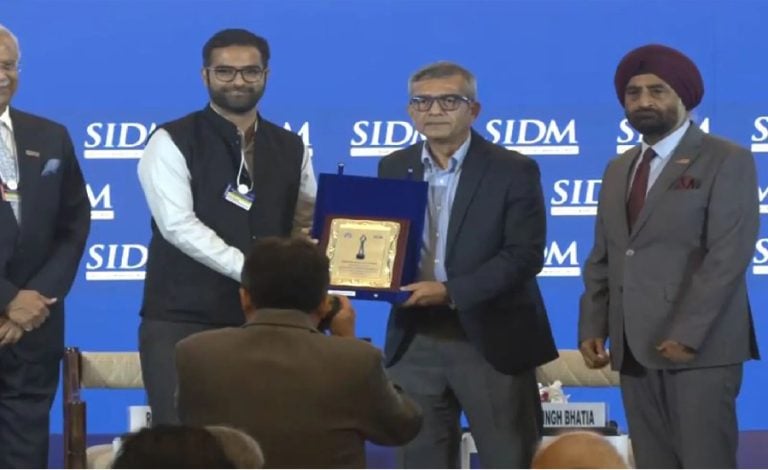
New Delhi: Speaking at the Society of Indian Defence Manufacturers (SIDM) Annual Conference in Delhi, Rajesh Kumar Singh highlighted the need to speed up defence procurement while maintaining transparency, procedural integrity and legal accountability.
He said several major acquisition programmes are being processed at the highest levels, including MRFA and other key defence initiatives. Some procurement-related processes could translate into signed contracts before the end of 2026.
Singh emphasised that procurement procedures must be followed to protect the integrity of the acquisition process. He acknowledged the need to accelerate decision-making but cautioned against bypassing established processes.
The Defence Secretary also highlighted reforms to the Defence Acquisition Procedure (DAP), stating that the Ministry of Defence hopes to secure final approval for the proposed changes before the end of 2026.
He noted that the number of contracts signed has improved significantly, although procurement needs to move faster to meet the country’s operational and industrial requirements.
Key procurement priorities include:
- Expediting high-value defence acquisition programmes.
- Advancing MRFA procurement.
- Progressing jet engine co-production arrangements.
- Implementing reforms to the Defence Acquisition Procedure.
- Increasing the pace of contract finalisation and execution.
Read also: India-France Rafale M Deal: How India Plans To Integrate Its Own Weapons in Rafale M Fighter Jets
DRDO Reforms to Focus on Research and Development
A major part of Singh’s strategy involves transforming DRDO into a primarily research-focused organisation rather than allowing it to function as a systems integrator or original equipment manufacturer (OEM) in conventional areas.
He said reforms have been initiated to establish clearer roles and responsibilities within the organisation. Under the proposed approach, DRDO will concentrate on scientific research and the development of advanced defence technologies.
However, the organisation may continue to undertake production-related activities in specialised strategic fields where no viable alternatives exist.
The reform strategy aims to strengthen DRDO’s core research capabilities while enabling Indian private companies to commercialise technologies developed through public research investments.
Conventional Missile Technologies to Be Transferred to Private Industry
Singh announced that DRDO intends to transfer technology for conventional missile systems to private industry by November 2027, enabling companies to undertake commercial production.
The proposed shift is expected to give private manufacturers a greater role in producing established defence systems while allowing DRDO scientists to focus on next-generation technologies.
The approach seeks to create a clearer division of responsibilities between research institutions and manufacturing companies, helping expand India’s defence production capacity.
DRDO Laboratories to Be Rationalised
The Defence Secretary also outlined plans to rationalise DRDO’s laboratory network to reduce duplication, improve coordination and strengthen research efficiency.
The organisation currently has approximately 33 laboratories, according to Singh’s remarks. The proposed restructuring aims to reduce overlapping activities, streamline administration and allow scientists to devote more time to research and development.
The VijayRaghavan Committee report has also recommended consolidating DRDO laboratories, with a proposed structure of approximately 33–35 core research centres from a network of around 50 laboratories.
The broader reform agenda includes:
- Reducing duplication across research establishments.
- Clarifying institutional responsibilities.
- Improving accountability for project timelines.
- Simplifying administrative procedures.
- Reducing the administrative burden on scientists, including tasks related to Government e-Marketplace (GeM) tendering.
The Ministry is also considering changes to recruitment practices and measures to address recurring project delays.
Singh stressed that talent and accountability would be central to DRDO’s transformation, while acknowledging the organisation’s contributions to India’s strategic programmes and scientific capabilities.
Government Targets Greater Private Sector Participation in Defence Production
Singh emphasised that India’s strategic autonomy depends on building a strong and sovereign domestic defence industrial base.
He said the government wants the private sector to account for at least 50% of India’s defence production over time, compared with its current share of approximately 24%.
According to data cited from the Ministry of Defence, the private sector’s contribution to the value of defence production has ranged between 21% and 25% in recent years, while Defence Public Sector Undertakings (DPSUs) account for the remaining share.
Singh called for a more balanced partnership between public and private manufacturers, arguing that domestic defence production is essential not only for national security but also for industrial expansion, employment generation and economic growth.
The government has already increased the allocation of the defence capital procurement budget for domestic industry to 75%, from 68% in FY2022–23.
India’s annual defence capital budget is estimated at ₹1.6 lakh crore to ₹1.8 lakh crore, creating a substantial opportunity for domestic manufacturers.
Singh estimated that the domestic defence industry could have an annual business opportunity of approximately $20 billion to $25 billion over the next decade.
Defence Ministry Wants Industry to Be Treated as a Partner
Singh called for a cultural shift within the Ministry of Defence and the Armed Forces, urging officials to view companies as industry partners rather than merely vendors.
Drawing on his previous experience at the Department for Promotion of Industry and Internal Trade (DPIIT), he highlighted the importance of building trust and cooperation between government institutions and the domestic defence industry.
He said the term “industry partners” better reflects the strategic relationship required between the government and manufacturers across the public and private sectors.
The Defence Secretary also encouraged companies to collaborate after receiving contracts, stressing that healthy competition should not prevent manufacturers from working together to ensure timely project execution.
According to Singh, effective coordination among the Armed Forces, DRDO, DPSUs, private companies, MSMEs, start-ups and academic institutions is essential to achieving long-term defence self-reliance.
Operation Sindoor Highlights Importance of Industry Coordination
Singh referred to situations such as Operation Sindoor to underline the importance of direct engagement between military commanders and industry during urgent operational requirements.
Such situations demonstrate the need for responsive domestic manufacturing capabilities and effective coordination between the Armed Forces and suppliers.
He stressed that India’s defence ecosystem must be capable of responding quickly to changing operational demands, particularly during emergencies when equipment and supplies may be required at short notice.
The experience reinforces the need for stronger relationships between military users, research institutions and manufacturers to improve the speed and reliability of defence supplies.
Government Opens More Defence Manufacturing Opportunities to Private Companies
The Defence Secretary highlighted the government’s efforts to reduce public sector monopolies and expand opportunities for private manufacturers across the defence industry.
Sectors that were previously dominated by government-owned enterprises are increasingly opening to private participation.
These efforts include:
- Ammunition manufacturing: Licensed private domestic companies have been permitted to manufacture ammunition.
- Fighter aircraft production: Private industry participation is being encouraged, including through the Advanced Medium Combat Aircraft (AMCA) programme.
- Missile manufacturing: DRDO plans to transfer technologies for conventional missile systems to private companies by November 2027.
- Defence supply chains: Indian manufacturers are being encouraged to integrate into international supply chains, particularly in friendly countries and regions.
The government has also corporatised the former Ordnance Factory Board into seven Defence Public Sector Undertakings, while opening additional manufacturing opportunities to licensed private entities.
Singh said the objective is to create a more competitive industrial ecosystem in which public sector enterprises, private manufacturers and emerging companies can contribute to national defence requirements.
Faster Technology Development and Drone Procurement in Focus
Singh highlighted the need to adapt procurement and development processes to rapidly evolving defence technologies, particularly drones and other emerging systems.
The Ministry of Defence is delegating greater authority to facilitate faster decision-making and encouraging spiral development, an approach that allows systems to be improved through successive development stages rather than waiting for a single, finalised design.
He argued that fast-track procurement should become the norm rather than the exception, particularly in technology areas where capabilities can change rapidly.
The Ministry is also considering measures to reduce entry barriers for start-ups and micro, small and medium enterprises (MSMEs).
Proposals include reimbursement of trial costs and no-cost, no-liability field evaluations, which could help smaller companies demonstrate their technologies without bearing excessive financial risks.
These measures aim to encourage innovation, attract new participants and strengthen India’s ability to develop and manufacture advanced defence technologies domestically.
Defence Reforms Aim to Strengthen India’s Strategic Autonomy
Singh’s reform agenda combines faster procurement, a research-focused DRDO, greater private sector participation and stronger collaboration across India’s defence ecosystem.
The proposed changes seek to reduce delays, improve accountability, expand domestic manufacturing and help Indian companies participate in global defence supply chains.
By increasing private industry involvement while retaining public sector expertise in strategic areas, the government aims to build a more balanced and resilient defence industrial base.
The success of these reforms will depend on the implementation of procurement changes, timely technology transfers, improved project management and effective cooperation between the government, research institutions and industry.
Ultimately, the strategy positions domestic defence manufacturing as both a national security priority and a driver of India’s industrial and economic growth.
Read also: Why India And Greece Are Strengthening Coastal Security And Maritime Cooperation