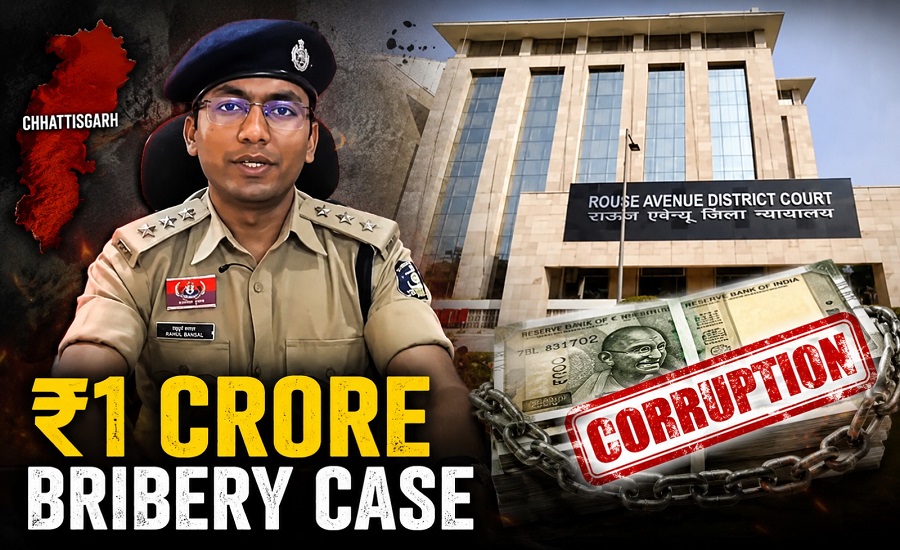
Chhattisgarh Director General of Police Arun Dev Gautam has submitted a report before a Delhi court concerning allegations that IPS officer Rahul Bansal and two other police personnel demanded and accepted a bribe to halt an investigation into a cyber fraud case.
Bansal, a 2022-batch IPS officer, has rejected the allegations, calling them baseless and saying that he has full faith in the judicial process. The matter is currently before the court, while the CBI court continues to hear the related proceedings.
The case originated from a complaint filed at the Ambikapur Cyber Police Station over an alleged Rs 21.15 lakh cyber fraud. The complainant told police that he lost the money through 84 transactions carried out on two fake trading platforms.
A police team led by Bansal investigated the case and subsequently filed a chargesheet against 23 people.
Rs 1.5 Crore Bribe Allegation
According to the CBI court’s July 1 order, the complainant approached the court after alleging that neither the Chhattisgarh Police nor the CBI had taken action on his complaint.
The complaint submitted before the Ambikapur police alleged that Bansal, allegedly through two other policemen, demanded Rs 1.5 crore to stop the investigation. The complainant alleged that Rs 1 crore was eventually paid.
IPS Rahul Bansal has denied the allegations.
“The allegations are baseless. The complaint is currently before the court, and I have complete faith in the judicial process and the law,” he said.
Sarguja Range Inspector General of Police Deepak Kumar Jha told The Indian Express that the original fraud investigation had uncovered what police described as a sophisticated cyber-fraud network operating across several states and internationally.
Jha identified Haryana-based Anshul Ginotra and Delhi-based Garvit Jain as two key suspects. Both are reportedly absconding, and non-bailable warrants have been issued against them. Jha also said that he was examining the bribery allegations.
Fake Trading Platforms and Rs 1,880 Crore in Crypto Transactions
The investigation has expanded significantly beyond the original Rs 21.15 lakh complaint.
According to police sources, as reported in TIE, the accused allegedly operated 38 fake trading portals that were used by around 19,340 people. Investigators believe the network relied on mule bank accounts, fintech payment gateways and multiple channels to move the money.
Two of the platforms examined by investigators allegedly recorded cryptocurrency-linked transactions worth more than Rs 1,880 crore over a four-month period.
Police have described the case as a major investigation into alleged illegal ‘dabba trading’ and fintech-based money laundering. In dabba trading, transactions or bets are settled outside recognised stock exchanges rather than through regulated market mechanisms.
Investigators also found that those allegedly running the network used pseudonyms, virtual phone numbers and mobile connections registered in other people’s names, making it difficult to establish their identities.
An investigation-linked ledger allegedly showed laundering flows of Rs 601.90 crore in less than two months. Payment gateway collections reportedly crossed Rs 275.41 crore in October 2025 alone.
The other 36 portals remain under investigation.
Network Spread Across Eight States
According to investigators, the alleged operation was divided into several layers. Different groups were reportedly responsible for developing and managing the fake platforms, arranging bank accounts, processing payments and transferring the proceeds through cash, hawala and cryptocurrency.
Investigators have identified around Rs 690 crore that allegedly moved through one fintech payment network, although they suspect the actual figure could be higher.
In one case, a single virtual ID allegedly handled Rs 8.86 crore through 822 transactions in just one day.
Police also suspect that cash was moved through cash-management and hawala channels. Investigators have alleged that between Rs 50 lakh and Rs 1 crore was moved daily in Delhi through such channels.
The investigation has also traced alleged overseas links. In Dubai, rupee proceeds were reportedly converted into UAE dirhams, while cryptocurrency was allegedly transferred to Chinese vendors for betting and gaming balances as well as server-related expenses.
So far, 23 people have been arrested across eight states in connection with the alleged network.
Investigators now suspect that the operation may have been active since 2022. If established, the longer operating period could indicate that the scale of the alleged fraud was considerably larger than what was initially reported in the Ambikapur complaint.
The bribery allegations against Bansal remain before the court, and the claims against all accused persons are subject to the ongoing judicial proceedings.