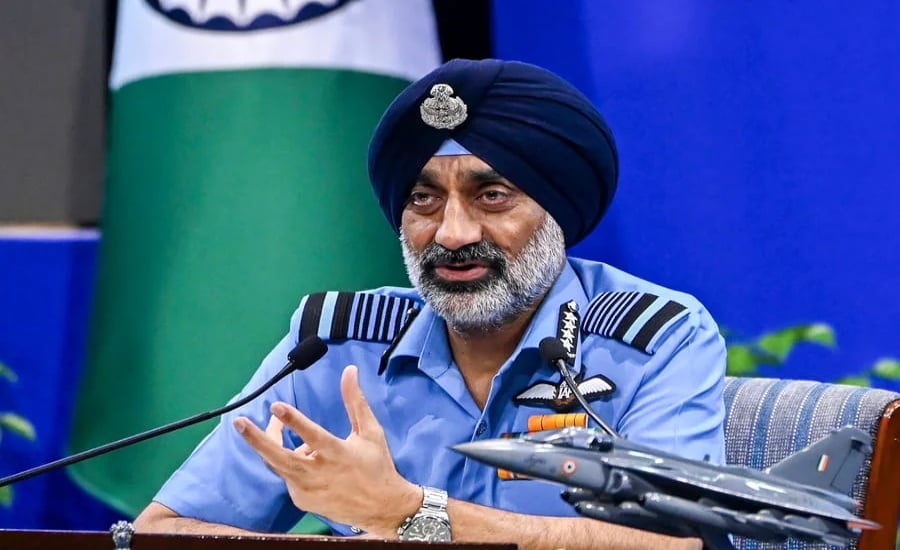
New Delhi: IAF drones strategy is evolving rapidly as India expands its use of drones, loitering munitions, and unmanned systems. Air Chief Marshal A.P. Singh has clarified that drones are becoming an important part of modern warfare, but the IAF does not see a need for a separate drone force.
Instead, drones will remain integrated with existing air combat and weapon systems. His remarks came ahead of Air Force Day celebrations and during discussions on Exercise Tarang Shakti 2026.
Details of IAF Drones Strategy
Air Chief Marshal A.P. Singh said drones are not a completely new concept for the Indian Air Force. According to him, the IAF has been using capabilities similar to modern unmanned systems for many years. However, he emphasized that drones are evolutionary, meaning they are significantly improving military operations and changing how missions are carried out on the battlefield.
Loitering munitions and unmanned systems can create confusion for adversaries and help destroy important targets.
Drones Will Remain Part Of The Existing Force Structure
The Air Chief clearly ruled out the idea of creating an independent drone command or separate drone force. He explained that drones must operate alongside fighter aircraft, missiles, surveillance systems, and other military assets. According to the IAF, modern warfare requires all platforms to work together as a single integrated force rather than as separate organizations.
IAF Drones Strategy: Specialized Drone Units May Expand
While rejecting a separate drone force, the Air Chief confirmed that specialized drone units already exist within the Indian Air Force. He stated that the number of such units could increase in the future if operational requirements demand it. This approach allows the IAF to strengthen drone capabilities without creating a completely separate command structure.
Why Integration Is Important In Modern Warfare
Modern military operations involve aircraft, drones, missiles, electronic warfare systems, satellites, and ground forces working together.
The IAF believes drones should support these systems rather than function independently. Integrated operations improve coordination, increase battlefield effectiveness, and help commanders make faster decisions during combat situations.
Growing Focus On Unmanned Systems
The Indian Air Force has been actively increasing its focus on unmanned technologies. Recent initiatives such as Dronathon 2026 demonstrate the service’s interest in testing advanced drone capabilities and encouraging innovation in the unmanned systems sector.
Exercise Tarang Shakti 2026 Highlights International Cooperation
Speaking about Exercise Tarang Shakti 2026, Air Chief Marshal Singh highlighted the importance of multinational military exercises. He said such exercises help participating countries improve interoperability, learn from each other’s experiences, and strengthen operational coordination. The exercise is being hosted by the Indian Air Force in Jodhpur and involves multiple partner nations.
Learning From Global Air Forces
The Air Chief noted that multinational exercises create opportunities for pilots and military personnel to interact with foreign counterparts, understand different operational methods, and improve communication during joint missions. These lessons help participating air forces improve their readiness for future operations.
Read also: Why The Indian Air Force Is Already Looking At Tejas Mk-2 Amid Delays In Tejas Mk-1A Deliveries
FAQs
The IAF believes drones enhance and expand existing military capabilities rather than completely replacing traditional systems, making them an evolutionary development in warfare.
No. Air Chief Marshal A.P. Singh has stated that the IAF does not see a need for a separate drone force and prefers integrating drones into existing operational structures.
Exercise Tarang Shakti 2026 is a multinational air exercise hosted by the Indian Air Force to improve interoperability, cooperation, and operational learning among participating nations.