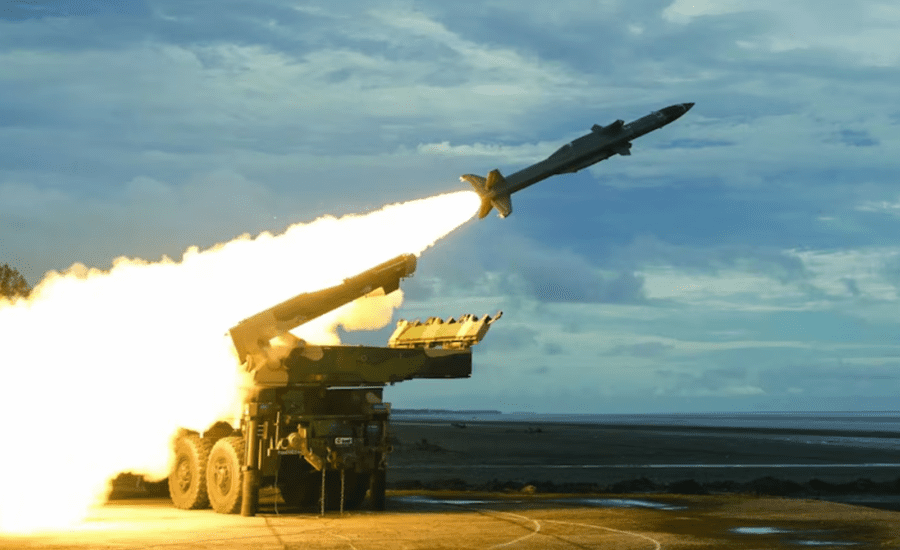
New Delhi: The BrahMos-II hypersonic missile is emerging as one of India’s most ambitious next-generation defence projects. Designed as a hypersonic cruise missile for deployment across the Army, Navy and Air Force, the missile is expected to combine extreme speed, long-range precision strike capability and multi-platform adaptability. If successfully developed, BrahMos-II could significantly strengthen India’s strategic deterrence and long-range strike capabilities.
What Is The BrahMos-II Hypersonic Missile
BrahMos-II is a proposed hypersonic variant of the BrahMos missile family being developed by BrahMos Aerospace, the India-Russia joint venture between DRDO and NPO Mashinostroyenia.
Read also: How India Plans to Make the World’s Fastest Cruise Missile 20% Cheaper by 2028
According to BrahMos Aerospace, the missile is envisioned as a futuristic hypersonic weapon featuring advanced technologies, smart materials and an air-breathing propulsion system.
Designed For Army, Navy And Air Force
One of the biggest advantages of BrahMos-II is its tri-service capability. The missile is expected to be adaptable for launch from land-based mobile launchers, naval warships and aircraft, allowing all three branches of India’s armed forces to use the same strike platform. This multi-platform flexibility is a key feature of the BrahMos missile family.
BrahMos-II Hypersonic Missile: Hypersonic Speed Could Transform Strike Operations
Official information from BrahMos Aerospace states that BrahMos-II is being designed around scramjet (supersonic combustion ramjet) technology, enabling speeds of Mach 5 and above.
Defence reports and open-source assessments suggest the missile could potentially reach speeds approaching Mach 8, making it one of the fastest cruise missiles under development. At such speeds, enemy air-defence systems would have very little reaction time.
BrahMos-II Hypersonic Missile: Long-Range Precision Strike Capability
Reports indicate that BrahMos-II could achieve a significantly longer range than current BrahMos variants. Some defence assessments estimate a potential range between 600 km and 1,500 km, although final specifications will depend on development progress, testing results and official approvals. No final operational range has yet been officially announced by BrahMos Aerospace.
BrahMos-II Hypersonic Missile: Advanced Scramjet Engine At The Core
The most critical technology behind BrahMos-II is its air-breathing scramjet engine. Unlike conventional rocket propulsion, a scramjet uses atmospheric oxygen during flight, helping sustain hypersonic speeds over longer distances. BrahMos Aerospace has identified this propulsion technology as one of the defining elements of the programme.
Why BrahMos-II Hypersonic Missile Matters For India
The development of BrahMos-II reflects India’s broader effort to build advanced indigenous and joint-development missile technologies. A successful hypersonic missile programme would provide:
- Faster response capability
- Deep-strike options against distant targets
- Greater survivability against missile defences
- Enhanced deterrence across land, sea and air domains
The project also aligns with India’s long-term focus on next-generation defence technologies and strategic self-reliance.
Current Status
BrahMos Aerospace has officially confirmed that BrahMos-II remains under development as a future hypersonic weapon system.
The final performance characteristics, including speed, range and deployment timelines, will depend on ongoing research, testing and technological validation.
Read also: What Is India’s Nirbhay Cruise Missile? Features, Range, And Strategic Importance Explained