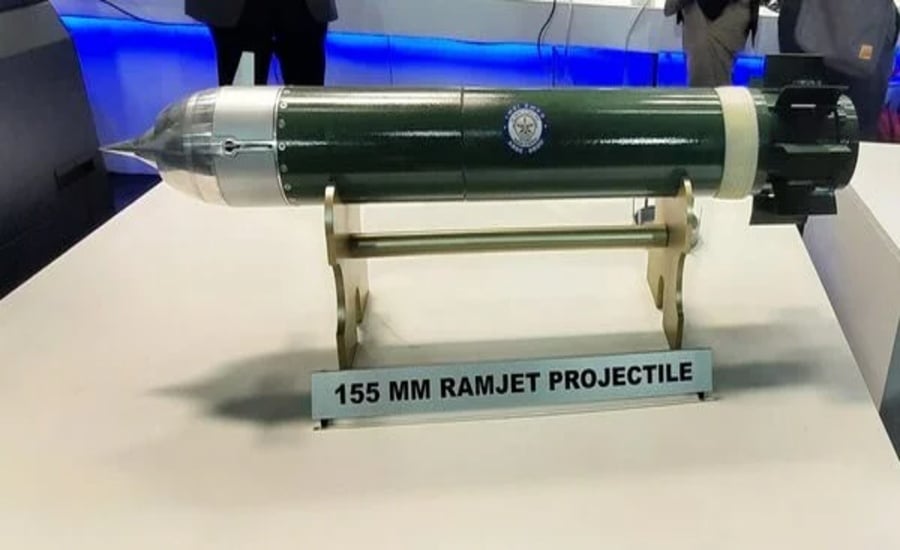
New Delhi: India is developing advanced 155mm ramjet-powered artillery ammunition to increase the Indian Army’s firing range. The DRDO 155mm ramjet artillery shell project is linked to India’s efforts to improve its defence technology through domestic research and development.
The technology aims to help conventional artillery shells travel much farther without requiring entirely new gun systems. However, the 80-kilometre range remains a development target reported in defence coverage, while official updates from IIT Madras confirm successful testing of the underlying ramjet technology and continued development.
What Is DRDO 155mm Ramjet Artillery Shell Project
The project aims to improve the range of conventional 155mm artillery ammunition by using ramjet propulsion. The Defence Research and Development Organisation (DRDO) has displayed a 155mm ramjet projectile, while research by the Indian Institute of Technology Madras has advanced the development of this technology.
Read also: Indian Army is Facing This Major Challenge Before the Zorawar Tank Induction
The main objective is to help the Indian Army engage targets at greater distances while continuing to use existing artillery platforms.
How Does Ramjet Technology Work
A ramjet is an air-breathing engine that uses the forward speed of a moving object to compress incoming air. It then mixes the compressed air with fuel to produce thrust.
Unlike a conventional artillery shell, which mainly depends on the energy received during firing, a ramjet-powered shell can produce additional thrust during flight. This extra thrust can help the shell travel farther than conventional ammunition, depending on its design and performance.
Why Does The Indian Army Need Longer-Range Artillery
Artillery is an important part of the Indian Army’s battlefield capabilities. Longer-range ammunition can help military units engage targets farther away while remaining at a greater distance from opposing forces. A successful extended-range shell could offer several benefits:
- Greater Firing Range: It could allow artillery units to reach targets located farther away.
- Better Use Of Existing Guns: The technology aims to improve ammunition performance without replacing every artillery gun.
- Lower Dependence On Missiles: For suitable missions, extended-range artillery could provide another option alongside more expensive missile systems.
- Improved Operational Flexibility: Longer-range weapons could give commanders more choices during military operations.
The actual benefits will depend on final testing, ammunition compatibility, accuracy and operational requirements.
Can The New Shell Reach 80 Kilometres
The reports describe a target range of up to 80 kilometres for the 155mm ramjet projectile. This would represent a major increase over the approximately 45-kilometre range cited for some existing artillery configurations. However, the 80-kilometre figure should not be treated as a confirmed operational capability.
In an official announcement dated January 12, 2026, IIT Madras reported successful development and testing of ramjet-propelled artillery shells. The institute stated that the technology could potentially increase artillery range by nearly 50 per cent when fully developed.
The announcement also confirmed that further technical work was continuing. Therefore, the final range and operational status must be distinguished from the project’s development goals.
What Is The Role Of DRDO And IIT Madras
DRDO is India’s main defence research and development organisation. It works on technologies intended to strengthen the country’s military capabilities.
IIT Madras has conducted research into ramjet-assisted artillery ammunition in collaboration with the Indian Army. The project began in 2020 and has progressed through several stages of testing.
According to IIT Madras, trials with a 76mm gun helped validate the core concept before the technology was tested with 155mm artillery systems.
Tests at the School of Artillery in Deolali in September 2025 demonstrated successful gun exit, stable flight and ramjet ignition. Further trials at the Pokhran Field Firing Range in December 2025 marked another stage in development. The project still requires continued technical improvements before its full operational capability can be established.
How Could The DRDO 155mm Ramjet Shell Project Support Atmanirbhar Bharat
Atmanirbhar Bharat aims to increase India’s ability to design, develop and manufacture important products within the country.
Developing advanced artillery ammunition domestically could support this goal by strengthening India’s defence research, engineering skills and local technology base.
It could also reduce dependence on foreign suppliers for certain specialised defence technologies, provided that the system reaches the required level of performance and production readiness.
The project highlights the role of cooperation between research institutions, the armed forces and defence organisations in developing advanced military equipment.
Read also: What is MTS 2.0? How It Can Upgrade Indian Army For the Advanced Warfare
FAQs
A ramjet-powered shell uses incoming air and fuel to produce thrust during flight. This additional propulsion can help the shell travel farther than conventional artillery ammunition.
The reported development target is up to 80 kilometres. However, this figure should not be treated as a confirmed operational range. IIT Madras has reported successful testing of ramjet-assisted artillery technology and a potential range improvement of nearly 50 per cent.
Successful development and testing have been reported, but the technology is still undergoing technical improvements. Its final operational capability and deployment status depend on further trials and official defence decisions.