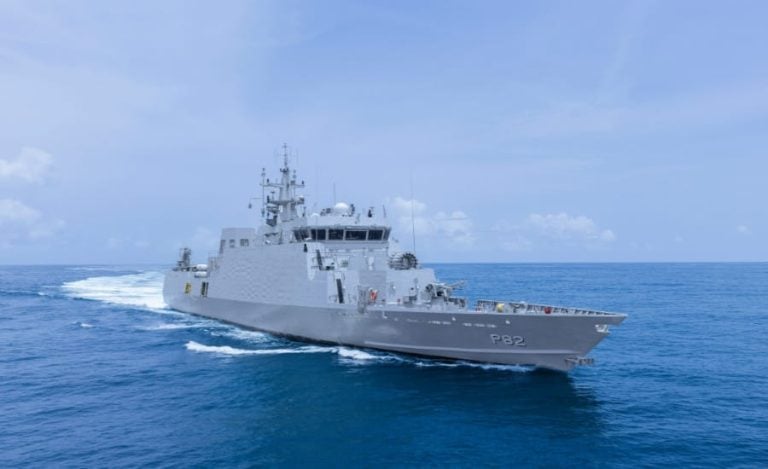
New Delhi: DRDO Active Antenna Array Unit has reached an important milestone after Astra Microwave Products Limited officially delivered the advanced Active Antenna Array Unit (AAAU) to the Defence Research and Development Organisation (DRDO) for final testing. The delivery is a major step in India’s mission to build world-class indigenous defence systems under the Aatmanirbhar Bharat initiative. Once the final trials are successfully completed, the radar system is expected to improve the Indian Navy’s surveillance, target tracking, and air defence capabilities.
Details of DRDO Active Antenna Array Unit
India’s defence technology has moved one step closer to self-reliance with the delivery of the Active Antenna Array Unit (AAAU) by Astra Microwave Products Limited.
Read also: What Is DRDO’s SMART Anti-Submarine Weapon? Final Trials and 2031 Navy Induction Explained
The company confirmed the handover during its fourth-quarter financial results presentation. According to the company, the radar subsystem has now entered the final testing phase under DRDO before it can be approved for operational deployment.
The delivery demonstrates the strong partnership between India’s government research organisations and private defence manufacturers in developing advanced military technologies.
What is the Active Antenna Array Unit (AAAU)
The Active Antenna Array Unit (AAAU) is one of the most important components of an Active Electronically Scanned Array (AESA) radar. Instead of using a mechanically rotating antenna like older radar systems, an AESA radar uses hundreds of small transmit/receive (T/R) modules. These modules electronically direct radar beams within milliseconds.
This technology allows the radar to quickly search, detect, track, and monitor multiple targets at the same time without moving the antenna physically. Because of this advanced design, AESA radars are considered among the most capable radar systems used by modern armed forces worldwide.
Why DRDO Active Antenna Array Unit is Important for the Indian Navy
The newly delivered radar system has been designed for both maritime and land-based defence operations. It is expected to help future Indian Navy warships perform several critical missions, including:
- Long-range maritime surveillance.
- Early warning against enemy aircraft and missiles.
- Detection of hostile surface vessels.
- Simultaneous tracking of multiple aerial and sea targets.
- Providing accurate targeting information to air defence weapon systems.
The radar has also been engineered to operate reliably in challenging sea conditions, including high humidity, saltwater exposure, and rough weather.
How AESA Radar Technology Works
AESA radar technology is regarded as one of the biggest advancements in modern military surveillance. Unlike conventional radars that rotate mechanically, AESA radars electronically control thousands of tiny radar signals. This enables the radar to:
- Scan much faster.
- Switch between different targets almost instantly.
- Track several threats simultaneously.
- Continue operating even if a few transmit/receive modules fail.
- Resist enemy electronic jamming more effectively.
These capabilities significantly improve battlefield awareness and reaction time.
DRDO Active Antenna Array Unit: Final Trials Will Decide Operational Clearance
Now that DRDO has received the Active Antenna Array Unit, the project has entered its most important stage. During the final trials, DRDO scientists will carefully evaluate the radar’s:
- Detection range.
- Target tracking accuracy.
- Reliability during continuous operations.
- Electronic beam steering performance.
- Resistance to electronic warfare.
- Performance in realistic operational conditions.
Only after successfully completing these evaluations will the radar be considered ready for induction into service.
Read also: India Plans New DRDO Trisonic Wind Tunnel to Accelerate Missile Development