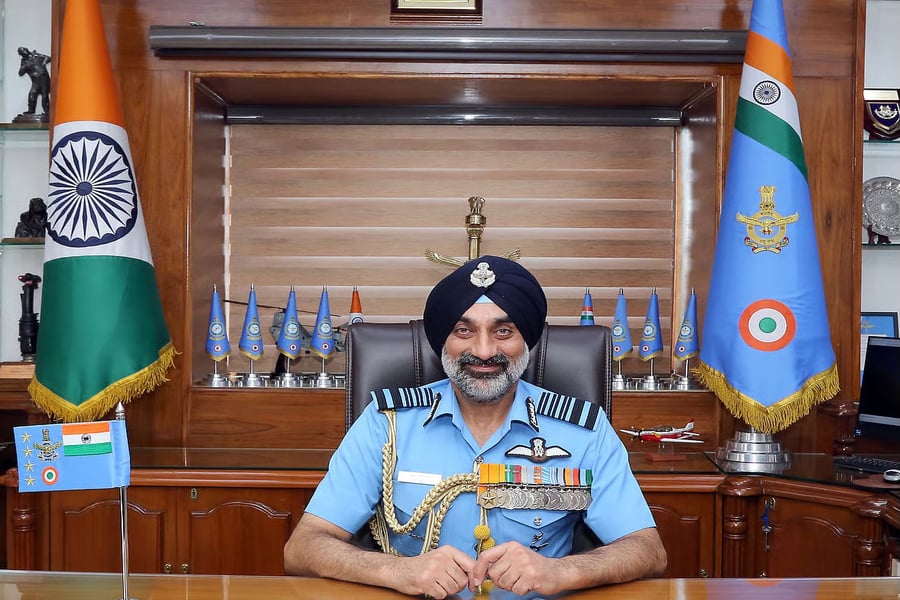
New Delhi: The air chief Marshal A.P. Singh strongly stated that drones cannot win wars on their own. Speaking at the India defence conclave, he emphasized that human pilots, manned fighter aircraft, and real-time decision-making will remain essential in future conflicts despite rapid advances in autonomous systems and artificial intelligence.
His remarks come as militaries worldwide invest heavily in drones, swarm technologies, and AI-enabled warfare. However, the Indian Air Force believes that future combat will depend on a balanced mix of manned and unmanned platforms.
India Defence Conclave: IAF Chief Rejects The Idea Of Fully Autonomous Air Warfare
Addressing defence experts and industry leaders, Air Chief Marshal A.P. Singh rejected the view that drones will completely replace fighter pilots in future wars.
According to him, unmanned systems are valuable tools for intelligence gathering, surveillance, reconnaissance, and tactical support. However, they cannot independently achieve strategic military objectives. He stressed that human judgement remains critical when dealing with rapidly changing battlefield conditions and high-stakes combat decisions.
Why Human Pilots Still Matter
The IAF Chief explained that modern warfare often requires split-second decisions that cannot be fully delegated to algorithms. Human pilots can interpret complex situations, assess risks, and make informed choices based on experience and mission objectives.
This capability becomes even more important during deep-strike operations, strategic missions, and situations where escalation control is necessary.
India Defence Conclave: Human Judgement Prevents Escalation
Military operations are not only about hitting targets. Commanders must also consider political objectives, diplomatic consequences, and the possibility of wider conflict. Human judgement helps ensure that military actions remain aligned with national goals.
Manned-Unmanned Teaming Is The Future
Rather than choosing between pilots and drones, the Indian Air Force is focusing on Manned-Unmanned Teaming (MUM-T). Under this concept, fighter aircraft operate alongside autonomous drones, sometimes referred to as “loyal wingmen.”
The pilot remains in command while drones perform tasks such as surveillance, electronic warfare, target identification, and support missions.
How MUM-T Improves Combat Effectiveness
Manned-unmanned teaming offers several advantages:
- Better battlefield awareness.
- Reduced risk to pilots.
- Improved intelligence collection.
- Greater operational flexibility.
- Enhanced strike capability.
This approach combines the strengths of advanced technology with human expertise.
Operation Sindoor Demonstrated The Value Of Piloted Aircraft
Air Chief Marshal Singh pointed to Operation Sindoor as an example of why manned fighter aircraft remain important. During the operation, Indian Air Force pilots conducted precision missions against key targets while maintaining careful control over escalation.
The operation demonstrated that experienced pilots remain central to successful combat missions. He argued that while drones contributed to intelligence and support functions, critical strike decisions still depended on trained aircrew and military leadership.
India Defence Conclave: Drones Are Important But Not War-Winning Weapons
The IAF Chief acknowledged that drones have transformed modern warfare. They can gather intelligence, overwhelm enemy sensors, create confusion, and support larger operations. However, he noted that drones alone cannot deliver victory in major military campaigns.
Many defence experts around the world have also argued that advanced technologies complement traditional military systems rather than replace them entirely.
India Defence Conclave: AMCA And India’s Future Air Combat Strategy
The IAF’s long-term vision reflects this balanced approach. India’s upcoming Advanced Medium Combat Aircraft (AMCA) is expected to operate alongside advanced autonomous systems and AI-enabled drone escorts. This will allow pilots to control multiple assets while maintaining command authority during complex missions.
Why AMCA Matters
The AMCA programme is designed to provide:
- Fifth-generation stealth capabilities.
- Advanced sensors and networking.
- Integration with autonomous systems.
- Enhanced long-range strike power.
The project is expected to become a cornerstone of India’s future air power strategy.
India Defence Conclave: IAF Chief Calls For Faster Defence Self-Reliance
Apart from discussing drones, Air Chief Marshal Singh also stressed the importance of accelerating India’s defence manufacturing capabilities. He highlighted the need for stronger support to private industry, startups, and indigenous technology programmes. According to him, reducing dependence on imported systems is essential for long-term national security.
Read also: India Plans World-Class Drone Ecosystem To Strengthen National Security
FAQs
The AMCA is expected to work with AI-enabled autonomous systems and drone wingmen, allowing pilots to control multiple assets during missions while retaining decision-making authority.
MUM-T is a combat concept where fighter aircraft operate alongside autonomous drones. The pilot remains in command while drones perform support and mission-enhancing tasks.
Air Chief Marshal A.P. Singh said drones are valuable support systems but cannot win wars on their own. Human pilots and manned aircraft remain essential for critical combat decisions.