New Delhi: India’s FUFA stealth UCAV program is now at the center of the country’s next-generation air combat strategy. The Defence Research and Development Organisation (DRDO), through the Gas Turbine Research Establishment (GTRE), has decided to prioritize the Futuristic Unmanned Fighter Aircraft (FUFA) over the older and heavier RSPA project. This shift reflects India’s growing focus on fast, stealthy, and AI-powered unmanned systems designed for modern warfare.
The move is expected to strengthen India’s position in sixth-generation aerial combat technologies and reduce reliance on traditional heavy strike drones.
Strategic Shift: Why FUFA Stealth UCAV is Getting Priority
India is moving away from bulky unmanned strike platforms toward lighter and smarter systems.
Read also: What is DRDO’s LRASSCM Missile? Features, Range, and Su-30MKI Integration Explained
GTRE has confirmed that the FUFA program will now take priority over the Remotely Piloted Strike Aircraft (RSPA), which was earlier linked to the Ghatak UCAV concept.
- RSPA was designed as a heavy 13–15 ton strike drone
- FUFA will be a lighter 7–10 ton stealth UCAV
- Focus is now on speed, survivability, and advanced technology
This change shows that India is adapting to modern warfare, where speed and stealth matter more than size.
What is FUFA Stealth UCAV?
The Futuristic Unmanned Fighter Aircraft (FUFA) is expected to be a cutting-edge unmanned combat system.
What are the Features FUFA Stealth UCAV
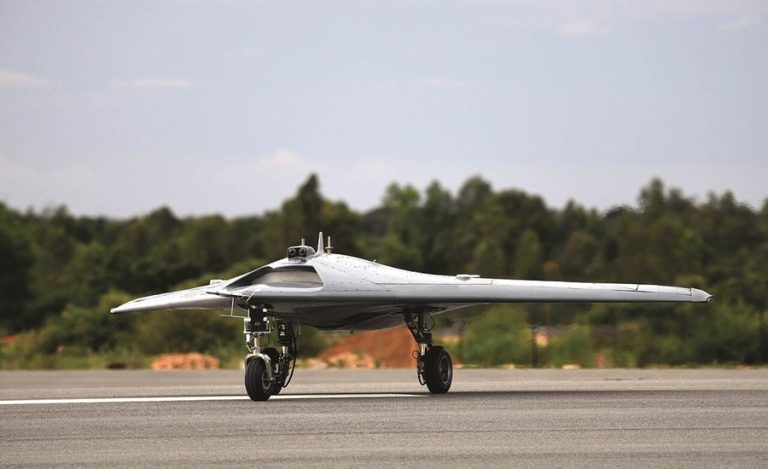
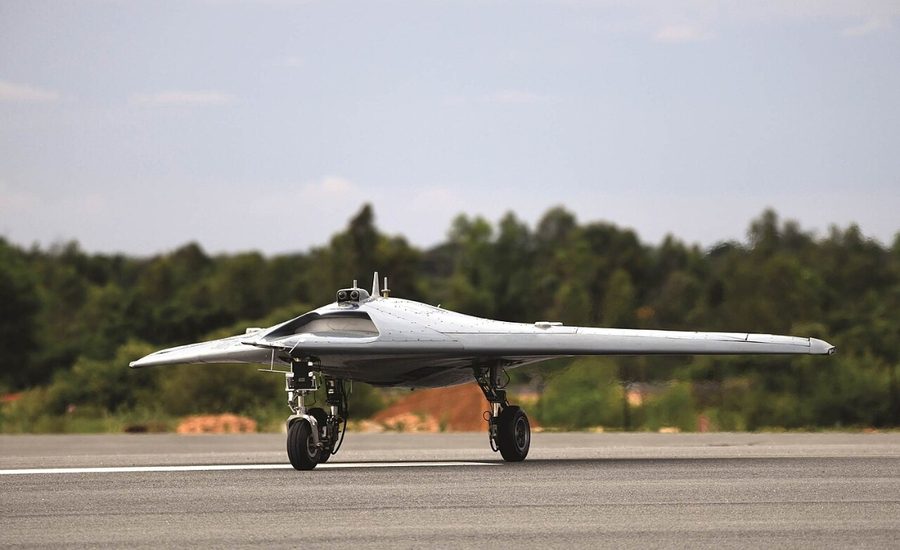
- Stealth design (flying-wing, tailless structure)
- High-speed performance (possibly supersonic)
- Artificial intelligence-based operations
- Advanced data-link networking
- Internal weapons bay for stealth missions
The platform is designed to operate in heavily defended enemy areas, where survival is critical.
Some reports also suggest it may carry advanced missiles like Astra Mk2 for long-range engagement.
Engine Power: Indigenous Kaveri Derivative
FUFA is expected to use a Kaveri Derivative Engine (KDE).
This is important because:
- It supports India’s Atmanirbhar Bharat (self-reliance) goal
- Reduces dependence on foreign engines
- Strengthens domestic aerospace capability
The use of indigenous engines also aligns with India’s long-term defence manufacturing strategy.
What Happens to Ghatak Program?
The RSPA, also known as the Ghatak UCAV, is not cancelled but is now less important.
RSPA Characteristics
- Heavy and bomber-like design
- Designed for deep strike missions
- Less focus on speed compared to FUFA
While RSPA may continue in some form, the main focus has clearly shifted to faster and more advanced unmanned systems.
Technology Demonstrator First
Officials have indicated that FUFA may first fly as a technology demonstrator.
This means:
- Initial versions will test stealth, AI, and engine performance
- Full operational deployment will come later
- Step-by-step development approach reduces risk
This is a common strategy used in advanced aerospace programs worldwide.
Why FUFA Stealth UCAV Move is Important for India
This decision is a major step toward sixth-generation warfare readiness.
Key Benefits
- Better performance in electronic warfare environments
- Ability to penetrate advanced air defence systems
- Stronger integration with network-centric warfare
- Boost to indigenous defence technology
It also shows India’s intent to compete with global powers in next-gen unmanned combat systems.
Conclusion
India’s decision to prioritize the FUFA stealth UCAV over the heavier RSPA marks a clear shift toward faster, smarter, and stealth-focused air combat systems. With advanced AI, indigenous engines, and cutting-edge design, FUFA could become a key pillar of India’s future air power. While RSPA still has relevance, the future clearly belongs to agile and intelligent unmanned fighters.