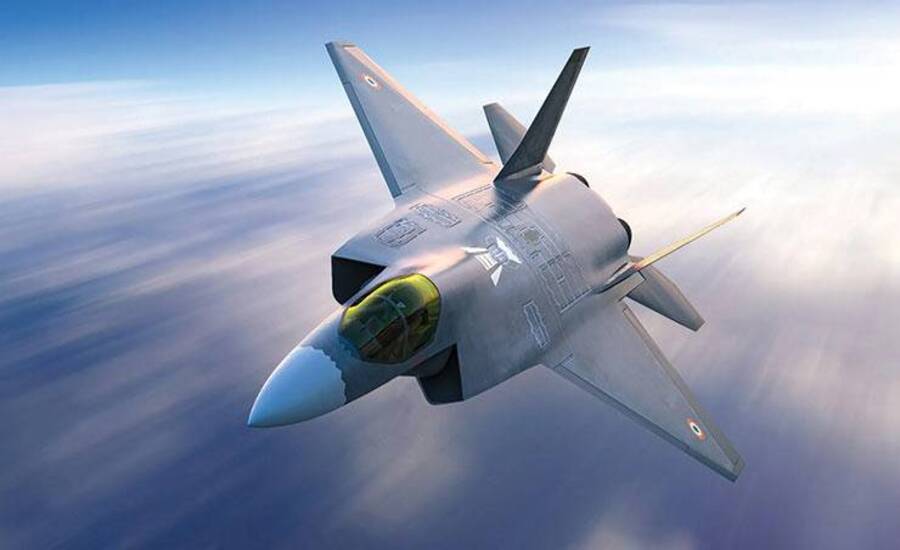
New Delhi: India has set a clear target for the first flight of its ambitious Advanced Medium Combat Aircraft (AMCA), the country’s first indigenous fifth-generation stealth fighter jet. According to officials, the first prototype is expected to take to the skies in September 2028, marking a major milestone for India’s defence aviation sector.
The announcement was made by Defence Secretary Rajesh Kumar Singh during the NDTV Defence Summit 2026, highlighting the government’s commitment to strengthening indigenous defence manufacturing.
What Is The AMCA Project
The Advanced Medium Combat Aircraft (AMCA) is India’s next-generation stealth fighter aircraft being developed by the Aeronautical Development Agency (ADA).
Read also: India Has A Rare Opportunity To Secure Advanced Military Technology From Russia
The aircraft is designed to feature advanced stealth capabilities, modern sensors, powerful engines, and the ability to operate in highly contested environments. Once operational, the AMCA is expected to become one of the most advanced fighter aircraft ever developed in India.
AMCA Project: Private Partner Selection Enters Final Stage
To meet the ambitious 2028 deadline, the Aeronautical Development Agency is finalizing the selection of a private-sector manufacturing partner. The bidding process has attracted strong interest from India’s leading defence companies. Three major industry groups are reportedly competing for the project:
- Tata Advanced Systems
- Larsen & Toubro (L&T) with Bharat Electronics and Dynamatic Technologies
- A Bharat Forge-led consortium including BEML and Data Patterns
The final commercial bids are expected to be submitted by October 30, 2026, with bid opening scheduled shortly afterward.
Why A Private Partner Is Important for AMCA Project
The selected private company will play a critical role in turning the AMCA design into a flying aircraft. Its responsibilities will include:
- Manufacturing five flying prototypes
- Building one structural test aircraft
- Creating dedicated production facilities
- Supporting testing and certification activities
This partnership is expected to accelerate development while expanding India’s defence manufacturing ecosystem.
HAL Not Part Of This Prototype Phase
One notable aspect of the project is that Hindustan Aeronautics Limited (HAL) did not qualify for this particular prototype manufacturing phase.
Instead, ADA has chosen to pursue a competitive private-sector model to speed up development and encourage greater industrial participation. However, HAL may still play a role in future stages of the program depending on project requirements.
AMCA Project: Tight Timeline Creates Major Challenge
The AMCA program is operating under a demanding schedule. The selected partner will be required to complete ground testing and achieve the aircraft’s maiden flight within 30 months of signing the agreement. Meeting this deadline will require several activities to run simultaneously, including:
Material Procurement
Critical raw materials and specialized components must be sourced early to avoid delays.
Tooling And Manufacturing Setup
Factories, production tools, and assembly systems need to be prepared before full-scale manufacturing begins.
Subsystem Development
Radar systems, avionics, flight controls, and other key technologies must be integrated and tested together.
Quality Certification
Every component must pass strict testing and certification standards before flight. Experts believe parallel execution of these tasks will be essential for achieving the September 2028 target.
GE F414 Engines To Power Initial Prototypes
The first AMCA prototypes are expected to be powered by General Electric F414 engines. These engines are already familiar to Indian aerospace programs and provide a reliable solution for initial testing and development.
Future versions of the aircraft could eventually receive more advanced engines as the program evolves.
AMCA Project: Massive New Test Facility Coming Up In Andhra Pradesh
To support AMCA development, India is also building a major new aerospace testing facility in Puttaparthi, Andhra Pradesh.
Earlier in 2026, Defence Minister Rajnath Singh laid the foundation stone for the new ADA Aircraft Integration And Flight Testing Centre. The facility will play a crucial role in testing, integration, and certification activities.
Key Features Of The Facility
The upcoming center will include:
- A 10,000-foot runway
- Air traffic control tower
- Aircraft integration infrastructure
- Advanced testing facilities
- Comprehensive meteorological systems
This dedicated infrastructure is expected to significantly improve India’s ability to develop and test advanced military aircraft domestically.
Why The AMCA Project Matters For India
The AMCA is more than just a fighter aircraft project. It represents India’s long-term goal of achieving greater self-reliance in advanced defence technology.
The aircraft is expected to strengthen the Indian Air Force’s future combat capabilities while reducing dependence on foreign suppliers.
Successful development of the AMCA could also position India among a small group of countries capable of designing and manufacturing fifth-generation stealth fighters.
Read also: Why The World Is Buying Indian Missiles: Defence Secretary Explains
FAQs
India is targeting September 2028 for the maiden flight of the first AMCA prototype, according to Defence Secretary Rajesh Kumar Singh.
The Advanced Medium Combat Aircraft (AMCA) is India’s indigenous fifth-generation stealth fighter aircraft being developed by the Aeronautical Development Agency (ADA) for future Indian Air Force requirements.
India is developing a dedicated Aircraft Integration and Flight Testing Centre in Puttaparthi, Andhra Pradesh, to support AMCA testing and future aerospace programs.