New Delhi: The Indian Navy is celebrating 50 years of Long-Range Maritime Reconnaissance (LRMR) operations on 18 November 2026. The Golden Jubilee also marks the 50th anniversary of Indian Naval Air Squadron 312 (INAS 312), known as the ‘Albatross’. Over the past five decades, the Navy’s maritime patrol aircraft have played an important role in protecting India’s maritime interests, monitoring the Indian Ocean Region and supporting national security operations.
Indian Navy LRMR Operations: INAS 312 Was Commissioned In 1976
The history of India’s Long-Range Maritime Reconnaissance operations goes back to the period after the 1971 war. The Indian Navy recognised the need for aircraft that could conduct long-distance maritime patrols and work alongside naval ships and helicopters.
Read also: Indian Navy MQ-9 Drones Set to Transform Maritime Surveillance Across the Indian Ocean Region
On 18 November 1976, INAS 312 was officially commissioned at INS Hansa in Goa. The squadron initially received five Lockheed Super Constellation aircraft transferred from the Indian Air Force. These aircraft became the foundation of the Navy’s long-range maritime surveillance capability.
Indian Navy LRMR Operations: Indian Navy Strengthened Its Maritime Patrol Fleet
Over the years, the Indian Navy introduced several advanced aircraft to improve its maritime reconnaissance and anti-submarine warfare capabilities. The major developments included:
1. Ilyushin Il-38 (1977)
The Navy inducted the Ilyushin Il-38 in 1977. It strengthened India’s maritime surveillance and anti-submarine warfare capabilities.
2. Tupolev Tu-142M (1988)
In 1988, INAS 312 received the Tupolev Tu-142M aircraft. It significantly extended the Navy’s patrol range across the Indian Ocean Region.
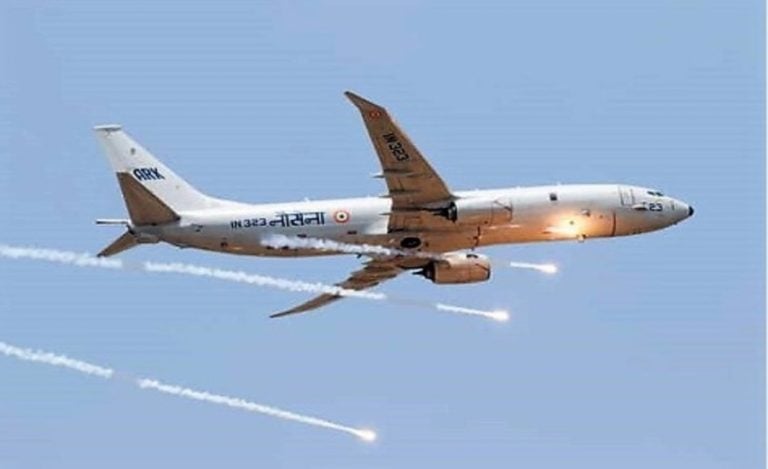
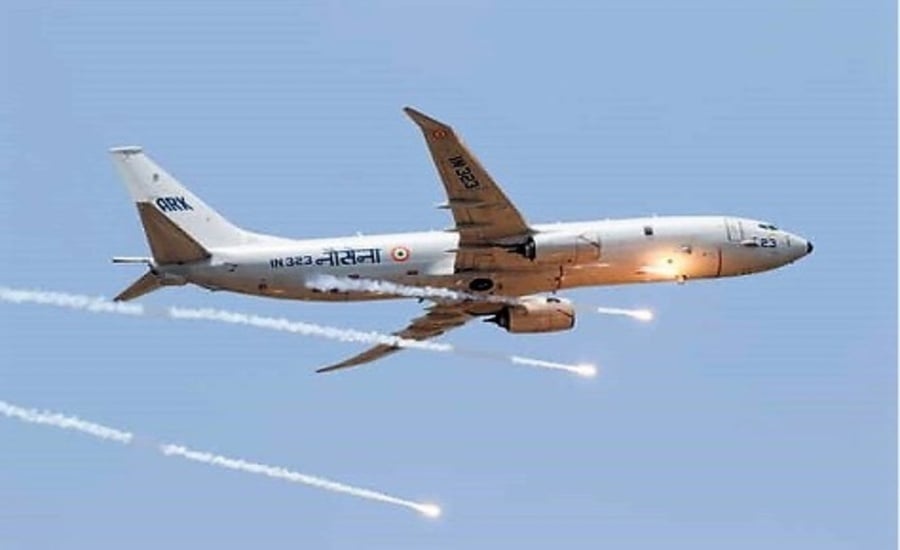
3. Boeing P-8I (2013)
The induction of the Boeing P-8I at INS Rajali, Arakkonam, in 2013 marked another major step forward. The aircraft brought advanced capabilities in:
- Wide-area intelligence gathering
- Maritime surveillance
- Anti-submarine warfare
- Maritime strike operations
- Intelligence, Surveillance and Reconnaissance (ISR)
The P-8I has become an important part of India’s modern maritime security network.
LRMR Aircraft Supported Major Indian Military Operations
During the last five decades, Indian Navy LRMR aircraft have supported several important military and security operations. These include:
- Operation Cactus: India’s military intervention in the Maldives in 1988.
- Operation Vijay: India’s military operation during the 1999 Kargil conflict.
- Operation Parakram: India’s military mobilisation following the 2001 Parliament attack.
- Operation Sindoor: India’s military operation in 2025.
Apart from military operations, these aircraft have also supported anti-piracy missions and search and rescue operations. Their ability to monitor large maritime areas makes them important for protecting India’s sea routes and maritime interests.
Where Are India’s P-8I Aircraft Currently Based
Today, the Indian Navy operates P-8I maritime patrol aircraft through two important naval air squadrons. These are:
- INAS 312: Based at INS Rajali, Arakkonam, Tamil Nadu.
- INAS 316: Based at INS Hansa, Goa.
Both squadrons maintain surveillance over the Indian Ocean and surrounding maritime areas. Their operations help the Navy monitor important sea routes, identify potential threats and protect India’s maritime interests.
Why Is The 50-Year Indian Navy LRMR Operations Milestone Important
The Golden Jubilee of LRMR operations represents five decades of progress in India’s maritime surveillance capabilities. From the Super Constellation aircraft in 1976 to the advanced Boeing P-8I today, the Indian Navy has continuously strengthened its ability to monitor distant maritime areas.
The milestone also recognises the contribution of generations of naval pilots, mission crews, aircraft maintenance teams and support personnel.
Their dedication and professional skills have helped build and maintain India’s long-range maritime reconnaissance capability. As India’s maritime interests continue to grow, long-range patrol aircraft will remain an important part of the country’s naval security strategy.
Read also: What Is RIMPAC 2026? Key Highlights, Objectives and Strategic Importance
FAQs
The Indian Navy currently uses Boeing P-8I aircraft for long-range maritime reconnaissance, maritime surveillance and anti-submarine warfare operations.
The Indian Navy started its Long-Range Maritime Reconnaissance operations on 18 November 1976, with the commissioning of INAS 312 at INS Hansa, Goa.
INAS 312 is based at INS Rajali in Arakkonam, Tamil Nadu, while INAS 316 is based at INS Hansa in Goa.