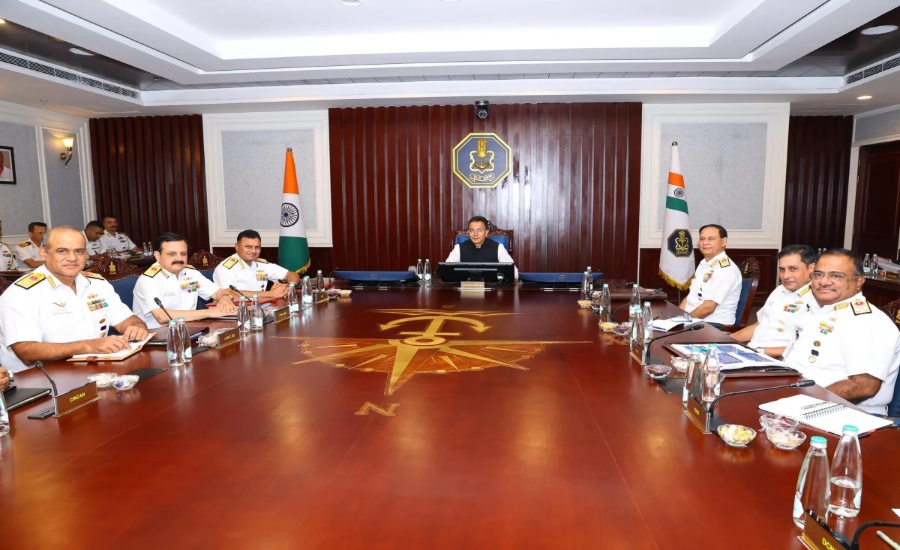
New Delhi: The Naval commanders’ conference 2026 concluded with a strong focus on operational preparedness, jointness, technology adoption, and national security. According to official statements from the Indian Navy and the Ministry of Defence, senior military leaders discussed future challenges, force readiness, logistics, and defence modernization during the three-day conference held from September 29 to October 1, 2026.
The conference highlighted India’s commitment to strengthening maritime security, enhancing indigenous defence capabilities, and improving coordination among the armed forces.
What Was The Naval Commanders’ Conference 2026
The Second Biannual Naval Commanders’ Conference 2026 brought together top Indian Navy commanders and senior defence leadership. The event served as a platform to review operational readiness, discuss strategic challenges, and evaluate ongoing modernization efforts within the Navy.
The conference was attended by Defence Minister Rajnath Singh, Chief of Defence Staff (CDS) General Anil Chauhan’s successor General N.S. Raja Subramani, Army Chief General Dhiraj Seth, and other senior officials.
What are the Key Focus Areas of Naval Commanders’ Conference 2026
Naval commanders reviewed the Indian Navy’s preparedness to handle emerging security challenges. Discussions focused on fleet readiness, logistics support, maintenance systems, and operational efficiency across naval commands.
Leaders emphasized the importance of maintaining a combat-ready force capable of responding quickly to threats in the Indian Ocean Region and beyond.
Jointness Among Armed Forces
A major theme of the conference was greater integration among the Army, Navy, and Air Force. Military leaders stressed the need for stronger inter-service cooperation to improve operational effectiveness and national defence preparedness. Joint planning and resource sharing were identified as important factors in dealing with modern security challenges.
Technology Adoption And Innovation
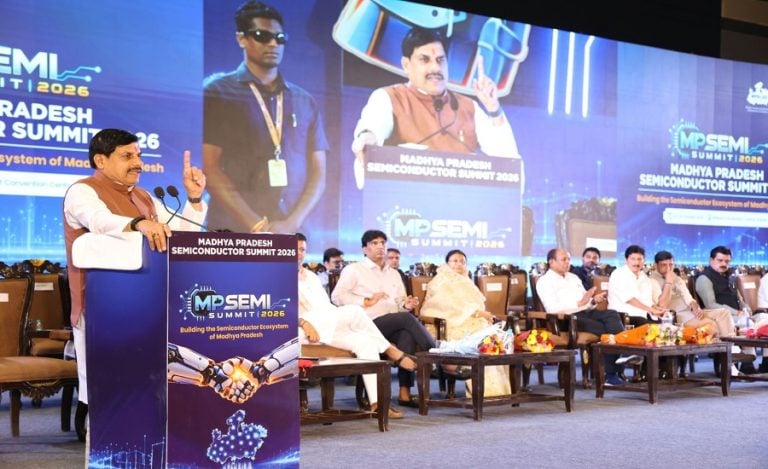
Minister of State for Electronics and Information Technology Jitin Prasada addressed the conference and highlighted the importance of rapid technology adoption. He encouraged greater focus on emerging technologies such as:
- Artificial Intelligence (AI)
- Semiconductors
- Quantum Technologies
- Autonomous Systems
- Advanced Digital Infrastructure
Officials noted that technological transformation is becoming increasingly important in modern warfare.
Naval Commanders’ Conference 2026: India’s Navy Focuses On Future Warfare
The conference examined how AI and autonomous technologies are changing military operations worldwide. Naval leaders discussed ways to integrate these technologies into operational planning, surveillance, logistics, and maritime security missions.
Building A Technology-Driven Navy
Senior defence officials stressed the importance of creating a technologically advanced naval force. The Navy’s modernization plans include improved digital systems, greater automation, and enhanced decision-making capabilities. These efforts are expected to strengthen India’s maritime power in the coming years.
Rajnath Singh Highlights Indigenous Defence Production
Defence Minister Rajnath Singh praised the Indian Navy’s role in protecting national interests and securing maritime trade routes. He noted that Indian naval ships are operating across a wide geographical area, including regions extending toward:
- The South China Sea
- The Mediterranean Sea
- The Atlantic Ocean
This growing presence reflects India’s expanding maritime influence.
India’s Warship Production Achieves Global Standards
Rajnath Singh highlighted the progress made under the Atmanirbhar Bharat initiative. According to the Defence Minister, Indian warships are now being built with over 75 percent indigenous content.
He stated that India’s naval shipbuilding ecosystem is meeting global benchmarks and has the potential to export advanced warships to friendly nations.
Naval Commanders’ Conference 2026: CDS Highlights Navy’s Strategic Role
Chief of Defence Staff General N.S. Raja Subramani described the Indian Navy as a major strategic force multiplier. He praised the Navy’s operational commitment and efforts to strengthen:
- Maritime security
- Energy security
- Technology absorption
- Defence innovation
- Indigenous capability development
He also emphasized resilience and continuous modernization as key requirements for future success.
Army Chief Discusses Regional Security Challenges
Army Chief General Dhiraj Seth interacted with naval commanders during the conference. He outlined the preparedness of the Indian Army to address evolving regional security concerns and stressed the importance of coordinated military planning. The discussions reflected the growing focus on integrated theatre-level operations among India’s armed forces.
What are the Outcomes Of The Naval Commanders’ Conference 2026
The conference reaffirmed the Indian Navy’s commitment to maintaining high operational readiness. Commanders reviewed preparedness measures to ensure rapid response capabilities in different security situations.
Greater Interagency Coordination
Leaders emphasized improved cooperation among defence organizations and government agencies. Such coordination is expected to strengthen India’s overall security framework.
Focus On Future-Ready Forces
The conference concluded with a shared vision of building a future-ready military force driven by technology, innovation, self-reliance, and jointness. Officials highlighted that continuous modernization will remain a priority for the Indian Navy.
Why Naval Commanders’ Conference 2026 Matters
The Naval Commanders’ Conference 2026 reflects India’s broader strategy to strengthen maritime security and prepare for future warfare challenges. With increasing geopolitical competition in the Indo-Pacific region, maintaining a technologically advanced and operationally ready Navy has become a key national priority.
The discussions and decisions made during the conference are expected to support India’s long-term defence modernization goals.
Read also: Indian Navy BrahMos Missile Deployment: Key Plans, Benefits and 2030 Roadmap
FAQs
Jointness improves coordination among the Army, Navy, and Air Force, enabling faster and more effective responses to security challenges.
The conference focused on operational preparedness, jointness among the armed forces, technology adoption, logistics, and defence modernization.
Rajnath Singh stated that Indian warships are now being built with over 75% indigenous content and that India’s naval shipbuilding ecosystem is meeting global standards.