New Delhi: India has strongly criticised Pakistan at the United Nations (UN), recalling its refusal to accept the bodies of its own soldiers killed during the 1999 Kargil War. India said the Indian Army buried several Pakistani soldiers with military honours and according to Islamic traditions.
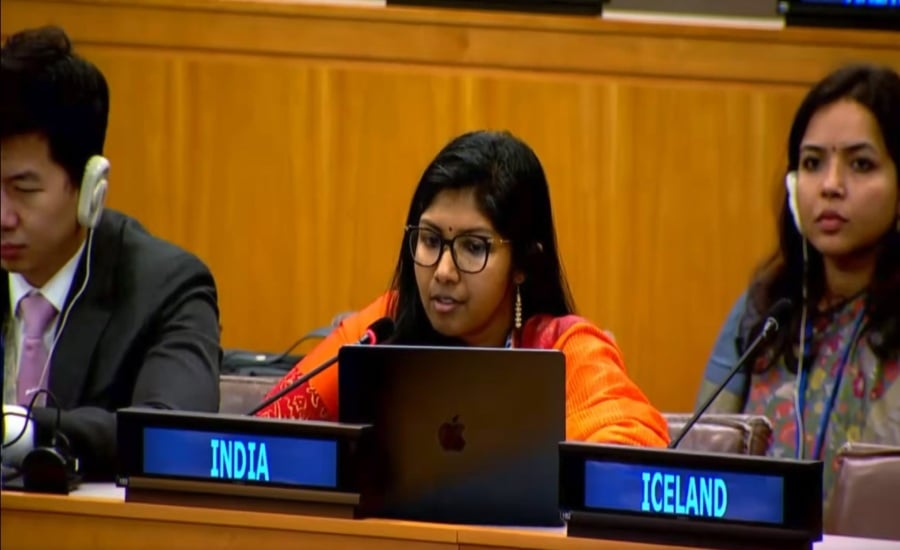
The remarks were made by Bhavika Mangalanandan, 2015 batch of the Indian Foreign Service and First Secretary at India’s Permanent Mission to the UN, during a discussion on religious freedom and funeral rights. The discussion also covered concerns about burial practices in Jammu and Kashmir.
India said Pakistani soldiers who died during the conflict were buried by the Indian Army after Pakistan refused to accept their bodies. The statement came during an international discussion on funeral rights and freedom of religion.
India Raises Kargil War Issue At United Nations
India strongly criticised Pakistan during an interactive dialogue at the United Nations on October 22, 2026.
Read also: Operation Safed Sagar: Complete Story of the IAF’s Role in the 1999 Kargil War
Bhavika Mangalanandan, First Secretary at India’s Permanent Mission to the UN, questioned Pakistan’s comments on religious freedom and funeral rights.
She reminded Pakistan that it had refused to accept the bodies of its own soldiers who were killed during the 1999 Kargil War.
India said the Indian Army recovered the bodies of Pakistani soldiers and provided them with proper burials. The Indian representative also said that several Pakistani soldiers were buried with military honours and according to Islamic traditions.
What India Said About Pakistan’s Role In Kargil War
During the Kargil War in 1999, Indian forces recovered the bodies of Pakistani soldiers who had died during the fighting.
According to India’s statement, Pakistan did not acknowledge the involvement of its military personnel in the conflict and refused to accept their bodies.
The Indian Army then buried several Pakistani soldiers with respect and according to their religious traditions.
India recalled this incident to question Pakistan’s position on religious freedom and burial rights during the UN discussion. The issue has once again highlighted the difficult history between India and Pakistan and the importance of respecting the dead during armed conflicts.
UN Report Raises Concerns Over Funeral Rights In Jammu And Kashmir
The discussion followed an interim report by Nazila Ghanea, the UN Special Rapporteur on freedom of religion or belief.
The report raised concerns about the alleged denial of funeral rights to people killed during security operations in Jammu and Kashmir. It mentioned reports of families being unable to receive the bodies of their relatives and concerns about remote or secret burials.
The report also stated that these practices reportedly affected Muslims in particular and raised questions about religious traditions.
The Special Rapporteur’s report called attention to the importance of protecting religious freedom and respecting funeral practices. India responded to these concerns during the interactive dialogue at the United Nations.
India Questions Report’s Focus On Funeral Rights After Kargil War
India questioned the report’s approach to funeral rights and the treatment of people killed during security operations.
Bhavika Mangalanandan said the report raised concerns about burial rights but did not give enough attention to the rights of victims of terrorism.
India argued that terrorists who take innocent lives should not receive greater attention than the people who suffer from terrorist attacks.
The Indian representative said that the right to life is one of the most important human rights.
She also stated that governments can restrict funeral rights in certain cases, but such restrictions must follow legal limits and principles of sovereignty. India said the discussion should also consider the suffering of victims and their families.
India Highlights Pakistan’s Minority Rights Issues
India also raised concerns about the treatment of religious minorities in Pakistan.
Bhavika Mangalanandan said that minorities in Pakistan face several problems and their rights are regularly abused. She mentioned communities such as Hindus, Christians and Sikhs.
India argued that Pakistan should focus on protecting the rights and safety of its own minority communities. The Indian representative also referred to concerns about forced marriages, forced conversions, misuse of blasphemy laws and discrimination.
According to the Human Rights Commission of Pakistan, religious minorities continue to face serious challenges in protecting their fundamental rights.
India said that countries should ensure the safety of their own minorities before making comments about the internal matters of other nations.
India Responds To Pakistan’s Comments On Jammu And Kashmir
India also criticised Pakistan’s comments about Jammu and Kashmir during the UN discussion.
Bhavika Mangalanandan said Pakistan should focus on developments in areas of Jammu and Kashmir under its control. She specifically mentioned Rawalakot.
India described Pakistan’s continued focus on Jammu and Kashmir as misplaced and said it should address concerns about the rights of minorities within its own territory.
The Indian representative also rejected Pakistan’s criticism of India’s internal matters. The issue remains a major point of disagreement between the two countries at international forums.
India Questions UN Report On COVID-19 Discrimination
India also raised concerns about the report’s discussion of discrimination and funeral practices during the COVID-19 pandemic.
Bhavika Mangalanandan said the report appeared to focus mainly on problems in the Global South. She questioned why similar tragic situations in developed countries were not discussed in the same way.
India argued that human rights reports should provide a balanced picture of events across different regions.
The Indian representative said that reports should not ignore serious incidents in other parts of the world. She also questioned whether political considerations were influencing the discussion of human rights issues.
Who is Bhavika Mangalanandan
Bhavika Mangalanandan is an Indian diplomat and an officer of the 2015 batch of the Indian Foreign Service (IFS). She gained significant international attention in September 2024 while serving as the First Secretary at the Permanent Mission of India to the United Nations in New York.
Early Life & Education
- Academic Background: Mangalanandan earned a Master’s degree in Energy Studies from the Indian Institute of Technology (IIT) Delhi in 2011.
- Corporate Experience: Before joining public service, she worked in the engineering and corporate sectors, serving as an Assistant Systems Engineer at Tata Consultancy Services (TCS) and later as a Senior Engineer (Marketing) at Schneider Electric.
Diplomatic Career
- Joining the IFS: She cleared the Union Public Service Commission (UPSC) Civil Services Examination and joined the Indian Foreign Service in 2015.
- Headquarters & Postings: She began her diplomatic career as an Undersecretary in the Ministry of External Affairs (MEA) in New Delhi and later served abroad in roles such as Second Secretary at the Embassy of India in Belarus.
- Permanent Mission to the UN: She was subsequently posted to India’s Permanent Mission to the United Nations in New York.
Prominent Public Moment
At the 79th United Nations General Assembly (UNGA) debate in September 2024, Mangalanandan exercised India’s “Right of Reply“ in response to remarks made by Pakistan’s Prime Minister Shehbaz Sharif regarding Jammu and Kashmir.
Her firm, composed delivery reiterating India’s diplomatic and geopolitical stance drew widespread domestic and international media coverage.
Read also: Operation Sindoor vs Kargil War: How Indian Air Power Evolved Over 26 Years
FAQs
India said the Indian Army recovered the bodies of Pakistani soldiers and buried several of them with military honours and according to Islamic traditions after Pakistan refused to accept them.
India criticised Pakistan for speaking about religious freedom and funeral rights while recalling its refusal to accept the bodies of soldiers killed during the 1999 Kargil War.
The interim report raised concerns about the alleged denial of funeral rights, including the return of bodies to families and reports of remote or secret burials during security operations in Jammu and Kashmir.