New Delhi: India is preparing for one of the most consequential naval upgrades in its modern history. Under Project-75I, the Indian Navy plans to induct six next-generation conventional submarines equipped with Air-Independent Propulsion (AIP)—a move valued at nearly $8 billion.
This ambitious program is not merely about fleet expansion. It represents a fundamental recalibration of India’s maritime deterrence posture, particularly in response to Pakistan’s expanding undersea capabilities and China’s growing naval footprint in the Indian Ocean Region (IOR).
As geopolitical tensions intensify across the Indo-Pacific, Project-75I is emerging as a strategic counterweight—quiet, stealthy, and deeply consequential.
What Is the Project-75I Submarine Program? A Brief Overview
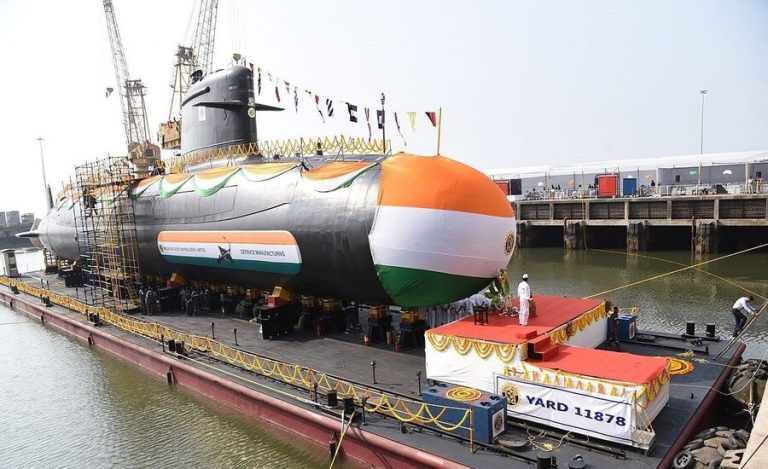
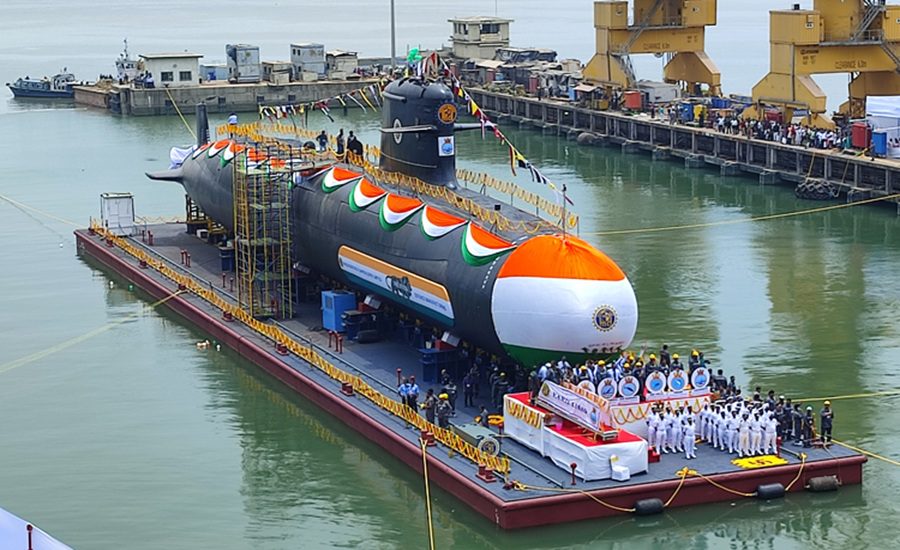
Project-75I is the follow-on initiative to India’s earlier Project-75, under which six Scorpène-class submarines were built at Mazagon Dock Shipbuilders Limited (MDL).
Unlike its predecessor, Project-75I introduces cutting-edge AIP technology at the construction stage itself, rather than retrofitting it later.
Key Highlights of Project-75I Submarine Program
- Construction of 6 advanced diesel-electric submarines
- Equipped with Air-Independent Propulsion (AIP)
- Designed for long-duration submerged operations
- Built under Strategic Partnership (SP) model
- Strong emphasis on indigenisation and technology transfer
Why Air-Independent Propulsion (AIP) Is a Game Changer
Conventional submarines traditionally rely on batteries that require periodic surfacing or snorkeling to recharge—making them vulnerable to detection.
- AIP technology changes that equation entirely.
- Strategic Advantages of AIP Submarines
- Allows submarines to remain submerged for weeks
- Significantly reduces acoustic, radar, and infrared signatures
- Enhances stealth, survivability, and endurance
- Ideal for covert surveillance and sea denial missions
- Offers near-nuclear stealth at a fraction of the cost
For India, AIP bridges the operational gap between conventional and nuclear submarines—without escalating costs or political risks.
Pakistan Factor: Restoring Undersea Balance in the Arabian Sea
Pakistan has been aggressively modernizing its submarine fleet, particularly through:
- Acquisition of Chinese Yuan-class (Type-039B) submarines
- Integration of AIP systems
- Potential deployment of submarine-launched cruise missiles
This has raised concerns about undersea asymmetry in the Arabian Sea.
How Project-75I Submarine Program Counters Pakistan
- Matches and potentially exceeds Pakistan’s AIP capabilities
- Strengthens India’s second-strike survivability
- Enhances dominance in chokepoints and sea lanes
- Reinforces deterrence without overt escalation
By restoring parity beneath the waves, India ensures that Pakistan cannot exploit stealth advantages in future contingencies.
China Factor: Responding to the Expanding PLA Navy in the Indian Ocean
China’s naval strategy has steadily expanded beyond the South China Sea into the Indian Ocean through:
- Regular deployment of PLA Navy submarines
- Dual-use port access under the String of Pearls strategy
- Increased maritime surveillance and intelligence gathering
What is the Importance of Project-75I Submarine Program
Project-75I strengthens India’s ability to:
- Monitor Chinese submarine movements in the IOR
- Secure critical Sea Lines of Communication (SLOCs)
- Conduct long-duration covert patrols
- Signal credible deterrence without provocation
The program sends a clear message: India will not cede undersea dominance in its primary maritime backyard.
Indigenous Push: Strategic Autonomy Through Naval Manufacturing
A defining feature of Project-75I is its emphasis on self-reliance.
- Make in India at Sea
- Indian shipyards will lead construction
- Foreign OEMs must provide deep technology transfer
- Indigenous AIP systems are being developed by DRDO
- Long-term boost to India’s defence industrial ecosystem
This aligns with India’s broader goal of reducing dependence on imports while building export-capable defence platforms.
LWhat is the Impact of Project-75I Submarine Program
Once inducted, the Project-75I submarines will dramatically enhance India’s naval doctrine.
- Expected Operational Roles
- Anti-surface and anti-submarine warfare
- Intelligence, surveillance, and reconnaissance (ISR)
- Special forces deployment
- Sea denial in contested waters
- Strategic signaling during crises
Their stealth and endurance make them force multipliers, capable of shaping outcomes without firing a single shot.
Strategic Signaling: Quiet Power, Loud Message
Submarines are unique strategic assets—they influence adversary calculations simply by existing.
Project-75I underscores:
- India’s long-term maritime vision
- Commitment to undersea deterrence
- Willingness to invest in high-impact, low-visibility capabilities
In an era of great-power competition, silence beneath the seas has become one of India’s loudest strategic statements.