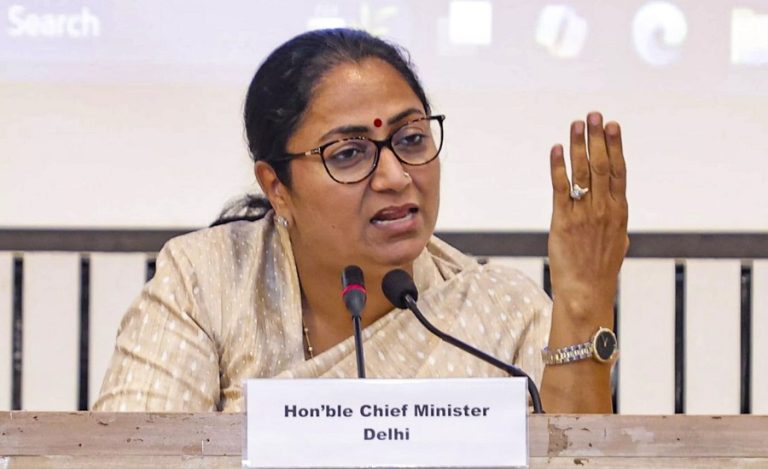
New Delhi: The Delhi government is preparing to launch the DURGA (Driving, Upliftment and Rozgar for Women and Transgender) E-Auto Scheme, which will allot 1,300 pink electric autos to women and transgender persons in its first phase. The Delhi Cabinet has approved the scheme under Chief Minister Rekha Gupta, with the initiative aiming to expand livelihood opportunities, encourage financial independence and improve last-mile connectivity.
Of the total autos, 1,170 will be reserved for women and 130 for transgender persons. Transport Minister Pankaj Kumar Singh said the scheme seeks to help beneficiaries build a steady source of income while supporting the shift towards electric mobility in the national capital.
The initiative combines employment support with cleaner transport and is designed to help more women and transgender persons participate in the city’s mobility sector.
1,300 Pink E-Autos to Be Allotted in the First Phase
The first phase of the DURGA E-Auto Scheme will cover 1,300 electric autos, with separate allocations for women and transgender beneficiaries.
Each revenue district will have a quota of up to 90 autos for women and 10 for transgender persons. This arrangement will distribute the available opportunities across districts rather than concentrating them in a single area.
The government aims to make the scheme accessible to eligible applicants seeking livelihood opportunities in the transport sector. However, the number of autos available in each district will remain subject to the scheme’s quota and selection process.
For selected beneficiaries, the autos could provide an opportunity to earn through passenger transport while joining a sector that is increasingly adopting electric vehicles.
Read Also: Delhi CM Rekha Gupta Approves 1,000 Acres of Southern Ridge for Reserved Forest Notification
Digital Applications and Transparent Selection Process
The Delhi government plans to accept applications through a digital portal developed by the National Informatics Centre (NIC), Delhi. The online process is intended to make applications easier to submit and help officials manage the selection process.
District Magistrate-led committees will examine applications every week. If eligible applications exceed the available quota, the government will select beneficiaries through an online draw of lots.
This process is intended to ensure that selection follows a defined procedure when demand exceeds the number of available autos.
Those selected will receive Letters of Intent, identity cards, DURGA jackets and caps. These documents and items will help identify beneficiaries participating in the scheme.
The final allotment will depend on applicants meeting the applicable eligibility requirements and completing the prescribed process.
EV Policy Incentives and Digital Platform Support
Selected beneficiaries will also be eligible for applicable incentives under the Delhi EV Policy 2026. The extent of support will depend on the provisions and conditions of the relevant policy.
The Transport Department will also ask aggregators to provide free onboarding and subscriptions to help drivers join digital mobility platforms.
Such support could help beneficiaries connect with passengers through app-based services and explore additional ways to secure rides. It may also reduce some of the initial barriers associated with joining digital transport networks.
However, actual earnings will depend on factors such as passenger demand, operating costs, platform access and the terms applicable to individual drivers.
Dedicated Charging and Parking Facilities Proposed
To support the operation of electric autos, the Transport Department has requested dedicated parking and charging spaces at Metro and Namo Bharat Regional Rapid Transit System (RRTS) stations.
The department has approached the Delhi Metro Rail Corporation (DMRC) and the National Capital Region Transport Corporation (NCRTC) regarding these facilities.
Dedicated spaces could help drivers access major transport hubs and serve passengers travelling between residential areas, metro stations and other destinations. Charging infrastructure will also be important for keeping electric autos operational during working hours.
The proposal highlights the need to coordinate employment initiatives with transport infrastructure. The availability and location of these facilities will influence how conveniently beneficiaries can operate their vehicles.
Two-Phase Assessment to Track the Scheme’s Impact
The Delhi government plans to assess the scheme in two phases to review its impact on beneficiaries’ livelihoods and financial well-being.
The assessment could help authorities understand whether the initiative is improving income opportunities and supporting financial independence. It may also help identify practical challenges faced by beneficiaries while operating their vehicles.
The results will be important in evaluating the scheme beyond the number of autos allotted. Factors such as income stability, access to passengers, charging facilities and the costs of running an electric auto can influence its long-term effectiveness.
The assessment findings could also help the government identify areas where additional support or changes may be needed.
Delhi’s Wider Focus on Women’s Safety and Support
The DURGA E-Auto Scheme comes amid the Delhi government’s broader emphasis on women’s safety, access to support services and development.
Chief Minister Rekha Gupta recently highlighted the need for better coordination among police, hospitals, legal aid services and shelter homes so that women facing harassment or violence can receive timely assistance without having to approach multiple offices repeatedly.
Speaking at the two-day National Departmental Summit on Women and Child Development on Friday, which was attended by Prime Minister Narendra Modi, Gupta outlined five priorities for strengthening support systems for women and children.
These included individual care plans for victims, stronger coordination between helplines and One Stop Centres, easier access to counselling and legal aid, prevention of child marriage, and effective implementation of laws against sexual harassment at workplaces.
Her remarks focused on improving coordination between institutions so that people seeking assistance can access services more efficiently.
Helplines and Support Centres Remain Important
The Chief Minister also highlighted three key helpline numbers: Women Helpline 181, emergency number 112 and Child Helpline 1098.
According to the figures cited by her, 998 One Stop Centres across the country had assisted 15.95 lakh women, while 431 Shakti Sadans had provided support to 3.36 lakh women.
These services form part of the wider support network for women facing violence, distress or other difficulties. One Stop Centres aim to connect women with relevant assistance, while Shakti Sadans provide support to women in need of shelter and rehabilitation.
The focus on support services complements the government’s livelihood initiatives by addressing different aspects of women’s welfare, from economic opportunities to access to safety and assistance.
Livelihood Opportunities and Cleaner Urban Mobility
The DURGA E-Auto Scheme brings together employment generation, inclusion and electric transport under one initiative. By reserving most of the first-phase autos for women while allocating a separate share to transgender persons, the scheme seeks to widen participation in the transport sector.
Its success will depend on fair selection, accessible charging facilities, practical support for joining mobility platforms and the ability of beneficiaries to earn a sustainable income.
As Delhi expands its electric mobility network, the scheme could create new opportunities for eligible drivers while improving connections between public transport hubs and nearby destinations. The planned two-phase assessment will be important in determining whether these objectives translate into lasting economic benefits for beneficiaries.
Read Also: Delhi Launches ₹8,300 Crore Clean Air Programme with World Bank Support to Combat Pollution