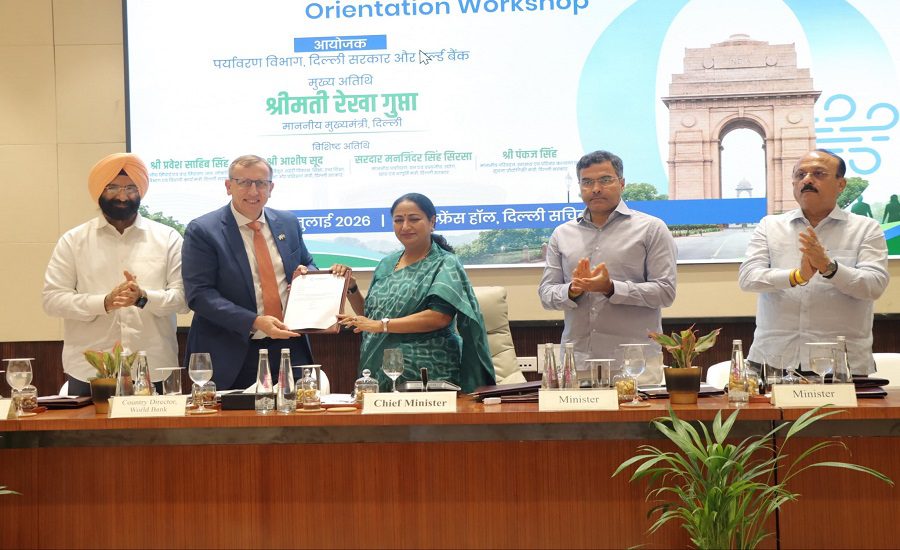
New Delhi: Delhi Chief Minister Rekha Gupta has launched the “Clean Air, Healthy Delhi” (Delhi Clean Air Program) in collaboration with the World Bank to tackle rising air pollution levels in the national capital.
The seven-year programme was inaugurated during an orientation workshop organized by the World Bank and Delhi Environment Department at the Delhi Secretariat. The initiative aims to create a scientific, technology-driven and coordinated approach for improving air quality across Delhi.
With an estimated investment of ₹8,300 crore, the programme is designed to strengthen pollution control measures, improve monitoring systems and promote sustainable development in the capital.
Delhi Clean Air Program to Run from 2026 to 2033
The Delhi Clean Air Program will be implemented for seven years, from September 2026 to August 2033, covering all districts of the national capital.
Under the funding structure:
- World Bank will provide 65% of the project funding
- Delhi Government will contribute the remaining 35%
The programme is aimed at creating long-term solutions rather than short-term pollution control measures.
Chief Minister Rekha Gupta said air pollution is a complex challenge that requires scientific planning, long-term strategies and collective efforts from multiple government departments.
Two Key Pillars of Delhi’s Clean Air Mission
The Delhi Clean Air Program will work on two major pillars focused on improving air quality management and reducing pollution sources.
1. Advanced Monitoring and Data-Based Decision Making
The programme will establish stronger monitoring mechanisms through:
- Dedicated Project Management Unit (PMU)
- Modern air quality monitoring networks
- Integrated Command and Control Centre
- Data analytics-based decision-making systems
These systems will help authorities track pollution levels in real time and take more effective action.
The programme will also encourage better coordination with neighbouring states to address regional pollution challenges.
2. Reducing Pollution Sources Through Sustainable Solutions
The second pillar will focus on controlling major pollution sources through several measures, including:
- Gradual phase-out of old polluting vehicles
- Promotion of electric vehicles
- Expansion of public transport systems
- Better dust control at construction sites and roads
- Modern solid waste management systems
The initiative aims to create a cleaner and healthier urban environment for Delhi residents.
Focus on Electric Mobility and Green Development
The Delhi Government highlighted several ongoing environmental initiatives that will support the clean air mission.
These include:
- New Electric Vehicle Policy
- Expansion of electric buses
- Development of 32,000 EV charging points
- Large-scale plantation drives targeting 70 lakh trees
- Yamuna river rejuvenation projects
The government said these measures are part of a broader strategy to build a sustainable and environmentally responsible capital city.
CM Rekha Gupta Calls for Joint Efforts to Improve Air Quality
Addressing the workshop, Chief Minister Rekha Gupta said improving Delhi’s air quality cannot be the responsibility of a single department.
She emphasized the need for coordination among various departments and stakeholders to achieve measurable results.
The Chief Minister said the objective is not only to improve the Air Quality Index (AQI) but also to make the entire pollution management system more accountable and effective.
Delhi Government Allocates Major Funds for Environment Protection
Environment Minister Manjinder Singh Sirsa said environmental protection is among the government’s top priorities.
He highlighted that around 21% of Delhi’s Green Budget for 2026-27 has been allocated towards:
- Clean air initiatives
- Green Delhi programmes
- Yamuna rejuvenation efforts
He said the investment reflects the government’s commitment to improving the quality of life for citizens.
World Bank Experts Discuss International Standards
The orientation workshop was attended by senior officials and experts, including World Bank Acting Country Director Paul Procee.
World Bank representatives provided guidance on:
- Programme for Results (PforR) framework
- Financial management systems
- International environmental standards
- Implementation mechanisms
Officials from various departments, including:
- Delhi Pollution Control Committee (DPCC)
- Transport Department
- Delhi Transco Limited (DTL)
also participated in discussions focused on improving coordination and execution.
Major Objectives of Delhi Clean Air Program
The key goals of the ₹8,300 crore initiative include:
- Improving Delhi’s air quality
- Strengthening pollution monitoring systems
- Promoting clean transportation
- Reducing dust and waste-related pollution
- Enhancing government coordination
- Using technology for better environmental management
- Building a sustainable future for Delhi
The Delhi Clean Air Program marks a major step towards addressing the capital’s long-standing air pollution challenges through technology, infrastructure improvements and coordinated action. With World Bank support and a seven-year implementation plan, the initiative aims to create a cleaner, healthier and more sustainable Delhi for future generations.
Read also: CM Rekha Gupta Inaugurates ₹4 Crore Modern Health Upgrade at Lajpat Nagar Colony Hospital in Delhi