New Delhi: The Satya Niketan building collapse case has triggered a major legal and policy debate over student housing in Delhi. Taking note of concerns raised after the tragic collapse of a student accommodation building in Satya Niketan, the Delhi High Court has sought responses from Delhi University (DU), the Central Government, and the Delhi Government on a Public Interest Litigation (PIL) demanding hostel facilities in every DU-affiliated college. The case highlights the growing shortage of safe and affordable accommodation for students in the national capital.
Satya Niketan Collapse Case: Delhi High Court Issues Notice On Student Hostel PIL
The Delhi High Court issued notices to Delhi University, the Delhi Government, and the Central Government on a PIL seeking a comprehensive policy for hostel development in DU colleges. The petition calls for directions to ensure that every college affiliated with Delhi University has hostel facilities for students.
Read also: Delhi High Court Clarifies Rules On Hiring Amid Allegations Of Exam Malpractice
The matter was heard by a Bench led by Chief Justice Devendra Kumar Upadhyaya and Justice Tejas Karia. The court has sought responses from the concerned authorities and listed the matter for further hearing later this month.
Why The PIL Was Filed
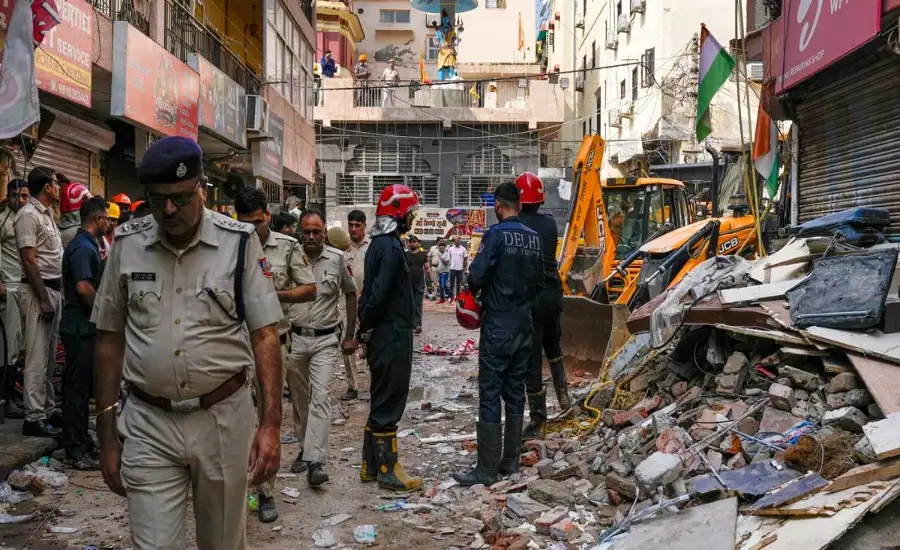
The PIL was filed in the aftermath of the Satya Niketan building collapse, which claimed seven lives and injured several others. The tragedy raised serious questions about the safety of private hostels and paying guest (PG) accommodations used by students in Delhi.
The petitioner argued that thousands of students are forced to stay in private hostels and PGs because many DU colleges do not provide hostel facilities. This increases both financial burden and safety risks for students coming from different parts of India.
Satya Niketan Collapse Case: Demand For A Time-Bound Hostel Policy
The PIL seeks a time-bound hostel development policy to address the accommodation shortage faced by students. It urges authorities to create adequate hostel infrastructure and reduce dependence on unregulated private accommodations.
Background Of The Satya Niketan Building Collapse Case
A five-storey building functioning as a student accommodation facility collapsed in Delhi’s Satya Niketan area near Delhi University. Rescue teams recovered seven bodies and saved multiple occupants trapped under the debris.
According to preliminary findings, the building was several decades old and was reportedly undergoing renovation work before the collapse. Authorities are investigating whether structural weaknesses, unauthorized construction, and basement work contributed to the incident.
Safety Concerns Over Student Housing
The collapse has sparked nationwide concern regarding the safety standards of student hostels and PG accommodations. Multiple petitions have since been filed before courts seeking stronger regulation and safety audits of student housing facilities.
Growing Demand For More DU Hostels
Delhi University is one of India’s largest universities, with colleges spread across multiple campuses and a large student population. However, hostel facilities remain limited and are available only in a fraction of colleges.
As a result, many students depend on rented rooms, PGs, and private hostels located around university areas such as Satya Niketan, Mukherjee Nagar, Kamla Nagar, and Vijay Nagar.
Student Safety Becomes A Key Issue
The PIL argues that proper hostel infrastructure can help improve student safety, reduce accommodation costs, and provide better living conditions. The issue has gained urgency after the Satya Niketan tragedy exposed the risks associated with poorly regulated private accommodations.
FAQs
The PIL was filed after the Satya Niketan building collapse, which highlighted safety concerns faced by students living in private hostels and PG accommodations.
The Delhi High Court sought responses on a PIL demanding hostel facilities in every Delhi University-affiliated college and a time-bound hostel development policy.
The petition seeks hostel facilities in all DU-affiliated colleges and the formulation of a structured, time-bound policy to improve student housing infrastructure.