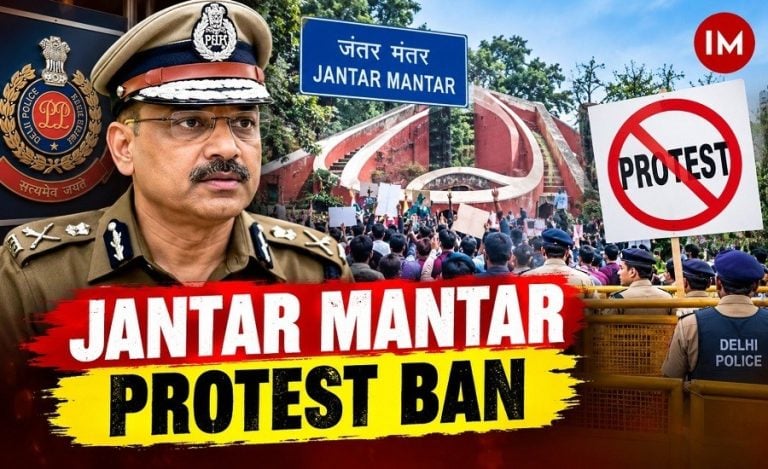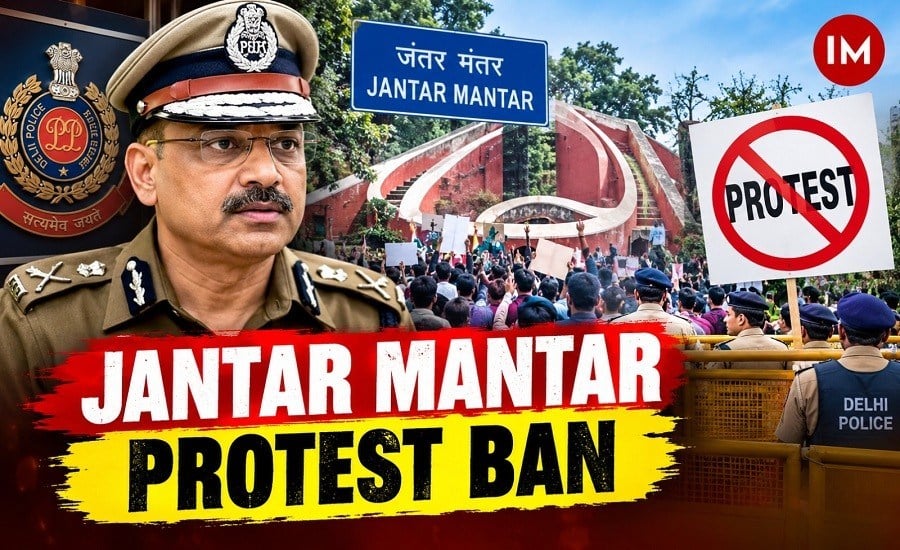
New Delhi: In a major decision affecting the organisation of public protests and demonstrations in the national capital, Delhi Police has removed Jantar Mantar from the list of designated protest venues and identified three alternative locations where citizens can organise demonstrations.
The decision follows recommendations submitted by a committee constituted by the Ministry of Home Affairs (MHA) to examine suitable alternative locations for citizens to exercise their right to protest.
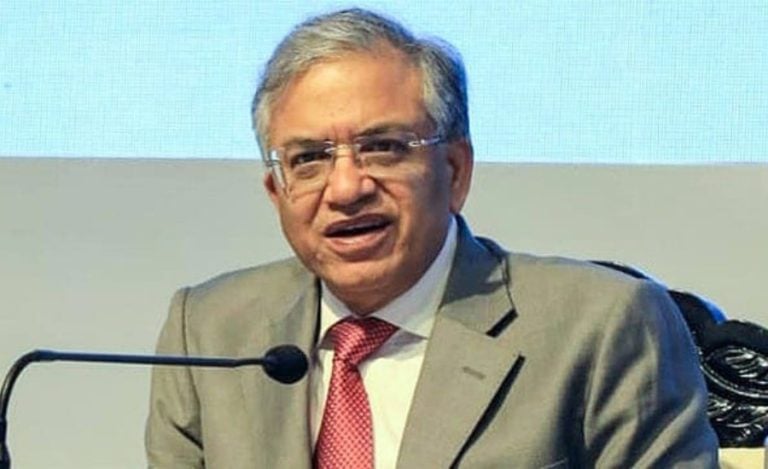
The official notice was issued by Delhi Police Commissioner Anurag Kumar, a 1994-batch Indian Police Service (IPS) officer of the AGMUT cadre.
Under the revised arrangement, Jantar Mantar will no longer function as a designated protest site. Instead, Ramlila Ground, Burari Ground and CBD Ground in East Delhi have been notified as the three new venues for organising protests, demonstrations and sit-ins.
The change comes amid heightened attention to protest-related restrictions in Delhi and questions concerning the regulation of public demonstrations.
Jantar Mantar De-Notified as Designated Protest Venue
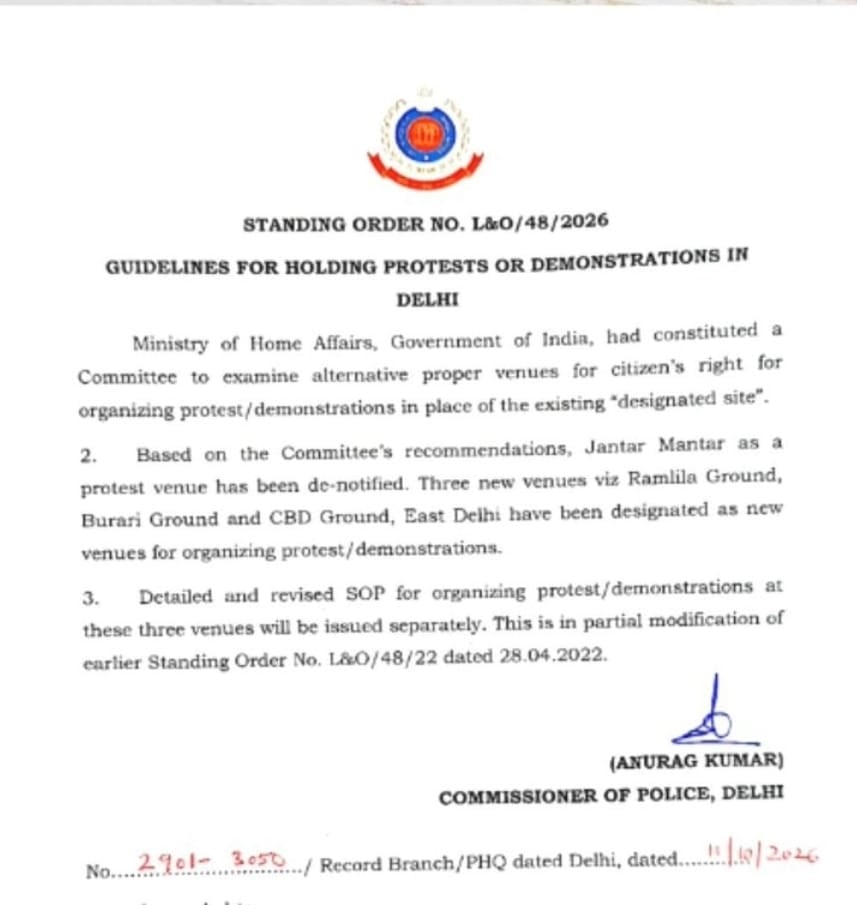
According to the official notice, the Ministry of Home Affairs had constituted a committee to examine alternative and appropriate venues where citizens could organise protests and demonstrations instead of the existing designated site.
Following the committee’s recommendations, Jantar Mantar has been de-notified as a protest venue.
The notice states: “Based on the Committee’s recommendations, Jantar Mantar as a protest venue has been de-notified.”
This means that Jantar Mantar will no longer be available as an officially designated location for organising protests under the revised arrangement.
The decision represents a significant change in Delhi’s protest management framework, as Jantar Mantar has long been associated with demonstrations by political organisations, farmers, students, employees, social activists and civil society groups.
Three New Protest Venues Designated in Delhi
The Delhi Police notice identifies three locations where protests and demonstrations may now be organised.
- Ramlila Ground (Ramlila Maidan), Delhi
- Burari Ground, Delhi
- CBD Ground, East Delhi
These locations have been designated as alternatives to Jantar Mantar following the recommendations of the MHA-appointed committee.
The move is intended to establish a revised framework for managing public demonstrations in the national capital.
However, the precise conditions governing the use of these venues will be specified in a separate Standard Operating Procedure.
Delhi Police to Issue Revised SOP for Protests
The notice states that a detailed and revised Standard Operating Procedure (SOP) for organising protests and demonstrations at the three newly designated venues will be issued separately.
The SOP is expected to clarify the procedural requirements governing the organisation of demonstrations at these locations.
The present notification does not provide the detailed conditions relating to permissions, crowd management, timings or other operational arrangements.
Consequently, the specific requirements for holding protests at the new venues will become clearer once the revised SOP is issued.
Earlier Standing Order of April 28, 2022 Partially Modified
The latest notice also modifies the earlier framework governing designated protest venues in Delhi.
According to the notification, the decision has been issued in partial modification of Standing Order No. L&O/48/22 dated April 28, 2022.
The earlier standing order formed part of the existing arrangements for regulating demonstrations and protests.
With the latest modification, Jantar Mantar has been removed as a designated site and replaced by the three newly identified locations.
The notification does not state that all other provisions of the earlier standing order have been withdrawn.
Who Is IPS Anurag Kumar, the Delhi Police Commissioner Who Issued the Notice?
Anurag Kumar is a 1994-batch Indian Police Service officer belonging to the AGMUT cadre, which covers Arunachal Pradesh, Goa, Mizoram and Union Territories.
As Commissioner of Delhi Police, he is responsible for leading the police organisation in the national capital, including matters concerning law and order, public security and policing arrangements.
The notice de-notifying Jantar Mantar as a protest venue was issued under his authority.
The decision, however, follows the recommendations of a committee constituted by the Ministry of Home Affairs rather than being presented as an independent decision taken solely by the Police Commissioner.
Why Has Jantar Mantar Been Removed as a Protest Venue?
The decision has been linked to security concerns and the need to identify alternative locations for public demonstrations.
The Ministry of Home Affairs constituted a committee to examine appropriate venues where citizens could continue exercising their right to organise protests.
The committee subsequently recommended alternative sites, leading to the removal of Jantar Mantar from the designated list.
Although security concerns have been cited in the account of the decision, the supplied notification does not provide a detailed explanation of the specific security assessment or the criteria used to select the three alternative grounds.
The change therefore raises questions about how authorities will balance security requirements, public convenience and citizens’ ability to demonstrate peacefully.
Abhijit Dipke Reacts: ‘Entire Country Will Become Jantar Mantar’
The decision has drawn a sharp reaction from Abhijit Dipke, founder of the Cockroach Janata Party (CJP).
Reacting to the de-notification, Dipke said that Jantar Mantar had already been transformed from a place of protest into a battlefield.
He declared, “They have removed Jantar Mantar as the designated protest site. Indeed, it is no longer a place for protests, as it had been turned into a battlefield. Now, the entire country will become Jantar Mantar!”
His remarks reflect opposition to the government’s decision and concern over the removal of a venue historically associated with public demonstrations.
According to the supplied account, the Cockroach Janata Party launched its first agitation at Jantar Mantar when activist Sonam Wangchuk staged a sit-in demanding the resignation of then-Education Minister Dharmendra Pradhan.
Jantar Mantar: A Historic Centre of Public Protests in India
For decades, Jantar Mantar has occupied an important place in India’s culture of public protest.
Located in central Delhi, it has served as a gathering point for organisations and individuals seeking to raise demands before the government and draw national attention to political, social and economic issues.
Farmers, pensioners, students, employees, social activists, civil rights organisations and political groups have used the venue to communicate grievances and mobilise public support.
Several major movements associated with the national capital have included demonstrations at Jantar Mantar.
2012 Nirbhaya Movement
Following the December 2012 gang-rape and murder case in Delhi, large-scale demonstrations took place across the national capital.
Jantar Mantar was among the locations associated with public mobilisation demanding justice for the victim, stronger laws and improved safety for women.
The movement contributed to a nationwide debate on sexual violence, criminal justice and institutional accountability.
One Rank-One Pension Movement
Around 2015, ex-servicemen organised sustained demonstrations demanding the implementation of the One Rank-One Pension (OROP) principle.
Jantar Mantar became an important venue for their campaign, which brought the concerns of retired defence personnel into the national political debate.
Tamil Nadu Farmers’ Protests in 2017
In 2017, farmers from Tamil Nadu staged demonstrations at Jantar Mantar to highlight agricultural distress.
Their demands included relief from debt, support for drought-affected farmers and greater government intervention to address the agrarian crisis.
The protests attracted national attention because of the demonstrators’ distinctive methods of drawing public and government attention to their demands.
Protests Against Citizenship Amendment Act in 2019
During the protests against the Citizenship Amendment Act (CAA) in 2019, demonstrations were held at several locations across Delhi.
Jantar Mantar was among the sites used by groups opposing the legislation and expressing concerns about citizenship rights.
Farmers’ Protest and Kisan Sansad in 2021
During the farmers’ movement against the three central farm laws, Jantar Mantar became the venue for the Kisan Sansad, or Farmers’ Parliament, in 2021.
Farmers gathered there to conduct symbolic parliamentary proceedings and present their opposition to the agricultural legislation.
The event attracted considerable political attention as the farmers’ movement continued its campaign.
Wrestlers’ Protest in 2023
In 2023, prominent Indian wrestlers staged a prolonged sit-in at Jantar Mantar against Brij Bhushan Sharan Singh, the then-president of the Wrestling Federation of India.
The wrestlers raised allegations of sexual harassment and demanded action against him.
Their protest drew national attention to allegations of misconduct within sports administration and the treatment of athletes raising complaints.
What Does the Decision Mean for Future Protests in Delhi?
The de-notification of Jantar Mantar marks an important administrative change in how public demonstrations will be organised in Delhi.
Citizens and organisations planning protests will now have three newly designated venues: Ramlila Ground, Burari Ground and CBD Ground in East Delhi.
The revised SOP, which Delhi Police has said will be issued separately, will determine the practical arrangements for using these locations.
The notice changes the designated venues for protests; it does not, by itself, abolish the constitutional right to peaceful assembly.
The development is significant because Jantar Mantar has long been regarded as a prominent space for citizens to raise grievances near the country’s political and administrative institutions.
Its removal from the list of designated protest venues is therefore likely to remain a subject of public and political debate, particularly over the accessibility of alternative locations and the conditions under which peaceful demonstrations will be permitted.