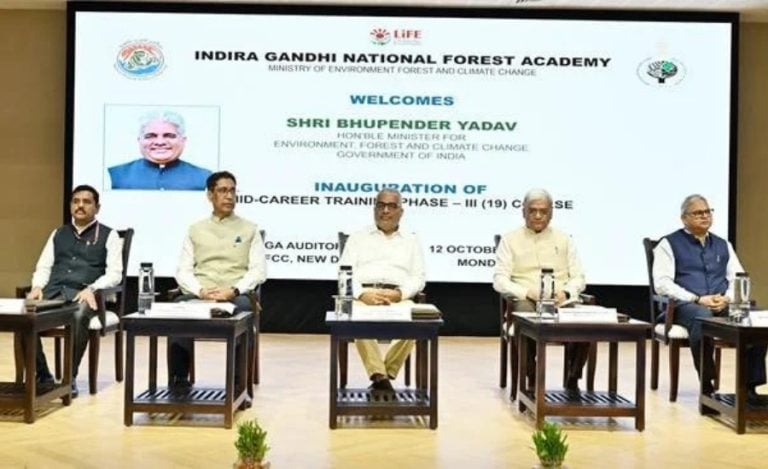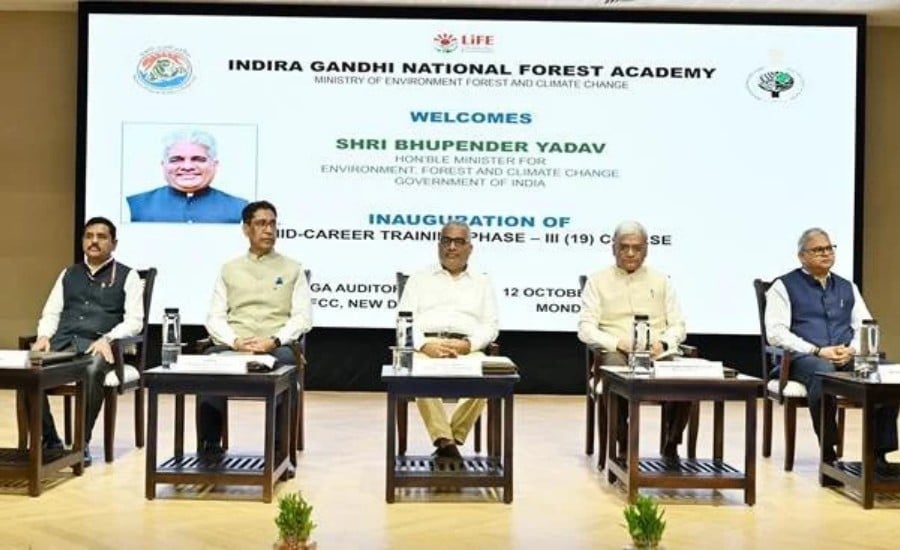
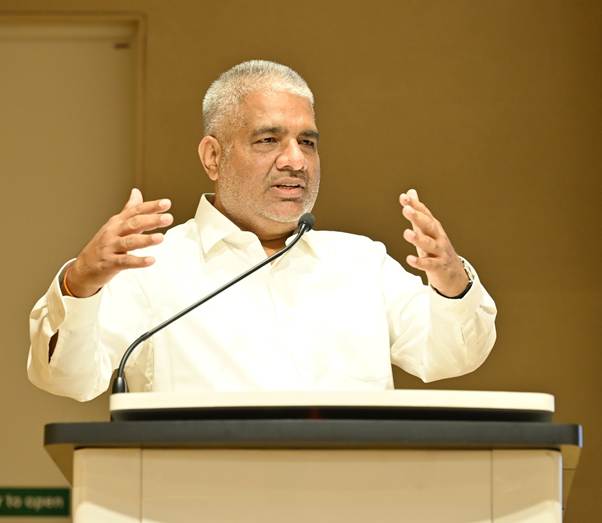
New Delhi: Union Environment, Forest and Climate Change Minister Bhupender Yadav on Monday called on Indian Forest Service (IFS) officers to move beyond traditional regulatory responsibilities and take on broader roles as leaders, innovators and facilitators of sustainable development.
Interacting with participants of the Mid-Career Training (MCT) Phase-III (19) programme in New Delhi, Yadav stressed the need to combine scientific approaches, emerging technologies and community participation to address India’s evolving forest and wildlife conservation challenges.
He said the vision of Viksit Bharat@2047 must integrate economic development with ecological security, highlighting the responsibility of forest officers in protecting the country’s natural resources while supporting sustainable development.
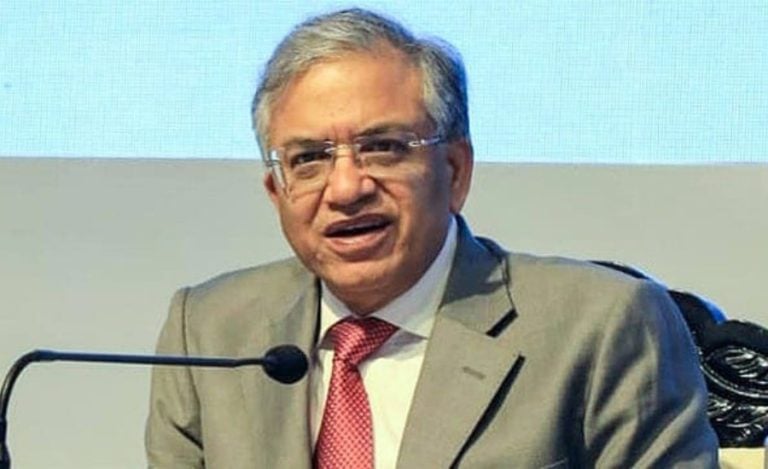
The interaction was attended by senior officials of the Ministry of Environment, Forest and Climate Change (MoEFCC), including Secretary Narendra Bhooshan, Director General of Forests and Special Secretary Santosh Tiwari, Additional Director General of Wildlife Ramesh Pandey, and Indira Gandhi National Forest Academy Director Rajendra Prasad Khajuria.
Human-Wildlife Conflict, Forest Fires Among Key Challenges
Yadav identified several pressing issues requiring effective forest governance, scientific intervention and stronger engagement with local communities.
The key challenges highlighted by the minister included:
- Human-wildlife conflict: Developing practical approaches to reduce conflict between people and wildlife.
- Forest fires: Strengthening preparedness and management to protect forest ecosystems.
- Climate change: Adapting forest management practices to changing environmental conditions.
- Development and conservation: Balancing economic growth with the protection of forests, wildlife and biodiversity.
The minister encouraged officers to think beyond conventional approaches and identify practical solutions suited to the challenges they encounter in the field.
AI, GIS and Remote Sensing to Support Forest Management
Highlighting the changing responsibilities of the Indian Forest Service, Yadav emphasised the importance of emerging technologies in conservation planning and decision-making.
He called on officers to make greater use of:
- Geographic Information Systems (GIS) for spatial analysis and forest management planning.
- Remote sensing for monitoring forests, landscapes and ecological changes.
- Artificial intelligence (AI) to support forestry-related analysis and decision-making.
- Digital transformation to improve institutional processes and governance.
He also stressed the importance of continuous professional development, stronger institutions and the use of traditional knowledge alongside modern technology.
According to the minister, IFS officers need both field-level implementation experience and exposure to policymaking across different ministries to understand the wider links between environmental protection and development.
Minister Highlights India’s Conservation Initiatives
Yadav acknowledged the contribution of forest officers to safeguarding India’s forests, wildlife and ecological heritage. He also highlighted progress in forest and tree cover, carbon sequestration, wetland conservation and landscape restoration.
The minister referred to several initiatives aimed at strengthening environmental protection and expanding green cover, including:
- Ek Ped Maa Ke Naam: A citizen-engagement initiative promoting tree planting.
- MISHTI: An initiative focused on the restoration and conservation of mangrove ecosystems.
- Aravalli Green Wall Project: A landscape-restoration initiative targeting the Aravalli region.
- Nagar Van Yojana: A programme supporting the development of urban forests.
He emphasised that India’s diverse climates, ecosystems and biodiversity require conservation strategies suited to different landscapes and local conditions.
Mid-Career Training Programme to Run Until November 6
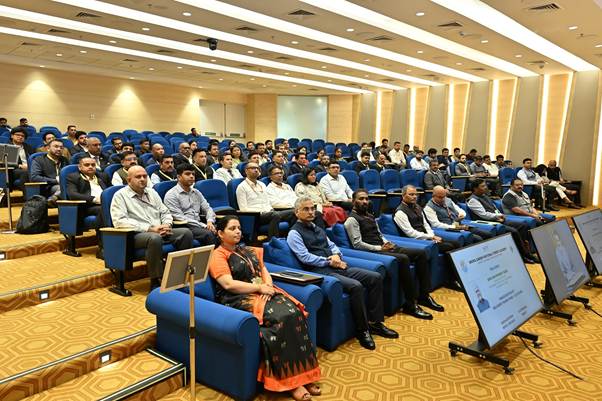
The Mid-Career Training Phase-III (19) programme is being organised by the Indira Gandhi National Forest Academy (IGNFA) from October 12 to November 6, 2026.
The programme includes 68 IFS officers from 18 cadres, each with seven to nine years of service. It is designed to strengthen leadership, strategic policymaking, field-level implementation and forest governance.
The training combines policy exposure, management development and specialised forestry modules.
Key Components of the Training Programme
Line Ministry Module
The module will familiarise officers with key central ministries and organisations, helping them understand inter-sectoral coordination and policy frameworks.
Thematic Visits
Field visits to Uttarakhand and Uttar Pradesh will focus on practices related to:
- Wildlife management
- Biodiversity conservation
- Ecotourism
- Community-based forest management
Management Module
This component will cover leadership and decision-making, human resource and financial management, governance of forest commons, negotiation, conflict resolution, change management, communication and ethical leadership.
Forestry Module
The specialised module will address contemporary environmental and forestry issues, including:
- International environmental conventions
- AI applications in forestry and digital transformation
- Wildlife leadership and biodiversity governance
- Climate finance
- Forest Rights Act-related issues
- Watershed management
- Recent amendments to the Forest (Conservation) Act
- Human-wildlife conflict
Focus on Leadership and Sustainable Development
Yadav urged the participating officers to strengthen their leadership capabilities, improve decision-making and develop innovative approaches to forest management.
He emphasised that protecting India’s ecological future requires effective institutions, scientific knowledge, technological innovation and meaningful community engagement.
The training programme is intended to equip mid-career IFS officers with the policy understanding and management skills needed to address emerging environmental challenges while advancing sustainable development.
Read Also: India Calls for COP31 to Shift Focus From Climate Targets to Faster Implementation