New Delhi: Nuclear Power Corporation of India Limited (NPCIL) has strengthened its radiological monitoring and emergency response capabilities with the induction of Mobile Radiological Assessment Laboratories (MRALs) equipped with advanced radiation monitoring technologies. The mobile laboratories are designed to support real-time radiation assessment and improve preparedness for radiological emergencies, particularly in remote locations across the country.
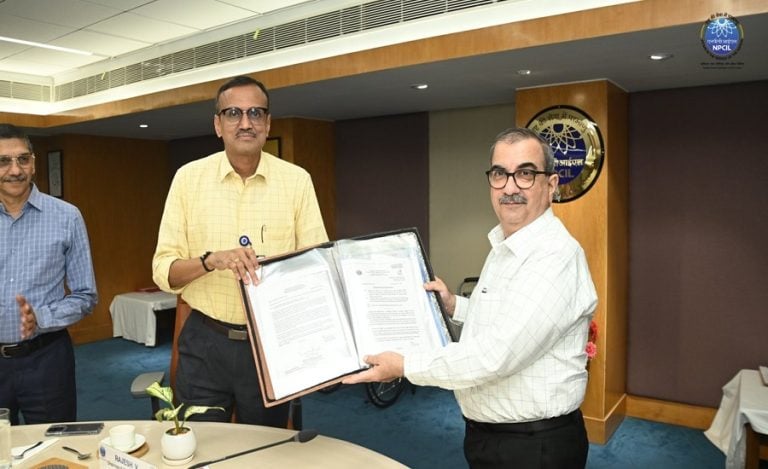
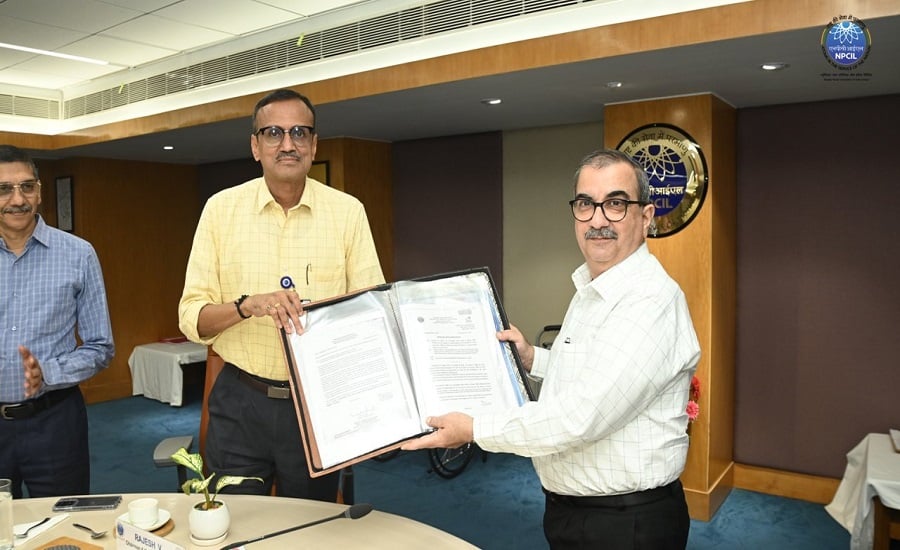
The MRALs were developed by the Radiological Safety Systems Division (RSSD), Bhabha Atomic Research Centre (BARC). They were formally handed over to Rajesh Veeraraghavan, Chairman and Managing Director of NPCIL, by Vivek Bhasin, Director of BARC, at Nabikiya Urja Bhavan, NPCIL.
Senior officials from NPCIL, BARC, the Atomic Energy Regulatory Board (AERB) and the Department of Atomic Energy (DAE) attended the handover ceremony. Officials from various nuclear power plant sites also participated through video conferencing.
NPCIL Enhances Radiological Monitoring Capabilities
The induction of MRALs marks an important step towards strengthening India’s radiological monitoring infrastructure and improving emergency preparedness. Equipped with advanced radiation detection technologies, these mobile laboratories are designed to conduct radiological monitoring and assessment in different locations.
Their mobility allows monitoring teams to reach areas where timely radiation measurements and assessments may be required. The facilities are expected to strengthen the country’s existing Radiation Emergency Response Centers and improve their ability to respond to radiological incidents.
The initiative also reflects the growing role of technology in supporting radiation safety, emergency assessment and preparedness across India’s nuclear energy infrastructure.
Read also: NPCIL and GSECL Sign MoU to Identify Sites for New Nuclear Power Projects in Gujarat
What Are Mobile Radiological Assessment Laboratories (MRALs)?
Mobile Radiological Assessment Laboratories are specialised mobile platforms designed to monitor radiation levels and assess radiological conditions in the surrounding environment.
Unlike monitoring systems limited to fixed locations, MRALs can be deployed to different areas as required. Their mobility supports radiation assessment in remote locations and other areas where rapid measurements may be necessary.
The laboratories are equipped with an Integrated Radiation Instrumentation System (IRIS), which combines multiple radiation detectors, data acquisition systems and computing capabilities within a single platform.
Key features of MRALs include:
- Integrated radiation monitoring: Multiple radiation detectors are brought together through a unified instrumentation system.
- Real-time measurements: The system enables radiation levels to be measured and monitored in real time.
- Monitoring while in motion: The technology supports radiation measurements even while the vehicle is moving.
- Data acquisition and computing: Integrated systems support the collection and processing of radiation monitoring data.
- Mobile deployment: The laboratories can be used at different locations, including remote areas requiring radiological assessment.
These capabilities are intended to improve the availability of radiation monitoring data and support timely assessment when required.
Integrated Radiation Instrumentation System Enables Real-Time Monitoring
The Integrated Radiation Instrumentation System (IRIS) is a central component of the MRAL platform. It integrates radiation detectors with data acquisition and computing systems to facilitate real-time radiation measurements.
The ability to collect measurements while the vehicle is in motion is particularly useful for mobile monitoring operations. It allows radiation monitoring teams to assess conditions across different locations without relying solely on measurements from fixed monitoring points.
By combining detection equipment, data collection and computing capabilities, IRIS provides an integrated platform for radiological monitoring and assessment.
The deployment of this technology is expected to strengthen the operational capabilities available to India’s radiation emergency response network.
MRALs to Strengthen Radiation Emergency Response Centers
The newly inducted mobile laboratories will further augment Radiation Emergency Response Centers across the country, particularly those serving remote locations.
These centres play an important role in radiological emergency preparedness and response. Access to mobile radiation monitoring systems can support the timely assessment of radiation levels and provide information needed to evaluate radiological conditions.
The MRALs are expected to contribute to the following areas:
- Strengthening radiological monitoring capabilities across different locations.
- Supporting timely radiation assessment during emergency situations.
- Improving access to monitoring facilities in remote areas.
- Enhancing the technological capabilities of Radiation Emergency Response Centers.
- Strengthening overall radiological preparedness and response infrastructure.
The initiative is aimed at developing a more responsive and technology-enabled radiological monitoring network. However, the announcement did not specify the number of laboratories inducted, their deployment locations or their detailed technical specifications.
NPCIL-BARC Collaboration Strengthens Radiation Safety Infrastructure
The handover of MRALs highlights the collaboration between NPCIL and BARC in strengthening radiation monitoring capabilities.
The laboratories were developed by RSSD, BARC, and handed over in the presence of senior officials from key organisations involved in India’s nuclear energy and radiation safety framework, including NPCIL, BARC, AERB and DAE.
Participation by officials from nuclear power plant sites through video conferencing also connected the handover event with personnel working across the country’s nuclear power infrastructure.
The induction represents a step towards improving access to advanced monitoring technologies and reinforcing India’s preparedness for radiological emergencies.
About Nuclear Power Corporation of India Limited (NPCIL)
Nuclear Power Corporation of India Limited (NPCIL) is a public sector enterprise under the Department of Atomic Energy, Government of India. It is responsible for the design, construction, commissioning and operation of nuclear power plants for electricity generation in India. NPCIL plays an important role in the country’s nuclear energy programme, with a focus on safe and reliable nuclear power generation.
Read also: NPCIL Begins Initial Fuel Loading at RAPP-8, Advances Commissioning of Indigenous 700 MWe Reactor