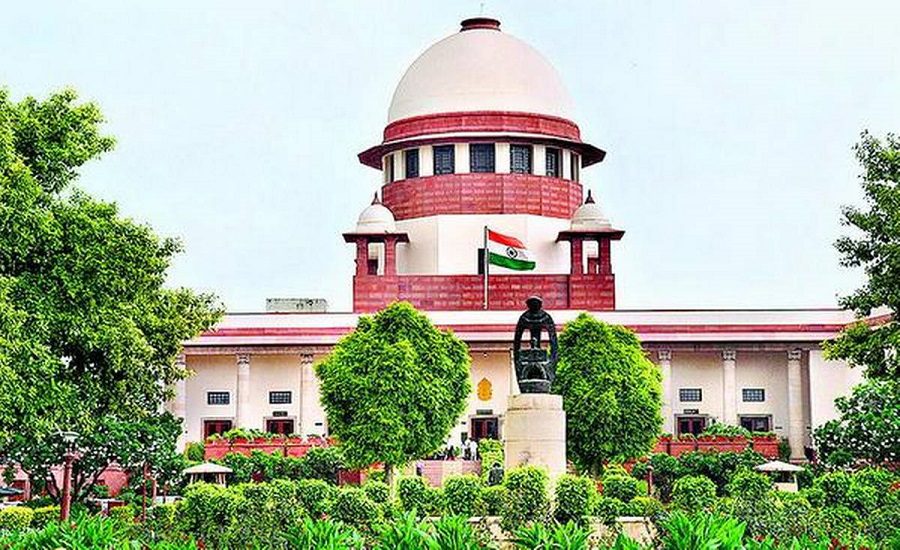
New Delhi: The Supreme Court of India on Monday heard petitions concerning restrictions on firecrackers in Delhi-NCR, stressing the need for a balanced and practical approach that considers both religious sentiments and the growing problem of air pollution.
A bench headed by Chief Justice of India (CJI) Justice Surya Kant observed that there was still sufficient time to consider public appeals and restrictions on the hours during which firecrackers could be burst. The court emphasised the importance of public awareness, civic responsibility and voluntary cooperation in addressing pollution.
The matter relates to a long-pending case concerning restrictions on firecrackers in the national capital and surrounding areas due to deteriorating air quality. The court indicated that limiting the time for bursting firecrackers could be considered as a possible alternative to a complete ban.
Supreme Court Emphasises Balanced Approach to Firecracker Use
During the hearing, the bench headed by CJI Surya Kant stressed the need to find a practical solution to the firecracker pollution issue without hurting religious sentiments.
The Chief Justice observed that the court would not hurt religious feelings but would examine what kind of balanced approach could be adopted.
The bench also highlighted the importance of public awareness and responsible behaviour, noting that citizens and civil society could play a significant role in addressing the pollution problem.
Rather than relying exclusively on strict prohibitions, the court indicated that a solution involving public cooperation and restrictions on the timing of firecracker use could be explored.
Read also: Will Firecrackers Be Allowed This Diwali? Supreme Court Gives A Major Hint
‘What Does Bursting Firecrackers Have to Do With Religion?’
During the proceedings, a lawyer argued that bursting firecrackers does not fall within the fundamental right to religious freedom. The lawyer distinguished between religious practices, such as worship, and the use of firecrackers, remarking that even God would be surprised by the argument linking the two.
Justice Joymalya Bagchi questioned the connection between firecrackers and religion, asking, “What does bursting firecrackers have to do with religion?”
The exchange highlighted the legal question of whether bursting firecrackers should be treated as an essential religious practice or addressed primarily as an environmental and public health concern.
The bench’s observations came as the court considered how restrictions could be framed to address pollution while taking account of the concerns raised by different parties.
Supreme Court Considers Restrictions on Firecracker Timings
The court also referred to the practical difficulties involved in enforcing a complete ban on firecrackers in Delhi-NCR.
CJI Surya Kant recalled that imposing a complete prohibition could lead people to burst firecrackers during the daytime instead, making enforcement more challenging.
Against this background, the court indicated that restricting the hours during which firecrackers may be used could be considered as a more practical option.
The key issues under consideration include:
- Whether restrictions on firecracker use should be based on specific time windows.
- How public awareness can encourage compliance with pollution-control measures.
- How to balance environmental concerns with religious sentiments.
- How authorities can effectively enforce restrictions during the festive season.
The court’s observations indicate that a regulated approach may be considered, although the final decision will depend on the proceedings and any directions subsequently issued.
Earlier Hearing Also Considered Conditional Permission
A similar hearing took place on September 30, when a bench comprising Justices M.M. Sundresh and P.B. Varale indicated that it was inclined to consider a proposal allowing firecrackers under certain conditions.
The earlier proceedings also reflected the possibility of permitting regulated use rather than imposing an absolute prohibition.
However, any permission would depend on the conditions established by the court and the applicable restrictions governing the sale and use of firecrackers in Delhi-NCR.
What Is the Delhi-NCR Firecracker Ban Case?
The case dates back to 2015, when the Supreme Court issued several directions to regulate the manufacture, sale and use of firecrackers in response to worsening air quality in Delhi and surrounding areas.
Over the years, the court has considered different restrictions aimed at reducing pollution caused by firecrackers, particularly during the Diwali festival.
Although the court had previously imposed a complete ban on firecracker use in Delhi, it subsequently allowed the sale and use of approved green firecrackers in Delhi-NCR for a limited period around Diwali in 2025.
Green firecrackers are designed to reduce emissions compared with conventional firecrackers, although their use does not eliminate pollution entirely.
The latest hearing continues the court’s efforts to determine how firecracker-related pollution can be controlled while establishing practical and enforceable rules.
What Happens Next?
The Supreme Court’s latest observations suggest that restrictions on the timing of firecracker use, public awareness campaigns and greater civic responsibility could form part of a balanced approach to the issue.
However, the observations made during the hearing should not be interpreted as a final order lifting the ban or granting general permission to burst firecrackers.
Any change in the existing restrictions will depend on the court’s formal directions and the applicable rules for Delhi-NCR. Until then, residents and authorities must follow the restrictions currently in force.
Read also: Delhi Metro Seat Dispute Turns Fatal; Retired IAS Officer, Supreme Court Lawyer Son Arrested