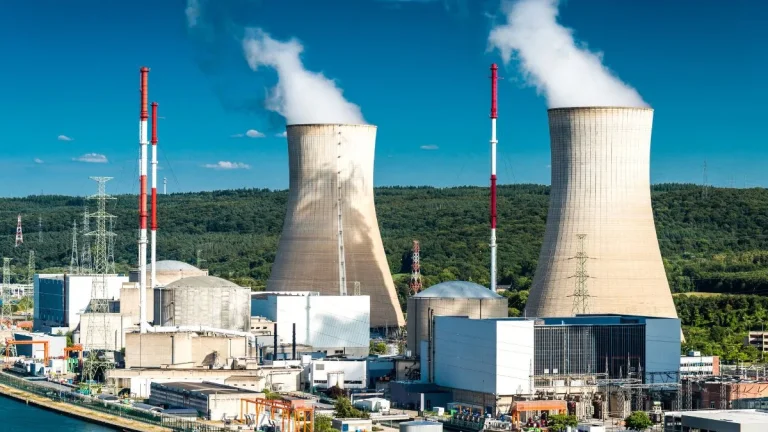
New Delhi: The Nuclear Power Corporation of India Limited (NPCIL) has commenced Initial Fuel Loading (IFL) at Unit-8 of the Rajasthan Atomic Power Project (RAPP-7&8) at Rawatbhata, Rajasthan, marking a significant milestone in the commissioning of the country’s indigenous 700 MWe Pressurised Heavy Water Reactor (PHWR).
The initial fuel loading began at 15:18 hrs on September 19, 2026, in the presence of senior NPCIL officials, including S. D. Paraswar, Director (Operations); N. K. Mitharwal, Director (Projects); D. S. Rao, Site Director, Rawatbhata Rajasthan Site, and the Station Directors.
The milestone marks the progression of RAPP-8 into an advanced stage of its commissioning process and comes after the completion of prescribed pre-requisites and regulatory reviews.
RAPP-8 Enters Important Stage of Commissioning
RAPP-7&8 comprises two indigenous 700 MWe PHWR units being developed at the Rawatbhata site in Rajasthan.
RAPP-8 is the fourth reactor in the series of sixteen indigenous 700 MWe PHWRs planned in the country. The standardised reactor programme is aimed at expanding India’s domestic nuclear generation capacity through indigenous reactor technology.
The commencement of Initial Fuel Loading allows the project to move towards the next critical stages of reactor commissioning.
Key upcoming milestones include:
- First Approach to Criticality (FAC): The stage at which a controlled nuclear fission chain reaction is initiated.
- Power generation: Following the required commissioning and testing activities.
- Commercial operation: The unit is expected to commence commercial operation during the current financial year, subject to completion of all required processes and clearances.
Read also: NPCIL Awards Major Generator Transformer Order to TARIL for Kaiga Nuclear Power Project
Regulatory Clearance Granted by AERB
The Initial Fuel Loading at RAPP-8 commenced after permission was granted by the Atomic Energy Regulatory Board (AERB).
The regulatory clearance followed the completion of prescribed pre-requisites and detailed safety assessments. The process included major system integrity audits and reviews of the readiness of the site and systems.
The clearance allows NPCIL to proceed with the Initial Fuel Loading as part of the reactor’s commissioning programme.
RAPP-8 Follows Earlier 700 MWe PHWR Milestones
RAPP-8 is part of a broader programme to deploy sixteen indigenous 700 MWe PHWRs across the country.
Earlier reactors in this series have already achieved key operational milestones. Kakrapar Atomic Power Project (KAPP) Units 3 and 4 in Gujarat commenced commercial operation in 2023-24, while RAPP-7 at Rawatbhata commenced commercial operation in April 2025.
The progress of these units forms part of India’s effort to develop a standardised fleet of large-capacity indigenous nuclear reactors.
RAPP-7 and RAPP-8 to Strengthen Indigenous Nuclear Capacity
The two units at RAPP are designed as indigenous 700 MWe PHWRs and are part of India’s long-term strategy to increase nuclear power generation.
The standardised design is intended to support the deployment of similar reactors at multiple locations, helping expand the country’s nuclear fleet.
The commissioning of RAPP-8 will add another major unit to this programme once the reactor completes the remaining stages and enters commercial operation.
Nuclear Power’s Role in India’s Energy Strategy
Nuclear energy is being considered an important component of India’s long-term energy strategy as the country seeks to meet rising electricity demand while moving towards a lower-carbon energy mix.
Unlike solar and wind power, nuclear power can provide continuous electricity generation. It can therefore complement renewable energy sources whose output varies depending on weather conditions and the time of day.
The expansion of indigenous nuclear capacity is also aimed at strengthening energy security and developing domestic capabilities in nuclear technology.
Initial Fuel Loading Does Not Mean Commercial Power Generation
The commencement of Initial Fuel Loading is an important commissioning milestone, but it does not mean that RAPP-8 has started commercial electricity generation.
The reactor will have to undergo several additional stages, including commissioning activities, testing, First Approach to Criticality and other prescribed regulatory processes before commercial operation can begin.
The progression to Initial Fuel Loading, however, marks a significant step towards the eventual operation of the 700 MWe unit.
India’s 16-Unit Indigenous 700 MWe PHWR Programme
RAPP-8 is part of the planned fleet of 16 indigenous 700 MWe PHWRs.
The programme focuses on standardised reactor designs that can be deployed at multiple sites, supporting a larger and more consistent domestic nuclear generation fleet.
As India works towards greater energy security and a larger share of low-carbon electricity generation, the commissioning of projects such as RAPP-8 is expected to contribute to the country’s long-term nuclear power expansion.
About NPCIL
Nuclear Power Corporation of India Limited (NPCIL) is a public sector enterprise under the Department of Atomic Energy, Government of India. It is responsible for the design, construction, commissioning and operation of nuclear power plants for electricity generation in the country. NPCIL operates nuclear power projects based on indigenous technologies and plays a key role in India’s nuclear power programme.
Read also: NPCIL Inaugurates DARSHAN Hub to Advance Small Modular Reactor Technology in India