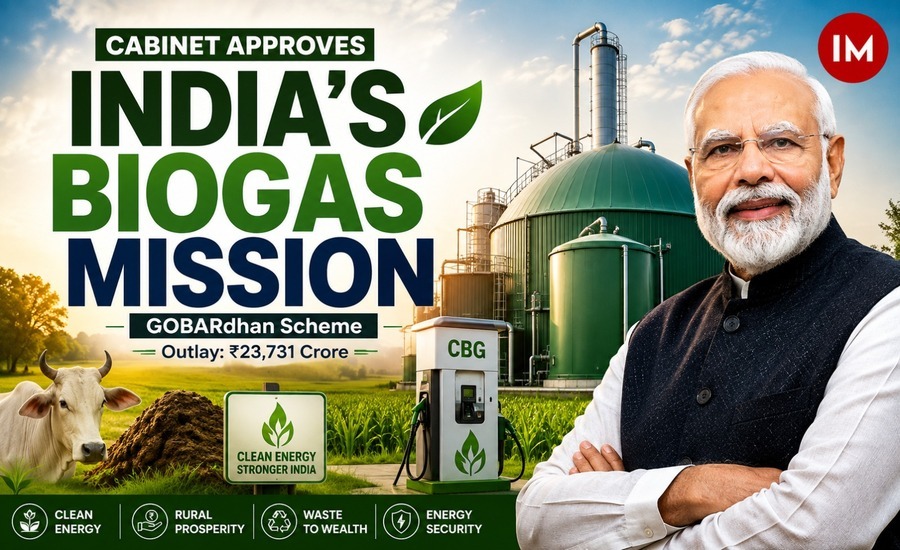
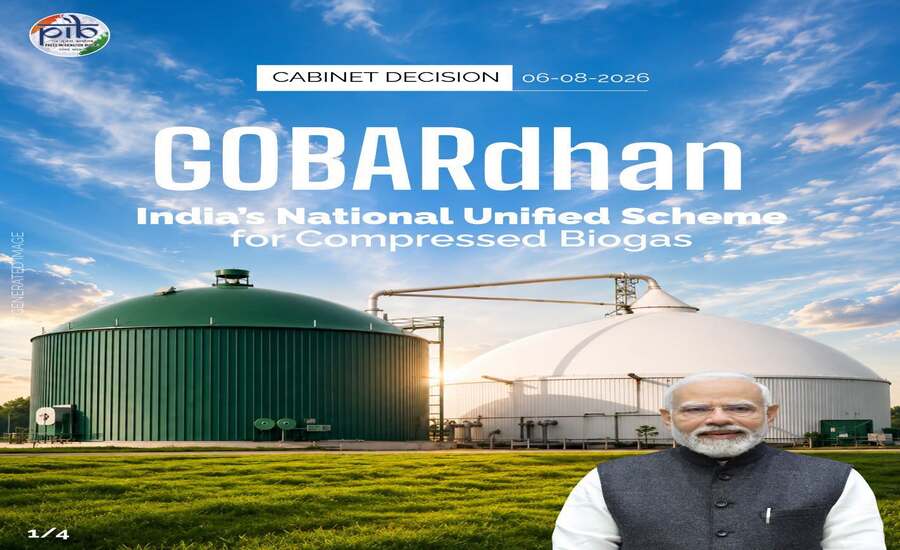
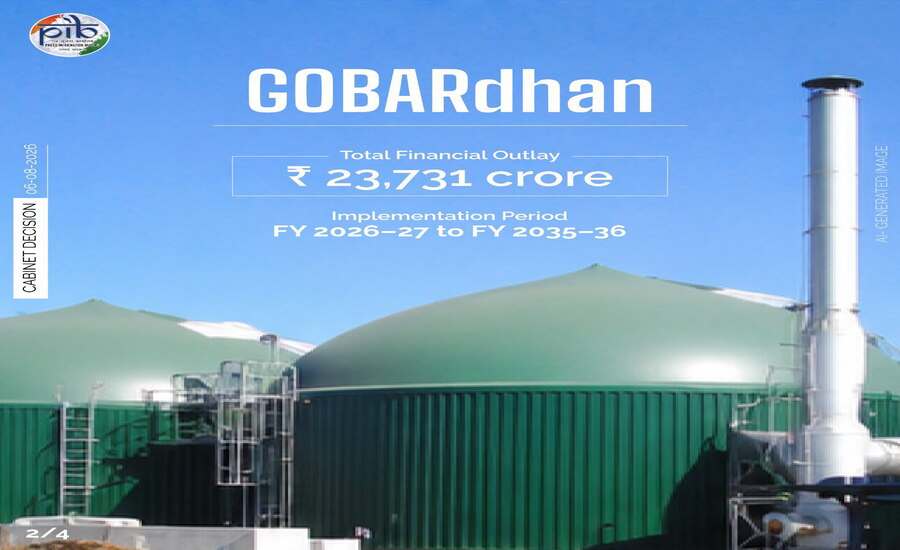
New Delhi: In a major push towards clean energy and rural development, the Union Cabinet has approved the ₹23,731-crore GOBARdhan (National Circular Bioenergy Scheme), a landmark initiative aimed at transforming agricultural residue, cattle dung, municipal organic waste and other biomass into compressed biogas (CBG), organic manure and new income opportunities for farmers.
Approved by the Cabinet chaired by Prime Minister Narendra Modi, the scheme will be implemented from FY 2026-27 to FY 2035-36. It seeks to establish compressed biogas as a key pillar of India’s energy mix while reducing dependence on imported fossil fuels and strengthening the country’s circular economy.
A National Push for Compressed Biogas
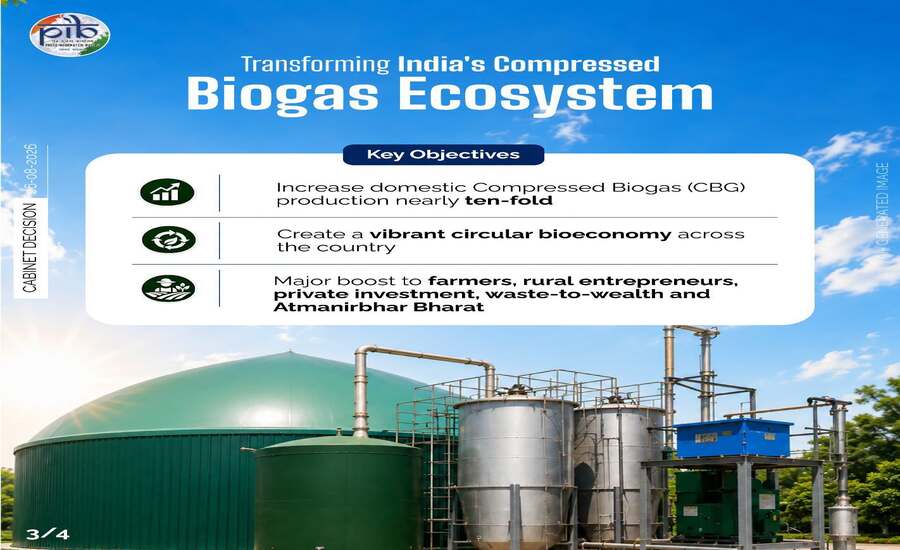
The GOBARdhan Scheme integrates multiple incentives under one national framework to accelerate CBG production. It combines assured market demand, stable pricing, capital support, pipeline connectivity, access to institutional finance and technology development to encourage investment across the sector.
The government expects the initiative to increase domestic CBG production by nearly ten times, making India a major producer of renewable gaseous fuel.
Six Pillars of the Scheme
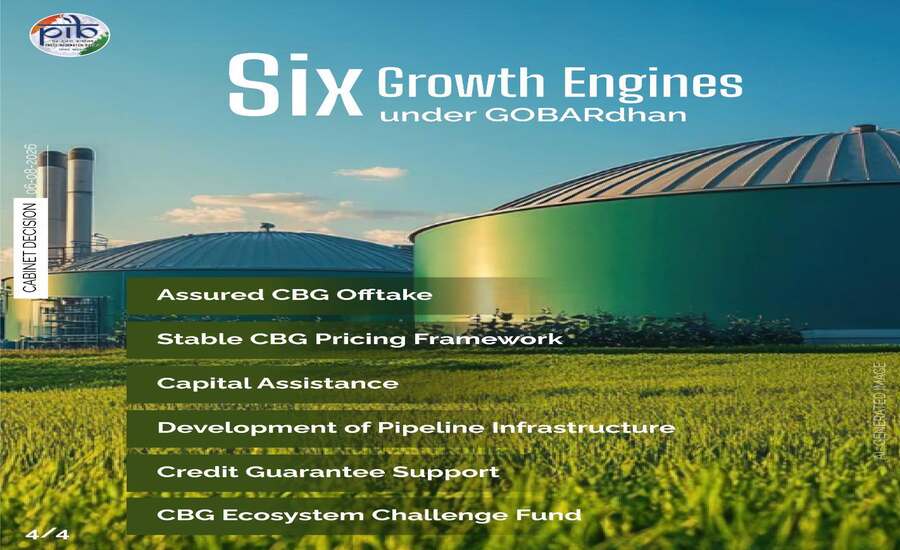
The scheme is built around six major components:
- Assured offtake of compressed biogas through City Gas Distribution networks.
- Government-backed pricing framework offering long-term revenue certainty.
- Capital assistance of up to ₹2 crore per tonne per day for eligible greenfield projects.
- Development of dedicated pipeline infrastructure connecting CBG plants with gas networks.
- Credit guarantee support to improve financing for MSMEs and rural entrepreneurs.
- A dedicated Challenge Fund to strengthen district-level planning, feedstock management and technology adoption.
Benefits for Farmers and Rural Economy
The initiative is expected to generate fresh economic opportunities in rural India by creating demand for agricultural residue, cattle dung and other biomass resources.
Farmers, cooperatives, feedstock suppliers and rural entrepreneurs are expected to benefit from additional income streams, while local employment will be created in waste collection, transportation, plant operations and organic manure production.
Boost to Clean Energy and Waste Management
Compressed biogas is chemically similar to natural gas and can be supplied through the existing gas distribution network.
The government believes the scheme will help:
- Reduce dependence on imported fossil fuels.
- Improve scientific management of agricultural and municipal organic waste.
- Lower greenhouse gas emissions.
- Expand the organic manure economy.
- Strengthen India’s clean energy ecosystem.
Built on Existing Initiatives
The GOBARdhan Scheme builds upon earlier government programmes such as the SATAT initiative, the Market Development Assistance Scheme, the Biomass Aggregation Machinery Scheme, the Development of Pipeline Infrastructure Scheme and financial assistance under the National Bioenergy Programme.
More than 200 compressed biogas plants have already been commissioned under these initiatives. The new scheme aims to scale up these efforts through a unified national framework.
Why It Matters
With India’s natural gas demand steadily increasing across transport, households and industries, the GOBARdhan Scheme is expected to play a crucial role in expanding domestic renewable fuel production. By converting waste into energy while supporting rural livelihoods and private investment, the initiative aligns with the government’s goals of Atmanirbhar Bharat, energy security, sustainable agriculture and a circular economy.
Read also: Bihar’s Supaul Women Turn Plastic Waste into Livelihood Through Waste Management Units