New Delhi: In a major advancement for electric vehicles (EVs) and clean energy storage, Indian scientists have developed a high-voltage supercapacitor using dual-functional porous graphene that can deliver increased range and faster acceleration for EVs while improving energy storage for renewable systems.
This innovation, led by researchers at the International Advanced Research Centre for Powder Metallurgy and New Materials (ARCI), could help transform energy storage technology both domestically and globally.
What Makes Graphene Supercapacitor Special?
Supercapacitors are devices that store and release electrical energy quickly — much faster than traditional batteries. However, conventional supercapacitors have been limited by lower voltage ranges (typically between 2.5-3.0 volts) because higher voltages lead to instability and safety risks like electrolyte breakdown.
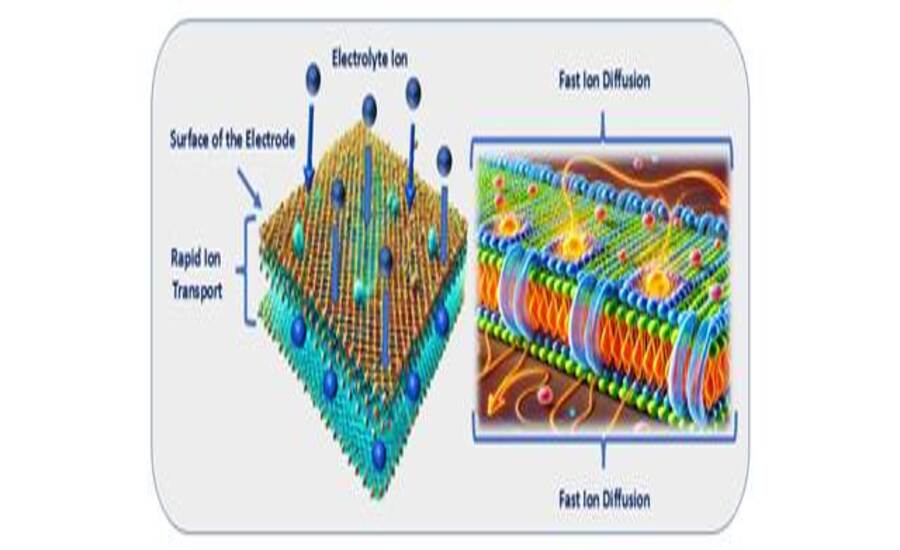
The newly developed device uses dual-functional porous graphene carbon nanocomposite (PGCN) electrodes, allowing operation at an unprecedented 3.4 volts — higher than standard models.
This breakthrough helps overcome longstanding voltage barriers, opening up a new era for more powerful, efficient energy storage.
What are the Benefits of Graphene Supercapacitor
The biggest impact of this innovation lies in electric vehicles.
- Faster acceleration: Higher power output translates to quicker acceleration for EVs.
- Longer driving range: With 33% higher energy storage compared with traditional devices, vehicles can travel farther on a single charge.
- Reduced battery complexity: Higher operating voltage reduces the number of cells needed in a pack, simplifying design and potentially lowering manufacturing costs.
These improvements could redefine performance standards for Indian-made EVs — particularly as the country pushes towards wider adoption of clean transportation.
Eco-Friendly Manufacturing
The PGCN electrodes are created through an eco-friendly hydrothermal carbonization process. The technique uses 1,2-propanediol as a precursor and operates at about 300°C for 25 hours inside a sealed vessel.
This method:
- Avoids harsh chemicals and external gases.
- Reduces environmental impact.
- Is scalable from lab to industrial production.
The result is a micro- and mesoporous material with excellent ion transport and high energy storage — delivering up to 17,000 W/kg power density, making it suitable for EVs, grid-scale systems, and portable electronics.
Durability & Long Life
One of the key metrics for energy storage devices is how well they perform over time. This new supercapacitor retains 96% of its performance even after 15,000 charge-discharge cycles.
Novel supercapacitors with dual-functional porous graphene can provide EV with faster acceleration
— PIB India (@PIB_India) January 28, 2026
Researchers at the International Advanced Research Centre for Powder Metallurgy and New Materials (ARCI), an autonomous institute of the Department of Science and Technology (DST)… pic.twitter.com/3f3I5Qc0so
That level of durability positions the technology as a strong candidate for both consumer and industrial applications.
Graphene Supercapacitor: Supporting India’s Energy Goals
This innovation is part of a broader push toward clean and sustainable energy systems in India. It supports national priorities like:
- Aatma Nirbhar Bharat (Self-reliant India) by strengthening indigenous energy technology capabilities.
- Adoption of renewable power solutions matched with advanced storage technology.
Published in the Chemical Engineering Journal, this research reflects how Indian scientists are pushing the envelope in energy science and supporting global shifts toward electrification and sustainability.
How Does Graphene Supercapacitor Work?
The secret lies in the dual-functional nature of the graphene electrode:
- Water-repellent: Resists degradation caused by moisture.
- Organic electrolyte compatibility: Helps liquids penetrate the pores quickly, boosting ion transport and overall efficiency.
These features encourage faster charge movement inside the supercapacitor and better energy retention during use — essential for long life and reliability.
Read also: EV Sound Alert System Mandatory from 2027: Govt Proposes AVAS for All Electric Vehicles