Gandhinagar: The Gujarat government has signed a Memorandum of Understanding (MoU) with the Centre under the second phase of the Jal Jeevan Mission, aiming to enhance the sustainability and efficiency of rural drinking water systems after achieving universal tap water connections in 2022.
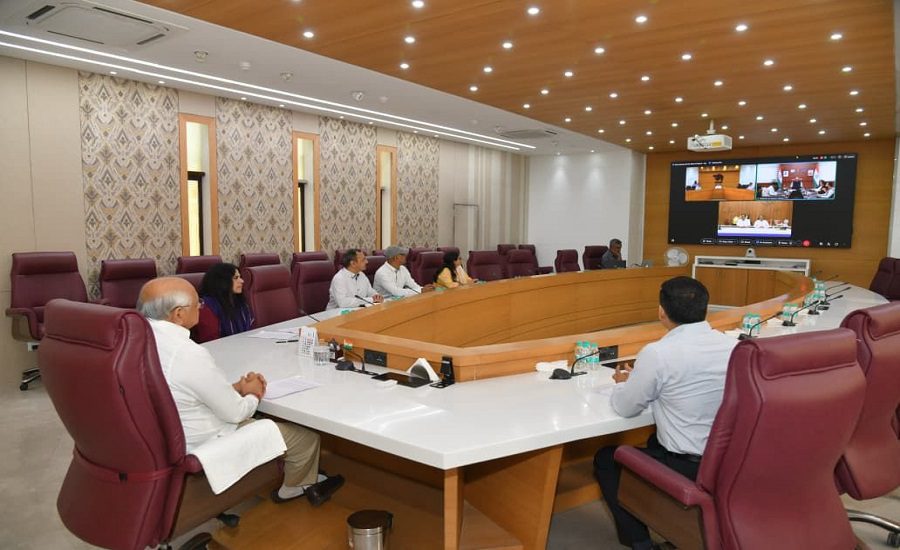
The agreement was signed between the state government and the Department of Drinking Water and Sanitation in the presence of Chief Minister Bhupendra Patel and Union Jal Shakti Minister C. R. Patil.
Focus on Sustainability and Regular Water Supply
Under Jal Jeevan Mission 2.0, the primary focus will be on ensuring long-term sustainability, improved accessibility, and regular supply of clean drinking water in rural areas.
Union Minister C.R. Patil and State Water Supply Minister Ishwarsinh Patel also participated in the programme via video conference.
Speaking at the event, Chief Minister Bhupendra Patel reiterated the government’s commitment to delivering clean and sufficient drinking water to every household, including those in remote regions.
A Milestone for Rural Development
CM Patel described the MoU as a major step forward in strengthening water management and improving rural living standards.
He emphasized that Gujarat has consistently implemented central government schemes efficiently and on priority, adding that this agreement will further accelerate rural development across the state.
Background: Jal Jeevan Mission Achievements
Launched on August 15, 2019, the Jal Jeevan Mission aimed to provide functional household tap connections under the “Har Ghar Jal” initiative.
Gujarat successfully achieved this goal by October 2022, becoming one of the leading states in rural water supply coverage.
Key Objectives Under Jal Jeevan Mission 2.0
The new phase of the mission will focus on:
- Strengthening water infrastructure
- Ensuring consistent and reliable supply
- Maintaining long-term sustainability of water sources by 2028
- Enhancing monitoring and transparency in implementation
The MoU also mandates timely completion of projects and their transfer to village panchayats for operation and maintenance (O&M).
Role of Local Committees and Digital Monitoring
Village-level water management will be handled by Village Water and Sanitation Committees (VWSCs), ensuring community participation and accountability.
The agreement also promotes the use of digital platforms such as ‘Sujalam Bharat’ and ‘PM Gati Shakti’ to improve monitoring, transparency, and efficiency.
Emphasis on Water Quality and Public Awareness
Several additional measures have been incorporated into the plan, including:
- Regular water quality testing
- Financial discipline in project execution
- Capacity building through initiatives like ‘Nal Jal Mitra’
- Awareness campaigns such as ‘Jal Utsav’ to promote water conservation
Defined Roles for Centre and State
As per the MoU:
- The Central government will provide guidance, funding, and monitoring support
- The State government will be responsible for implementation, policy execution, and technical assistance
The MoU under Jal Jeevan Mission 2.0 marks a significant step toward ensuring sustainable rural water supply in Gujarat. With a focus on infrastructure, community participation, and digital monitoring, the initiative is expected to strengthen water security and improve the quality of life in rural areas.
Read also: Gujarat CM Bhupendra Patel Unveils ₹413.81 Crore Development Plan for Porbandar with 46 Key Projects