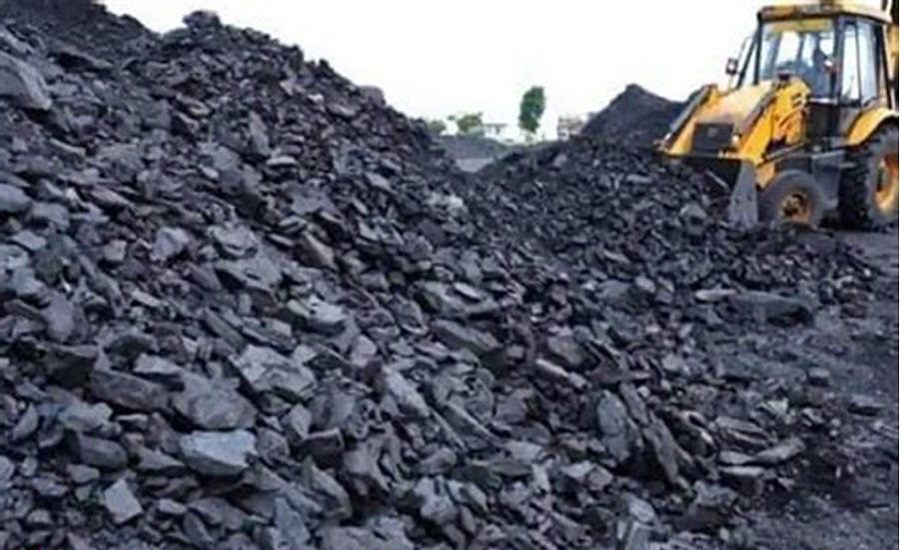
New Delhi: The Government of India is taking several policy measures and technological initiatives to increase domestic coal production, accelerate mine development, and reduce dependence on imported coal.
The key information was shared by Union Minister of State for Coal and Mines Satish Chandra Dubey in a written reply in the Rajya Sabha.
The government’s strategy focuses on faster coal block operationalisation, commercial mining reforms, increased domestic supply, modern mining technologies, environmental protection, and rehabilitation of people affected by mining projects.
Government Initiatives to Increase Domestic Coal Production
The Ministry of Coal has introduced several measures to improve coal production and speed up the development of coal blocks.
Major initiatives include:
- Regular review meetings by the Ministry of Coal to accelerate coal block development.
- Implementation of the Mines and Minerals (Development and Regulation) Amendment Act, 2021 (MMDR Act) to allow captive mine owners (excluding atomic minerals) to sell up to 50% of annual mineral production in the open market after meeting their end-use requirements.
- Introduction of a Single Window Clearance Portal for faster approval and operationalisation of coal mines.
- Establishment of a Project Management Unit (PMU) to support coal block allottees in obtaining approvals and clearances.
Read also: Coal Ministry to Sign MoUs for Sustainable Mine Closure, Jharia Rehabilitation and Skill Development
Commercial Coal Mining Policy Boosts Private Participation
The government launched commercial coal mining auctions in 2020 to increase coal production and encourage private sector participation.
Under the commercial mining framework:
- Coal mines are auctioned on a revenue-sharing basis.
- A rebate of 50% on the final offer price is provided for coal produced earlier than the scheduled production date.
- A 50% rebate is also available for coal gasification and coal liquefaction projects.
The policy allows greater flexibility for companies by removing restrictions on coal usage and encouraging new participants in the sector.
Key reforms include:
- Reduced upfront payment requirements.
- Adjustment of upfront amounts against monthly payments.
- Flexible operational parameters.
- Transparent bidding process.
- 100% Foreign Direct Investment (FDI) through the automatic route.
- Revenue-sharing model linked with the National Coal Index.
Faster Approval Timeline for Coal Block Development
To speed up mine operations, the government has reduced the timelines under the Coal Block Development and Production Agreement (CBDPA).
Revised timelines include:
- Fully explored coal blocks: Reduced from 51 months to 40 months.
- Partially explored coal blocks: Reduced from 66 months to 52 months.
These changes aim to bring more coal mines into production at a faster pace.
Regulatory Reforms to Support Coal Sector Growth
The government has introduced various policy reforms to simplify procedures and improve domestic coal production.
Important reforms include:
- Removal of the requirement for Prospecting Licence (PL) for accredited prospecting agencies.
- Elimination of certain approvals related to mine and seam opening permissions.
- Removal of government approval requirements for Geological Reports (GRs).
- Declaration of coking coal as a critical mineral.
- Introduction of incentives for underground coal mining.
Coal India and SCCL Adopt Modern Mining Technologies
Coal-producing companies are adopting advanced technologies to improve efficiency, productivity, and environmental performance.
Coal India Limited (CIL)
Coal India Limited is introducing modern mining technologies in underground and opencast mines.
Key technology initiatives include:
- Mass Production Technologies (MPT).
- Continuous Miners (CMs).
- Longwall (LW) technology.
- Highwall (HW) mining.
- Advanced excavators and dumpers in opencast mines.
- Standardisation of Heavy Earth Moving Machinery (HEMM).
- Surface miners for efficient and eco-friendly mining.
Singareni Collieries Company Limited (SCCL)
SCCL is focusing on faster project development and improving coal evacuation infrastructure.
Major steps include:
- Development of Coal Handling Plants (CHPs).
- Installation of crushers and mobile crushers.
- Setting up pre-weigh bins.
- Strengthening coal transportation systems.
Government Steps to Reduce Coal Import Dependency
The government is focusing on increasing domestic coal availability and reducing non-essential imports.
Key measures include:
- Increasing Annual Contracted Quantity (ACQ) up to 100% of normative requirements for eligible power plants.
- Increasing domestic coal supply to reduce dependence on imported coal.
- Ensuring full coal availability for Power Purchase Agreement (PPA)-linked power plants.
- Extending coking coal linkage tenure under the Non-Regulated Sector (NRS) auction policy up to 30 years.
- Promoting domestic production of washed coking coal.
Coking Coal Mission and New Policy Measures
To reduce dependence on imported coking coal, the government has launched the Coking Coal Mission.
The initiative aims to:
- Increase domestic coking coal production.
- Improve supply to the steel sector.
- Reduce dependence on imported coking coal.
Other measures include:
- Creation of a new sub-sector ‘Steel using Coking Coal through WDO route’ under NRS linkage auctions in March 2024.
- Introduction of coal availability measures under the Revised SHAKTI Policy, 2025.
- Allowing imported coal-based power plants to secure domestic coal under revised policy provisions.
- Launch of the CoalSETU window to increase availability of washed coal.
132 Coal Blocks Allocated Under Commercial Mining Auctions
Since the launch of commercial coal mine auctions in June 2020, the government has allocated 132 coal blocks.
Current status:
- 23 coal blocks have received Mine Opening Permission (MOP).
- 15 coal blocks have started coal production.
- Remaining 109 coal blocks are progressing according to scheduled development timelines.
The government expects these mines to contribute significantly towards increasing domestic coal production.
Focus on Sustainable and Environment-Friendly Coal Mining
Along with increasing production, the government is promoting environmental sustainability in coal and lignite mining.
Major environmental initiatives include:
- Plantation and bio-reclamation activities.
- Mine water utilisation for community purposes.
- Development of eco-parks in mined-out areas.
- Energy efficiency measures.
- Mechanised coal extraction and transportation.
- Reduction of carbon emissions from mining operations.
Commercial coal mining agreements require successful bidders to adopt modern technologies and reduce environmental impact in line with industry practices.
Measures for Green Mining and Pollution Control
Coal companies are implementing several steps to minimise environmental impact.
These include:
- Reducing road transportation through First Mile Connectivity projects.
- Promoting mechanised coal loading and transportation.
- Using blast-free mining technologies.
- Installing dust control systems such as:
- Fixed sprinklers.
- Mist sprinklers.
- Fog cannons.
- Mobile water sprinklers.
- Robotic water sprayers.
- Wheel washing systems.
Additional sustainability measures include:
- Large-scale plantation around mining areas.
- Grass and bamboo plantation on temporary dumps.
- Development of eco-parks.
- Regular ecological assessments.
- Scientific mine closure practices.
- Promotion of underground coal mining.
Rehabilitation and Compensation for Mining-Affected Families
The government has also taken steps to ensure fair compensation and rehabilitation for people affected by coal mining projects.
Key measures include:
- Compensation under the Right to Fair Compensation and Transparency in Land Acquisition, Rehabilitation and Resettlement (RFCTLARR) Act, 2013.
- Rehabilitation benefits according to prescribed legal provisions.
- Monitoring through Rehabilitation and Resettlement (R&R) committees headed by District Collectors or their representatives.
- Taking possession of land only after providing eligible benefits to Project Affected Families (PAFs).
India’s Roadmap Towards Coal Self-Reliance
The government’s multi-pronged strategy focuses on increasing domestic coal production, reducing import dependency, adopting modern mining technologies, and ensuring sustainable development.
With policy reforms, commercial mining expansion, and technology-driven operations, India aims to strengthen coal self-reliance while balancing energy security with environmental responsibility.
Read also: Coal Ministry Allows Insurance Surety Bonds for MMDR Coal Blocks to Boost Ease of Doing Business