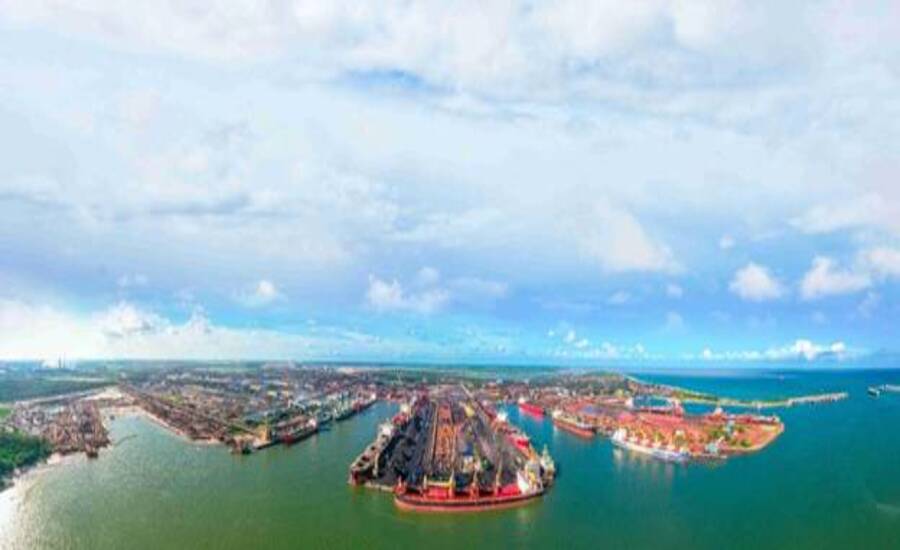
New Delhi: The government of India prepares a port crane manufacturing scheme to reduce dependence on Chinese equipment. The initiative aims to strengthen India’s maritime infrastructure while boosting domestic manufacturing. With ports expected to handle massive cargo growth in the coming decade, this move is crucial for both economic expansion and national security.
By promoting indigenous production, India is aligning its infrastructure goals with the larger vision of “Make in India” and reducing vulnerabilities caused by foreign supply chains.
Why Does India Need A Port Crane Manufacturing Scheme
India currently depends heavily on imported cranes, especially from China, which dominates nearly 70% of global crane manufacturing.
This dependence creates multiple risks:
- Delays in project execution due to supply issues
- High costs and limited bargaining power
- Strategic vulnerability in critical infrastructure
To overcome these challenges, the government is planning a dedicated manufacturing scheme for port cranes.
Key Highlights of the Proposed Port Crane Manufacturing Scheme
The upcoming policy is expected to offer strong financial support to domestic manufacturers.
Incentives Likely to Be Offered
- 20–30% capital subsidy for setting up manufacturing units
- 15% operational expenditure support for 5–7 years
- Focus on building competitive pricing against Chinese products
These incentives aim to make Indian manufacturers globally competitive and encourage private sector participation.
Massive Growth Target for Indian Ports
India is planning a huge expansion in port capacity:
- Current capacity: 27 million TEU (Twenty-foot Equivalent Units)
- Target: 175 million TEU in the next decade
This rapid growth makes it essential to have a reliable and fast supply of port equipment like cranes.
Without domestic production, such expansion could face serious delays.
What is the Importance of Port Crane Manufacturing Scheme
Ports are critical infrastructure. Dependence on foreign equipment—especially from geopolitical rivals—can create risks.
By building cranes domestically, India aims to:
- Strengthen supply chain resilience
- Ensure timely project execution
- Reduce exposure to external disruptions
This move is also aligned with India’s broader defence and industrial strategy, which emphasizes self-reliance and indigenous production.
Link With ‘Make in India’ and Defence Strategy
The crane manufacturing push reflects a larger trend:
- Increased defence and infrastructure spending
- Focus on domestic manufacturing ecosystems
- Integration of industry with national security goals
India’s defence budget has already seen strong growth, with emphasis on self-reliant production and modernization.
This shows that infrastructure and defence strategies are now closely connected.