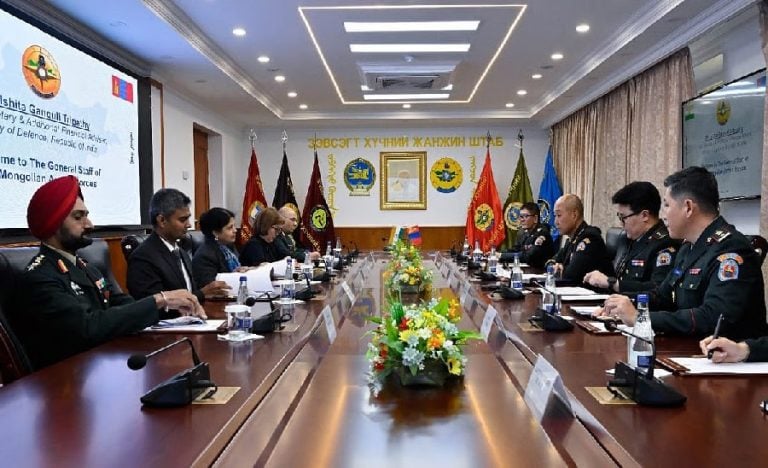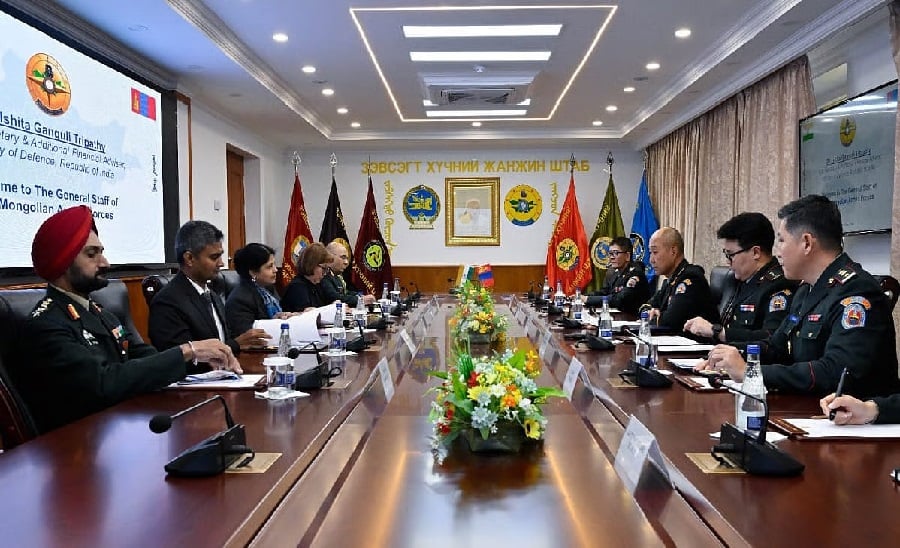
Ulaanbaatar: India and Mongolia have reaffirmed their commitment to strengthening bilateral defence cooperation during the 14th Joint Working Group (JWG) meeting between the defence ministries of the two countries, held in Ulaanbaatar on October 16, 2026.
Both sides conducted a comprehensive review of ongoing defence cooperation activities, assessed the progress of existing initiatives and discussed measures to expand collaboration in mutually identified areas. They also exchanged views on regional and international developments and reiterated their commitment to advancing the longstanding defence partnership through sustained dialogue.
India and Mongolia Review Bilateral Defence Cooperation
The meeting provided an opportunity for India and Mongolia to assess their existing defence engagement and identify new avenues for cooperation. Both sides discussed ways to strengthen ongoing initiatives and establish a forward-looking agenda to deepen their defence partnership.
The meeting was co-chaired by Dr Ishita Ganguli Tripathy, Joint Secretary in India’s Ministry of Defence, and Brigadier General Gansukh E, Deputy State Secretary of Defence of Mongolia.
The discussions reaffirmed the commitment of both countries to further strengthen their bilateral defence relationship through continued engagement, cooperation and mutual support.
Nomadic Elephant Exercise Highlights Defence Partnership
During the meeting, both sides appreciated the successful conclusion of the Nomadic Elephant military exercise, which reflects the commitment of India and Mongolia to strengthening bilateral defence cooperation.
The exercise provides an important platform for military engagement and cooperation between the armed forces of the two countries.
The Mongolian side also acknowledged India’s continued support in capacity building and training for personnel of the Mongolian Armed Forces. The recognition highlighted the importance of India’s training assistance in enhancing military capabilities and strengthening institutional ties between the two defence establishments.
India and Mongolia Explore Ways to Deepen Military Engagement
As part of the visit, Dr Ishita Ganguli Tripathy also met Major General Usukhbayar J, Deputy Chief of the General Staff of the Mongolian Armed Forces.
During the meeting, both sides appreciated the progress achieved in cooperation between their respective defence forces. They also identified opportunities to deepen engagement, strengthen bilateral defence ties and develop a forward-looking agenda for the India-Mongolia Strategic Partnership.
The interaction reinforced the importance of continued dialogue and practical cooperation in advancing the defence relationship between the two countries.
Indian Delegation Reviews Cybersecurity Training Centre
The Indian delegation visited the National Defence University of Mongolia to review the functioning of the Cyber Security Training Centre established with Indian assistance.
The Mongolian side appreciated India’s continued support in language training and cybersecurity. The visit highlighted the role of capacity building, technical cooperation and knowledge-sharing in strengthening the capabilities of Mongolian defence personnel.
Cooperation in these areas remains an important component of the broader bilateral defence partnership, helping both countries deepen institutional engagement and develop expertise in emerging fields such as cybersecurity.
India-Mongolia Partnership Rooted in Historical and Cultural Ties
India and Mongolia share longstanding historical, cultural and civilisational connections that provide a strong foundation for their contemporary strategic partnership.
The visit underscored the importance of shared faith and cultural heritage in bringing the two nations closer. These enduring ties complement their growing cooperation in defence, military training, cybersecurity and capacity building.
The 14th Joint Working Group meeting reaffirmed the commitment of India and Mongolia to further strengthen their defence partnership through sustained dialogue, expanded cooperation and continued engagement across mutually identified areas.