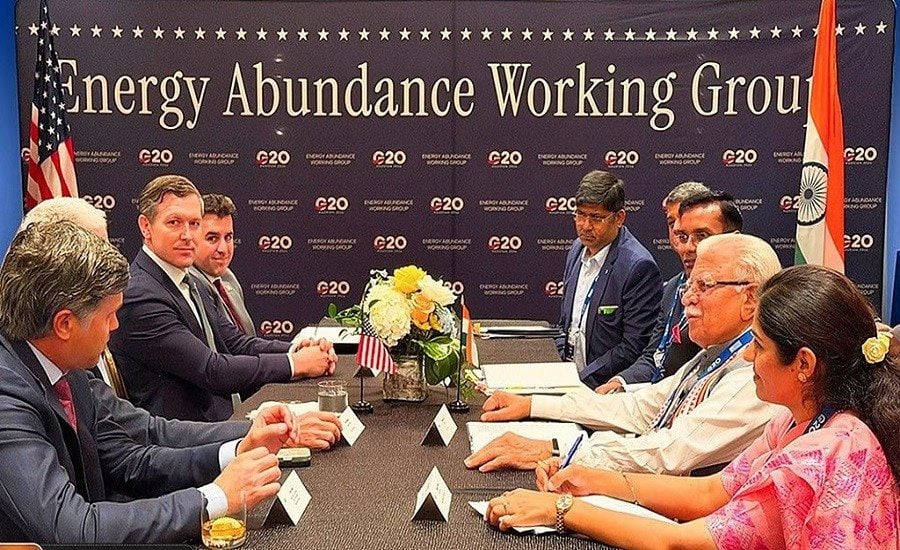
New Delhi/Houston: Union Power Minister Manohar Lal held discussions with US Energy Secretary Chris Wright in Houston on India’s nuclear energy expansion plans and the growing electricity requirements of artificial intelligence (AI), high-performance computing and data centres. The meeting took place on the sidelines of the G20 Energy Abundance Ministerial on September 15.
The talks also covered opportunities to strengthen India-US cooperation in clean energy, resilient energy infrastructure and emerging technologies.
India-US Talks Focus on Nuclear Energy and Emerging Technologies
During the meeting, Manohar Lal and Chris Wright discussed India’s roadmap for expanding nuclear power capacity, along with the power infrastructure required to support rapidly growing technology-intensive sectors.
Key areas discussed included:
- Nuclear energy expansion
- Electricity requirements of AI and high-performance computing
- Power needs of data centres
- Clean energy cooperation
- Resilient energy infrastructure
- Emerging energy technologies
India has set a target of reaching 100 GW of nuclear power capacity by 2047 under its Nuclear Energy Mission. The government has also enacted the SHANTI Act, 2025, which enables wider participation of public and private sectors in the nuclear energy sector.
Read also: India Could Build Up To 225 Nuclear Warheads With Existing Plutonium Reserves
Rising Power Demand From AI and Data Centres
The meeting also highlighted the changing electricity requirements associated with the expansion of AI, high-performance computing and data centres.
These technology-intensive sectors require reliable power infrastructure, making generation capacity, grid resilience and supporting infrastructure important areas for future energy planning.
The discussions therefore linked India’s technology expansion with the need for a resilient and reliable power system.
India’s Nuclear Power Capacity Expansion Roadmap
India’s Nuclear Energy Mission aims to increase nuclear power capacity to 100 GW by 2047. The government has said the roadmap includes large indigenous reactors as well as the development of Small Modular Reactors (SMRs).
According to the Department of Atomic Energy, India’s present installed nuclear capacity is 8.78 GW, with a target of around 22 GW by 2031-32 through projects already at various stages of implementation.
Manohar Lal Highlights India’s 552 GW Power Capacity
During the G20 Energy Abundance Working Group meetings, Manohar Lal highlighted India’s progress in developing a secure and resilient energy system.
He noted that India’s installed power generation capacity has reached 552 GW, while the share of non-fossil sources has crossed 50%. He also highlighted progress in:
- Solar energy
- Energy storage
- Nuclear power
- Clean cooking access
The minister also highlighted India’s international energy initiatives, including the International Solar Alliance, One Sun One World One Grid and the Global Biofuels Alliance.
Focus on Faster Energy Infrastructure Clearances
At the G20 meetings, Manohar Lal also discussed regulatory and permitting reforms aimed at improving the speed and predictability of infrastructure development.
He highlighted digital platforms including:
- National Single Window System
- PARIVESH
- PM Gati Shakti
These platforms are being used to streamline project approvals and improve infrastructure planning. The minister stressed the importance of efficient permitting for timely delivery of energy and other infrastructure projects and called for greater G20 cooperation in capacity building and regulatory modernisation.
Read also: How India Built A 190-Warhead Nuclear Arsenal While Modernising Its Strategic Forces