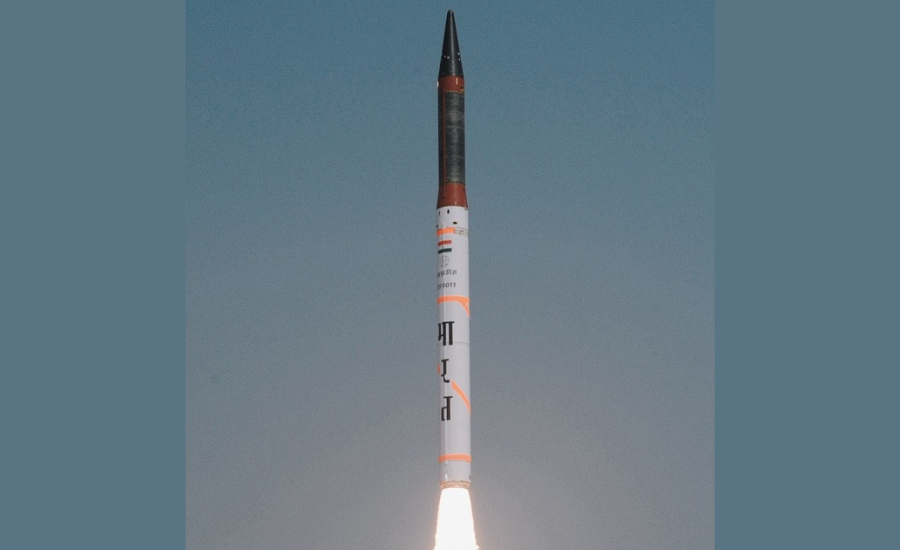
New Delhi: India nuclear warheads have reached an estimated 190, according to the latest assessment published by the Federation of American Scientists (FAS). The report highlights India’s ongoing efforts to modernise its nuclear arsenal through new missile systems, aircraft upgrades, and sea-based deterrent capabilities.
While the government of India does not officially disclose the size of its nuclear stockpile, independent experts believe India’s strategic forces are becoming more capable and diversified. The developments are aimed at maintaining a credible minimum deterrent amid evolving regional security challenges.
Details of India Nuclear Warheads
According to the Federation of American Scientists, India has produced enough military plutonium for approximately 140 to 225 nuclear warheads and may have already assembled up to 190 warheads.
Read also: Inside the Shocking Report of SIPRI on India Nuclear Stockpile 2026 and Global Scenario
Analysts believe the stockpile could continue to grow as additional delivery systems become operational and new warhead production continues.
India follows a policy of maintaining a credible minimum deterrent while modernising its strategic capabilities to address future security requirements.
Why Official Numbers Remain Unclear
India does not publicly disclose the exact number of nuclear warheads in its inventory. Most independent estimates are based on government documents, defence budgets, military parades, satellite imagery, research studies, and publicly available technical information.
Experts caution that all stockpile estimates contain some degree of uncertainty because of India’s long-standing policy of strategic ambiguity.
Plutonium Production Supports Future Growth of India Nuclear Warheads
India produces both highly enriched uranium and weapons-grade plutonium for its strategic programs. Most weapons-grade plutonium has historically been produced at the Dhruva reactor near Mumbai and other nuclear facilities.
Kalpakkam Reactor Adds New Capability
In April 2026, India’s 500-MW Prototype Fast Breeder Reactor (PFBR) at Kalpakkam achieved first criticality. Experts estimate that if operated efficiently, the reactor could significantly increase plutonium production and support future strategic requirements.
Additional breeder reactor projects are also being planned, potentially expanding India’s long-term production capacity.
India’s Nuclear Triad Becomes More Capable
India currently maintains a nuclear triad consisting of:
- Land-based ballistic missiles
- Nuclear-capable aircraft
- Sea-based nuclear systems
This structure ensures survivable deterrence by allowing nuclear delivery from multiple platforms.
Land-Based Missile Modernisation
India’s missile inventory includes:
- Prithvi-II
- Agni-I
- Agni-II
- Agni-III
- Agni-IV
- Agni-V
The Agni-V is already operational and provides long-range strategic reach. The Agni-P missile is moving closer to operational deployment and is expected to strengthen India’s future missile force structure. Some reports also suggest ongoing efforts to streamline missile systems for greater efficiency and readiness.
India Nuclear Warheads: Sea-Based Deterrence Gains Importance
India’s sea-based deterrent is centered around nuclear-powered ballistic missile submarines. These systems provide a secure second-strike capability, which is considered one of the most important elements of modern nuclear deterrence. Analysts believe submarine-based systems may carry mated warheads to ensure rapid response capability if required.
Nuclear-Capable Aircraft Fleet Undergoing Upgrades
Aircraft remain a critical part of India’s nuclear delivery capability. The Indian Air Force currently relies on Mirage-2000H and Jaguar IS aircraft for strategic strike missions.
Jaguar And Mirage Fleets Receive Modernisation
The Mirage-2000 fleet continues to undergo upgrades aimed at improving operational effectiveness. Jaguar aircraft have received DARIN-III avionics improvements, although parts of the fleet are expected to retire gradually over the coming years. The modernisation programs are intended to maintain operational readiness until newer platforms become available.
Rafale To Play A Larger Strategic Role
India currently operates 36 Rafale fighter aircraft. Defence analysts believe Rafale fighters could eventually assume a greater strategic role as older Jaguar aircraft retire from service.
The government has also approved additional Rafale acquisitions for the Indian Navy, strengthening overall airpower capabilities.
India’s Nuclear Doctrine Remains Under Focus
India officially follows a No First Use (NFU) nuclear doctrine. Under this policy, nuclear weapons would only be used in retaliation to a nuclear attack. However, modifications announced in 2003 allow nuclear retaliation against major chemical or biological attacks.
Debate Over No First Use Continues
Over the years, statements by senior defence officials have triggered discussions regarding the future interpretation of India’s NFU policy. Despite these debates, India continues to officially maintain its commitment to responsible nuclear stewardship and credible deterrence.
Regional Security Environment Shapes India Nuclear Warheads Strategy
India’s nuclear doctrine has historically focused on Pakistan. However, growing strategic competition and military modernisation in the wider region have increased the importance of long-range deterrence capabilities.
The development of systems such as the Agni-V reflects India’s need to address a broader strategic environment while maintaining stability and deterrence.
Read also: India Strengthens Nuclear Deterrence With Successful Advanced Agni Missile Test
FAQs
India’s nuclear triad consists of land-based ballistic missiles, nuclear-capable aircraft, and sea-based nuclear deterrent systems, allowing strategic strikes from multiple platforms.
According to the Federation of American Scientists, India may have assembled up to 190 nuclear warheads, with enough plutonium available for approximately 140 to 225 warheads.
Yes. India officially follows a No First Use (NFU) policy, meaning nuclear weapons would be used only in retaliation to a nuclear attack, with specific provisions related to chemical and biological attacks.