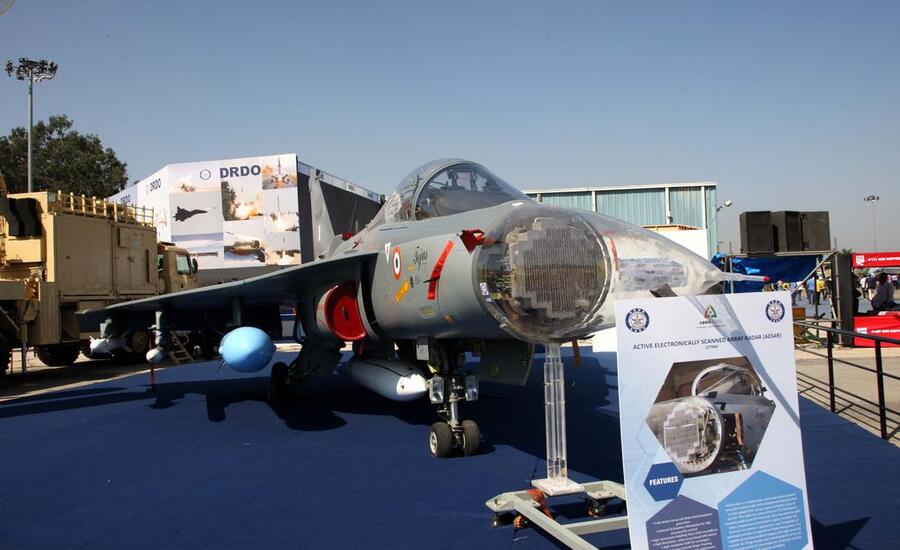
New Delhi: India’s indigenous Uttam AESA Radar for Tejas Mk1A has become the centre of a major defence debate after former Indian Air Force (IAF) Chief Air Chief Marshal (Retd.)
RKS Bhadauria criticised Hindustan Aeronautics Limited (HAL) for delaying its integration. He questioned why HAL continued with the Israeli EL/M-2052 radar for the first batch of 83 Tejas Mk1A fighter jets instead of introducing India’s homegrown technology.
The controversy has raised fresh questions about India’s defence manufacturing system and its goal of becoming self-reliant in military technology.
Why Did RKS Bhadauria Criticise HAL for Tejas Mk1A Radar Row
Former Air Chief Marshal RKS Bhadauria criticised HAL’s decision to continue using the Israeli EL/M-2052 AESA radar instead of introducing the indigenous Uttam radar in the first batch of Tejas Mk1A fighters.
Read also: From Tejas Mk1A To Rafale: How India Plans To Fix Its Fighter Squadron Deficit
Speaking on NDTV’s Ctrl + Alt + Defence podcast, Bhadauria reportedly described the decision as a bad move.
He argued that the Uttam radar had reached a mature stage and was ready for further adoption. He also questioned HAL’s project management and the speed of its work.
According to Bhadauria, major defence projects require faster decision-making, better planning and stronger coordination between different organisations.
He also expressed concerns about the working culture at HAL’s manufacturing facilities, saying that important defence projects should operate with greater urgency.
Uttam AESA Radar Vs Israeli EL/M-2052: What Is The Difference
The Uttam AESA radar is an indigenous airborne radar developed by the Defence Research and Development Organisation (DRDO). Its development is led by the Electronics and Radar Development Establishment (LRDE).
The radar is designed to help fighter aircraft detect enemy aircraft, track multiple targets and support air-to-air and air-to-ground operations.
The Israeli EL/M-2052 is another advanced AESA radar selected for the initial Tejas Mk1A aircraft.
According to performance figures reported in the defence coverage, Uttam has shown promising results in several important areas.
1. Target Tracking Capability
The Uttam radar is reported to have the ability to track more than 100 targets simultaneously.
In comparison, the Israeli EL/M-2052 is commonly reported to track around 64 targets.
This capability can help pilots monitor multiple potential threats during complex air operations.
2. Detection Range
The Uttam radar has reportedly demonstrated the ability to detect and track a Tejas-sized target at a distance of around 140 kilometres during testing.
This gives the indigenous radar a promising detection capability. However, radar detection range depends on factors such as target size, altitude, radar settings and operating conditions.
3. Transmit And Receive Modules
The Uttam radar is reported to feature approximately 980 Transmit/Receive Modules (TRMs).
These modules help the radar send and receive signals electronically.
A higher number of modules can support improved radar performance, although the total number alone does not determine the overall effectiveness of a radar system.
4. Electronic Warfare Protection
Modern fighter aircraft operate in environments where enemy forces may use electronic jamming to disturb radar signals.
The Uttam radar’s antenna design is intended to improve resistance to electronic interference.
This capability is important for fighter aircraft operating in highly contested airspace.
HAL Changes Its Original Radar Integration Plan
HAL’s earlier plan was to introduce the Israeli EL/M-2052 radar in the initial 40 Tejas Mk1A aircraft.
The indigenous Uttam radar was expected to replace it from the 41st aircraft onwards. However, the plan was later changed.
HAL decided to continue with the Israeli radar configuration for all 83 aircraft under the first order.
Reports on the decision pointed to concerns about the certification of Uttam and the integration of its associated electronic warfare systems.
The decision was aimed at avoiding further complications in the already delayed Tejas Mk1A production programme. As a result, the introduction of Uttam was shifted to the next batch of aircraft.
Uttam Radar To Equip The Next 97 Tejas Mk1A Aircraft
India’s Ministry of Defence signed a major contract with HAL on September 25, 2025, for the procurement of 97 additional LCA Mk1A aircraft.
The contract is worth more than Rs 62,370 crore, excluding taxes.
The order includes 68 fighter aircraft and 29 twin-seat trainer aircraft.
Importantly, the Ministry of Defence confirmed that the aircraft would include advanced indigenous systems such as the Uttam AESA radar. Deliveries are scheduled to begin during 2027-28 and continue over six years.
The new order is an important step towards increasing the use of Indian-developed defence technologies in the country’s fighter aircraft fleet.
Why Is Uttam Radar Important For India’s Defence Industry
The development of the Uttam AESA radar is important because modern fighter aircraft depend heavily on advanced radar technology.
Using an indigenous radar can reduce India’s dependence on foreign defence suppliers.
It can also give Indian organisations greater control over future upgrades, maintenance and technology development.
The Uttam programme also supports the wider development of India’s aerospace industry.
Its technology could support future fighter aircraft programmes, including the Tejas Mk2 and the Advanced Medium Combat Aircraft (AMCA), subject to their specific development and integration requirements.
The project also highlights the importance of cooperation between DRDO, HAL, the Indian Air Force and private defence companies.
Read also: Big Boost For Tejas Mk1A: HAL Expects 12 Additional GE F404 Engines Before Year-End
FAQs
Former IAF Chief RKS Bhadauria criticised HAL for continuing with the Israeli EL/M-2052 radar in the first 83 Tejas Mk1A aircraft instead of introducing India’s indigenous Uttam radar. He also questioned HAL’s project management and execution speed.
The Uttam AESA radar is an indigenous airborne radar developed by DRDO’s Electronics and Radar Development Establishment (LRDE). It is designed to help fighter aircraft detect and track multiple targets during air-to-air and air-to-ground operations.
Yes. The Ministry of Defence confirmed that the additional 97 Tejas Mk1A aircraft ordered in September 2025 would include the indigenous Uttam AESA radar as part of India’s defence indigenisation programme.