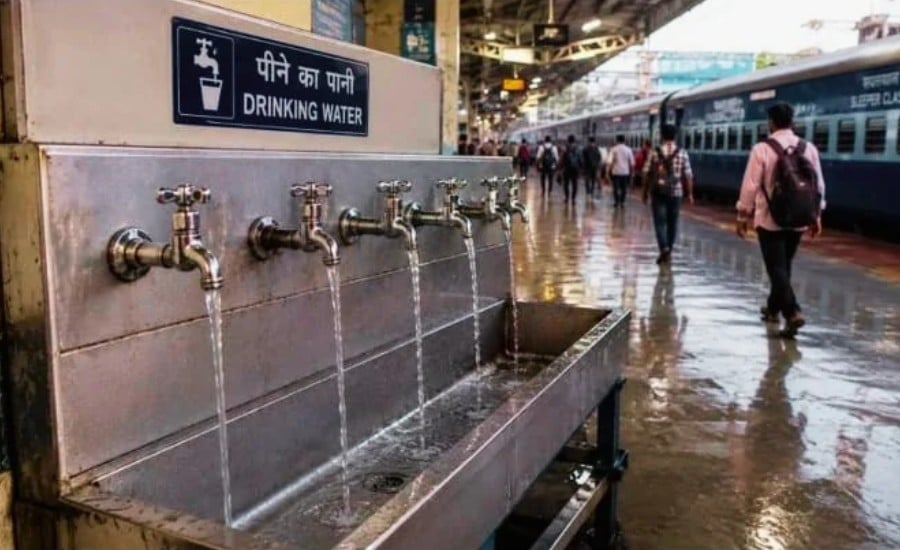
New Delhi: Indian Railways has launched a special cleanliness and water-safety drive across its network to strengthen the quality and hygiene of drinking water available to passengers at railway stations.
The initiative focuses on cleaning and disinfection of drinking-water tanks and filtration systems, along with comprehensive inspection of the infrastructure involved in storing, treating and dispensing potable water.
The Railway Board has directed Zonal Railways to identify deficiencies and undertake corrective measures, with station-wise monitoring of the action taken.
From Water Tanks to Taps: Entire Supply Chain Under Inspection
The drive goes beyond testing water only at the final dispensing point. The action plan calls for water-quality monitoring at both the source and point of consumption, along with regular inspection and maintenance of the entire drinking-water system.
Read Also: Indian Railways Operates 19 Rail Neer Plants Across India, Each Producing 1 Lakh Bottles Daily
Zonal Railways will inspect:
- Water sources, including hand pumps and borewells
- Treatment and filtration plants
- Underground and overhead tanks
- PVC water tanks
- Water booths and dispensing points
- Water coolers and purification systems
- Taps and connected pipelines
Drinking-water tanks will be drained, desludged, scrubbed and disinfected as part of the exercise.
Railways will also check tank covers, vents and overflow points to prevent contamination from birds, animals and algae.
Damaged Tanks, Pipes and Filters to Be Repaired
The inspection drive will identify infrastructure requiring immediate attention. Damaged tanks, pipelines and filters will be repaired or replaced wherever necessary.
Particular attention will be given to preventing cross-connections between potable and non-potable water systems, while pipelines forming part of the drinking-water circuit will be checked for leaks.
The Railways will also address leakages to prevent unnecessary water wastage.
Water Coolers and RO/UV Systems Under Focus
The Railway Board has also instructed Zonal Railways to conduct comprehensive inspections of water coolers and purification systems.
The measures include:
- Cleaning water-cooler tanks thoroughly
- Repairing leaks in coolers, pipelines and taps
- Maintaining hygiene around dispensing areas
- Checking UV/RO purification systems
- Replacing filter candles and other components when due
- Carrying out scheduled servicing and overhauling
- Installing or replacing purification systems where required
Similar cleaning, purification and monitoring requirements will apply to Water Vending Machines to ensure the water they dispense meets prescribed safety and hygiene requirements.
Water Quality to Be Tested at Multiple Points
The initiative also introduces a broader testing and monitoring approach. Railway officials will conduct physical, chemical and bacteriological testing of water samples at identified locations.
Testing will cover, wherever feasible:
- Water sources
- Post-treatment outlets
- Storage tanks
- Water coolers
- Water vending machines
- Selected taps and water booths
Daily residual-chlorine monitoring will also be undertaken. Where required, re-chlorination or other corrective measures will be initiated.
Station-Wise Deficiencies to Be Tracked
The Railway Board has asked Zonal Railways to prepare station-wise details of deficiencies identified during inspections and the corrective action taken.
It has also directed them to monitor works already sanctioned for the replacement or construction of underground and overhead water tanks and process fresh sanctions wherever required.
Suitable filtration and purification arrangements, including at-source and at-tap filtration, are also being examined according to local requirements.
Focus Extends Beyond Passenger Areas
The water-safety measures are not limited to railway stations. The action plan also covers drinking-water infrastructure in Railway colonies and workplaces.
Through the special drive, Indian Railways is seeking to strengthen preventive inspection, infrastructure maintenance, cleaning, disinfection and water-quality testing across its drinking-water supply network.
The initiative is aimed at ensuring the continued availability of safe, clean and hygienic drinking water for both railway passengers and personnel.